
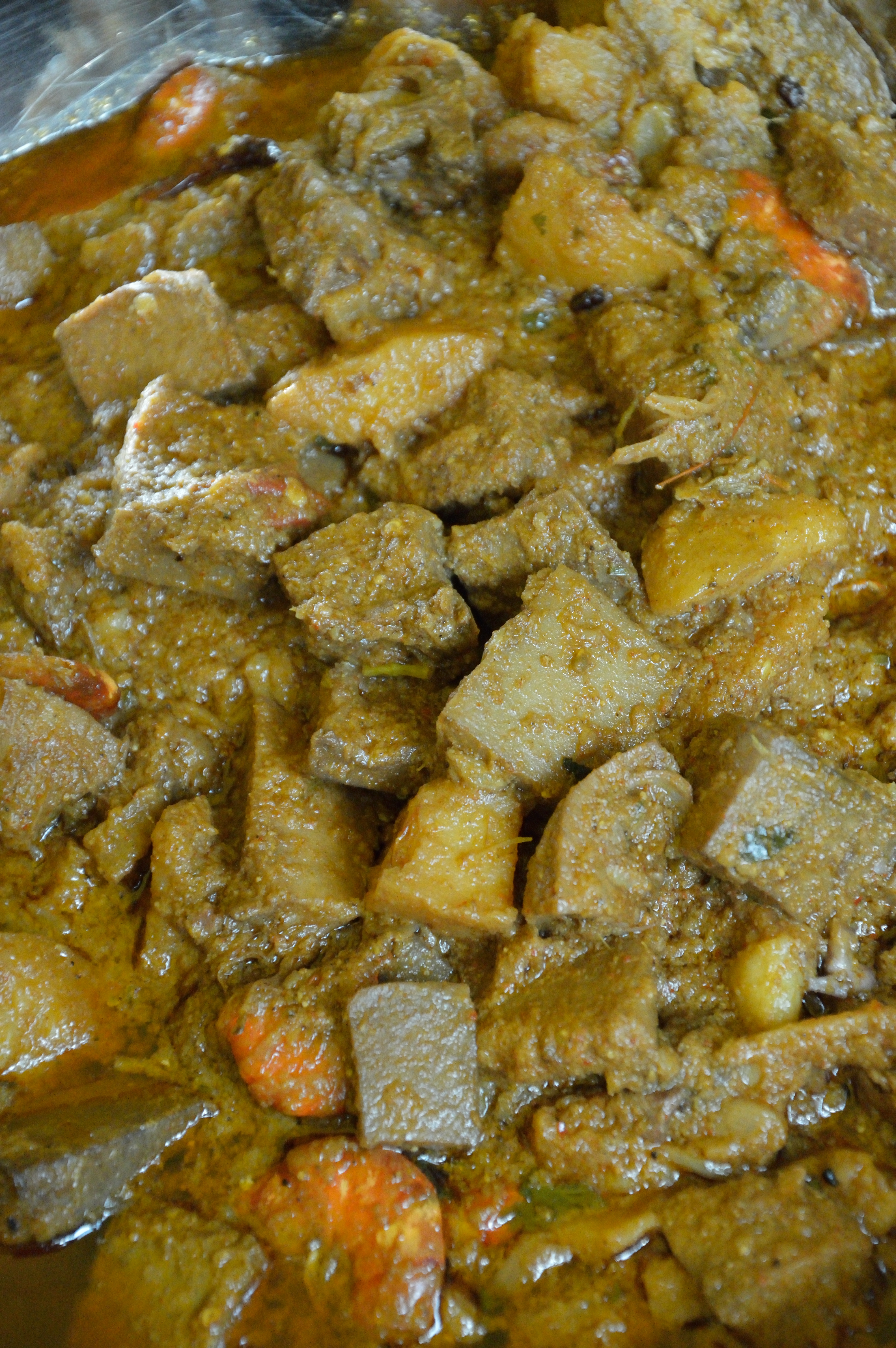
On 18 May 2026 the lifestyle desk of the Bangladeshi news site Jagonews24 published a recipe for green, or raw, jackfruit cooked with prawns. The piece said raw jackfruit was plentiful in the markets in that hot season and that many people know it as "poor man's meat". It described the vegetable as suited to a thin curry with rice, a dry bhuna or a spicy dish, and said it contains fibre, vitamins and minerals. In the recipe the jackfruit is first boiled with salt and turmeric and then cooked with prawns in spices fried in mustard oil.
The timing follows the crop's calendar. Banglapedia, the national encyclopaedia of Bangladesh, says the jackfruit tree flowers from December to March and its fruit ripens from May to August, so the young fruit, picked before it ripens, comes to market as a vegetable in late spring and early summer. The ingredients and method below are as Jagonews24 gave them; the sections after them set out what green jackfruit is, how its nutrients compare with the ripe fruit, how much of the crop Bangladesh grows and what earlier recipes did with it.
Ingredients
The Jagonews24 recipe lists these ingredients:
- Raw jackfruit: 1
- Prawns: half a cup
- Salt: to taste
- Turmeric powder: 1 spoon
- Mustard oil: as needed
- Cinnamon: 2 to 3 pieces
- Cloves: 4
- Cardamoms: 4
- Bay leaf: 1
- Onion paste: 1 teaspoon
- Tomato paste: 1 teaspoon
- Ginger-garlic paste: 1 teaspoon
- Chilli paste: half a teaspoon (to taste)
- Cumin powder: 1 tablespoon
- Coriander powder: 1 tablespoon
- Garam masala powder: 1 tablespoon
The list combines whole spices for the tempering (cinnamon, cloves, cardamom and bay leaf), wet pastes (onion, tomato, ginger-garlic and chilli) and ground spices (cumin and coriander). The garam masala powder is kept back until the end. The recipe does not say how large the jackfruit should be or which prawn to use. The Food Composition Table for Bangladesh, published in 2013 by the Institute of Nutrition and Food Science of the University of Dhaka with FAO support, lists several kinds of chingri, among them the giant river prawn (golda), the giant tiger prawn (bagda), the monsoon river prawn and the speckled shrimp (horina).
Method
Jagonews24 sets out the method in these steps:
- Cut the raw jackfruit, wash it well, boil it for a while with salt and turmeric, and drain off the water.
- Heat mustard oil in a pan and temper it with the cinnamon, cloves, cardamom and bay leaf.
- Add all the other spices except the garam masala powder and fry them well.
- When the spices are cooked, add the prawns and the boiled jackfruit pieces and mix well.
- Cover and cook over a medium flame for 15 minutes, lifting the lid now and then to stir and making sure nothing sticks to the pan.
- Before taking the pan off the heat, sprinkle over the garam masala powder and leave it covered a little longer.
Boiling the cut fruit first is the usual way to begin. Julia F. Morton, in her reference work Fruits of Warm Climates (1987), describes the full-grown but unripe fruit being cut into large chunks and boiled in lightly salted water until tender. The only handicap, she writes, is the fruit's copious gummy latex, which collects on the knife and the hands unless they are first rubbed with oil; latex that clings to the pot can also be removed by rubbing with oil.
Morton also records the botanist Burkill's view that it is the raw, unripe fruit that is astringent and indigestible, which is one reason the young fruit is eaten cooked, never raw.
Because the dish uses raw prawns, the World Health Organization's Five Keys to Safer Food, published in 2006, are worth keeping in mind in the kitchen: keep clean, separate raw and cooked food, cook thoroughly, keep food at safe temperatures, and use safe water and raw materials.
What green jackfruit is
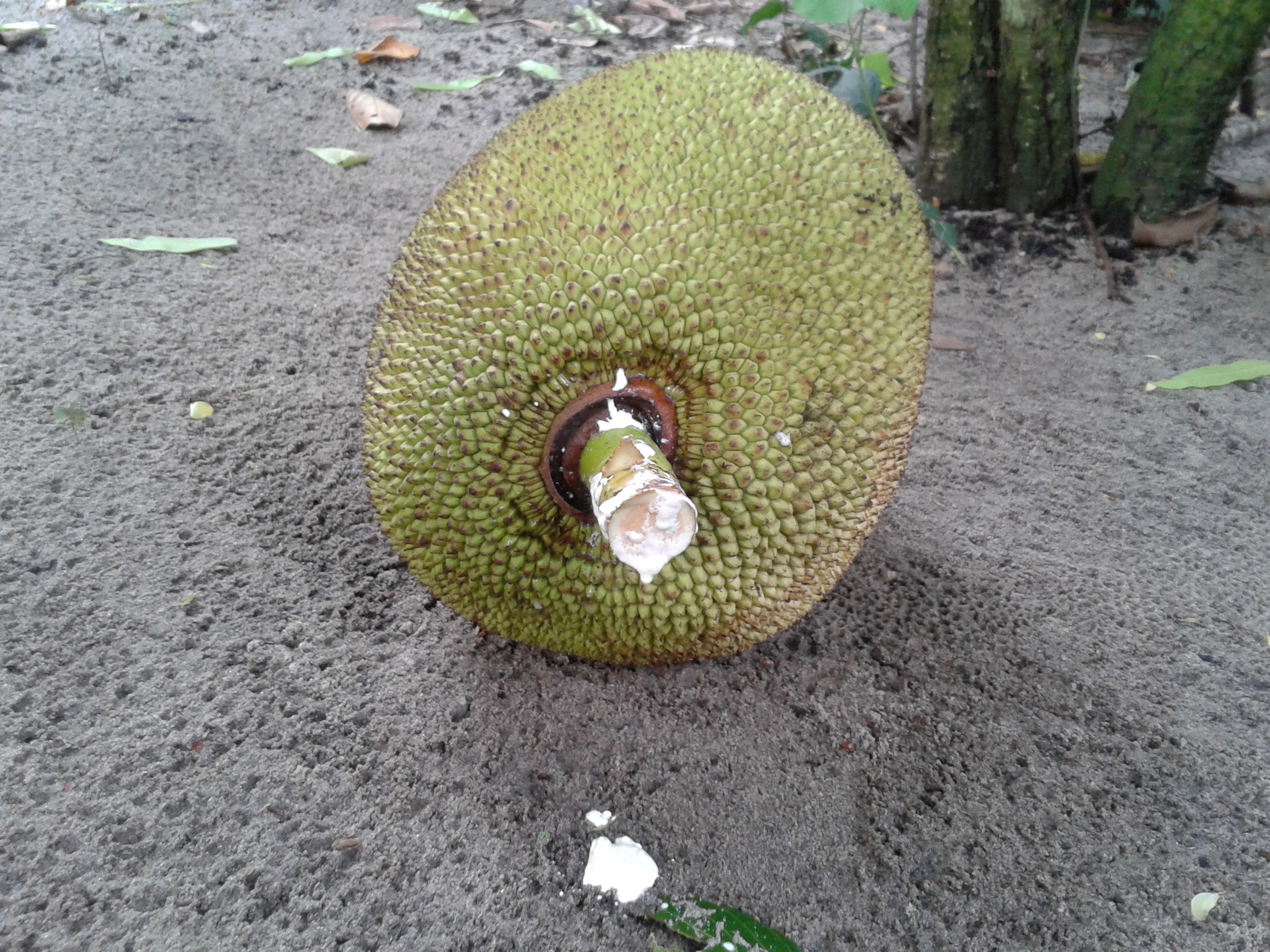
The jackfruit, Artocarpus heterophyllus, belongs to the mulberry family, Moraceae. Morton calls it the largest of all tree-borne fruits: it may be 20 to 90 cm long and 15 to 50 cm wide, and usually weighs 4.5 to 20 kg, occasionally as much as 50 kg. The tree is evergreen and 9 to 21 metres tall, and all its parts contain a sticky white latex. No one knows exactly where it originated, but it is believed to be native to the rainforests of the Western Ghats in India.
Inside the fruit are the fleshy "bulbs", each enclosing a seed, massed around a pithy central core; a single fruit may hold 100 to 500 seeds. Morton writes that the fruit matures three to eight months after flowering, and that in Asia jackfruits ripen mainly from March to June, April to September or June to August, depending on the region. In India, she notes, a good tree yields about 150 large fruits a year.
Green jackfruit is this fruit taken before it ripens. In Bengali it is also called enchor (এঁচোড়), a word Bangladeshi cookery writers use for the young fruit. Banglapedia lists the many uses of the tree: the unripe fruit is eaten as a vegetable, the seeds are boiled or roasted, the leaves and rind are fed to livestock, the yellow heartwood is a valuable timber that also gives a yellow dye, and the latex serves as a sealing material.
Banglapedia describes three main kinds of jackfruit in Bangladesh: khaja, with a hard pericarp; gala, whose pulp is very juicy and soft; and dorosa, an intermediate type whose pulp is fairly firm and juicy.
Using the soft, sticky local fruit as a vegetable has also been part of official planning. The Daily Star reported on 5 June 2019 that SM Kamruzzaman, a consultant on the Department of Agricultural Extension's (DAE) Year-Round Fruit Production for Nutrition Improvement project, said: "Our traditional variety is juicy and sticky. That's why it is tough to go for commercial production. We are planning to use the traditional variety of jackfruit as vegetable." The same report noted that unripe jackfruit, unlike the soft, sweet ripe fruit, resembles a potato.
Green and ripe: how the nutrients differ
Jagonews24 said green jackfruit contains fibre, vitamins and minerals. A review of jackfruit nutrition by R. A. S. N. Ranasinghe, S. D. T. Maduwanthi and R. A. U. J. Marapana, published in the International Journal of Food Science in January 2019, sets out the composition of young and ripe fruit side by side. Per 100 g of young fruit it gives:
- Water: 76.2 to 85.2 g
- Protein: 2.0 to 2.6 g
- Fat: 0.1 to 0.6 g
- Carbohydrate: 9.4 to 11.5 g
- Fibre: 2.6 to 3.6 g
- Calcium: 30.0 to 73.2 mg
- Phosphorus: 20.0 to 57.2 mg
- Potassium: 287 to 323 mg
- Iron: 0.4 to 1.9 mg
- Vitamin C: 12.0 to 14.0 mg
For ripe fruit the same table gives 16.0 to 25.4 g of carbohydrate, 1.0 to 1.5 g of fibre, 1.2 to 1.9 g of protein and 7.0 to 10.0 mg of vitamin C per 100 g. On these figures young jackfruit has less carbohydrate and more fibre than ripe jackfruit, slightly more protein and a little more vitamin C. The review also cites an earlier study that put the fibre content of immature jackfruit at 2.6 percent against 0.8 percent for ripe fruit.
The protein in green jackfruit is low beside that of meat or fish: about 2 to 2.6 g per 100 g on the figures above. The prawns in this recipe are therefore the dish's main source of protein, while the jackfruit supplies bulk and fibre. Anyone on a special diet, for example for diabetes or kidney disease, should ask a doctor or a qualified dietitian how jackfruit fits that diet.
Morton adds that raw jackfruit seeds are indigestible because they contain a powerful trypsin inhibitor, which is destroyed by boiling or baking. This is why the seeds, too, are always eaten cooked.
From "poor man's food" to "vegetable meat"
The nickname Jagonews24 used has a long history. The 2019 review notes that in Sri Lanka the jackfruit made a major contribution to the food supply of people and their livestock when staple grains were short, and is therefore referred to as "poorman's food". The Daily Star's 2019 report quoted Nyree Zerega, a plant biologist at the Chicago Botanic Garden who had studied the genetic diversity of jackfruit trees in Bangladesh, telling Business Insider: "Historically, jackfruit has a reputation for being a poor man's fruit." She also said that in Bangladesh it is often considered the second most important crop after mangoes, and that anyone with space to grow something almost always has a jackfruit tree, for both its fruit and its timber.
The comparison with meat has also travelled abroad. Morton noted in 1987 that canned jackfruit is more attractive than the fresh pulp and is sometimes called "vegetable meat". In the 2019 Daily Star report, the managing director of the Hortex Foundation, Md Manzurul Hannan, said Bangladesh's jackfruit exports were negligible but had good prospects if jackfruit meat, "popularly known as vegan meat", were exported, and that companies and the Bangladesh Agricultural Research Institute (BARI) were working on processing it.
By 2025 the idea had reached small businesses. Prothom Alo reported on 19 July 2025 that the post-harvest technology division of the Bangladesh Agricultural Research Council (BARC) was helping entrepreneurs with machinery, technology and packaging to make jackfruit chips, burgers and vegetable meat, with a pilot project running in 10 districts. A senior scientific officer of the division, Md Golam Ferdous Chowdhury, told the paper that entrepreneurs they had trained had sold Tk 60 lakh worth of jackfruit chips in a year, and that an NGO had recently bought two tonnes of vegetable meat from one entrepreneur to make singaras and samosas for export.
Earlier recipes: jackfruit with meat and prawns
Cooking green jackfruit with meat or prawns is an established Bengali practice. On 18 June 2019 Prothom Alo published a set of jackfruit-season recipes by Fatima Aziz. Its introduction said that nothing of the jackfruit goes to waste: the fruit can be eaten both raw and ripe, and even the seeds are used.
One of those recipes, raw jackfruit with beef bhuna, begins as the Jagonews24 dish does, with 700 g of raw jackfruit boiled with salt and turmeric. The jackfruit is cooked with 500 g of beef and pastes of ginger, garlic, onion, cumin, white mustard and fenugreek, with cinnamon, small cardamom and a bay leaf among the whole spices.
Another makes balls of boiled green jackfruit ground with prawn heads, each filled with a prawn and grated cheese, deep fried and simmered in a gravy of yoghurt and cream tempered with cumin, cloves, small cardamom and cinnamon in mustard oil. The same set also gives three dishes made with jackfruit seeds, two of them with prawns: one cooked with kochur loti (taro stolons) and dried fish, the other a mash with steamed prawns and grated coconut.
The two recipes, seven years apart, share the main steps of the Jagonews24 version: the green fruit boiled first with salt and turmeric, mustard oil, a tempering of whole spices such as cinnamon and cardamom, and prawns or meat as the partner ingredient.
The national fruit and how much Bangladesh grows
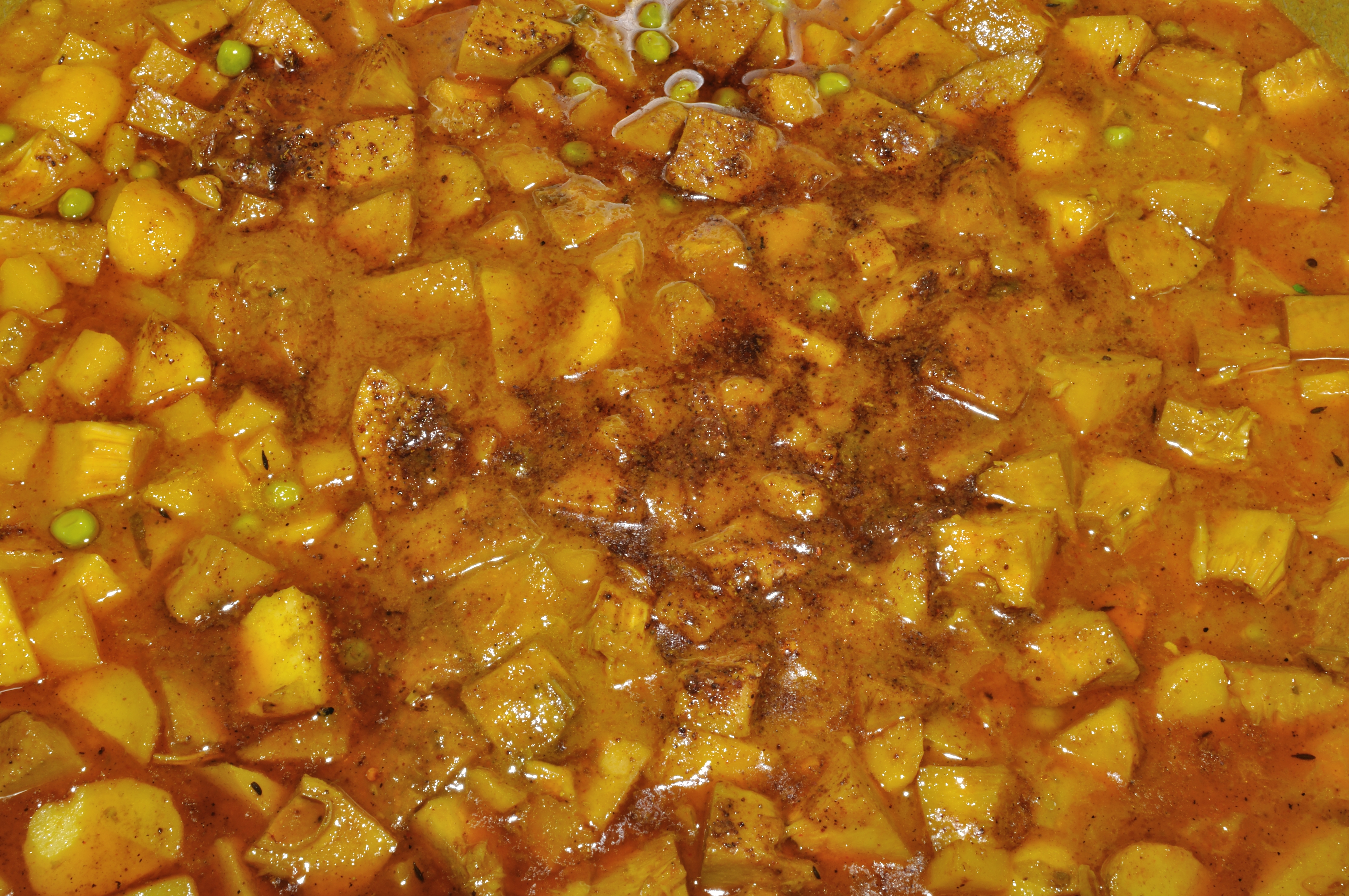
Jackfruit is the national fruit of Bangladesh. Banglapedia, citing figures for 2000 to 2007, put the area under the crop at 25,110 hectares and annual output at 469,500 tonnes, about 22 percent of the country's fruit production.
The official figures have since grown considerably. Prothom Alo reported on 19 July 2025 that, according to the DAE, jackfruit was grown on 58,700 hectares in the 2023-24 fiscal year, and that the country produced 1,830,131 tonnes that year, 6,131 tonnes more than the year before. Citing the Food and Agriculture Organization (FAO), the paper said India leads world production with 2 million tonnes a year and Bangladesh comes second. According to the DAE, it added, jackfruit ranks after mango among the country's fruits; mango production in 2023-24 was 25.09 lakh tonnes.
Jackfruit is grown in almost every district, but the same report named five that lead commercial production: Gazipur, Bandarban, Rangamati, Tangail and Khagrachhari. A DAE horticulturist, Md Moinul Haque, told the paper that jackfruit does well where the soil is reddish and the land slightly raised, and that although Gazipur produces the most, the jackfruit of Mymensingh is the tastiest.
A large share of the crop is never sold. The Daily Star reported in 2019 that, reportedly, up to 50 percent of the jackfruit grown in Bangladesh goes to waste, partly because the fruit spoils if it is not eaten or preserved within a few weeks. Prothom Alo's 2025 report said people in the trade see a certain reluctance towards jackfruit in a season crowded with mangoes, pineapples and lychees, and problems in storing and marketing it.
New varieties for a longer season
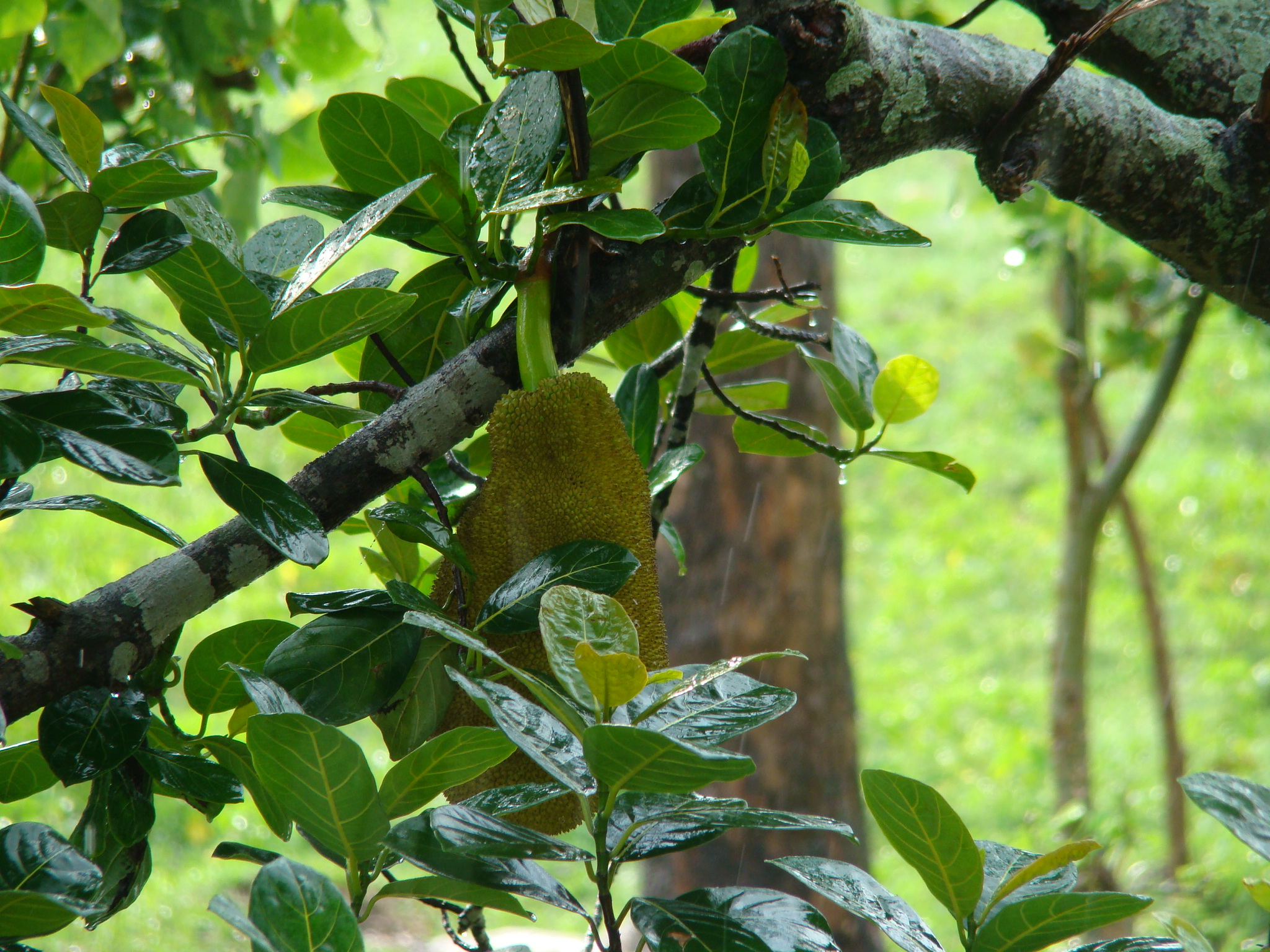
The short season and the latex have long held back commercial jackfruit farming. Prothom Alo reported from Gazipur on 19 September 2023 that scientists at BARI had developed a new variety, BARI Kanthal-6, recently released by the National Seed Board of the Ministry of Agriculture. BARI had earlier released five varieties, BARI Kanthal-1 to BARI Kanthal-5.
According to that report, the new variety bears fruit year-round, starts fruiting about a year and a half after a grafted seedling is planted, and has firm, bright yellow pulp without latex. Zillur Rahman, chief scientific officer of BARI's fruit division, told the paper that its average fruit weight was 3.93 kg, its sweetness (total soluble solids) 24.8 percent and its average yield 10.6 tonnes per hectare.
The report explained why grafting mattered. Jackfruit has traditionally been grown from seed, and such trees bear only seven or eight years after planting, without keeping the parent tree's variety, taste, sweetness or aroma. The BARI team first succeeded in raising grafted seedlings in 2009; wider research on high-yielding year-round grafts began in 2018 with funding from the Krishi Gobeshona Foundation and succeeded in 2021. Of 15 seedlings planted in a demonstration field, 13 bore fruit within a year and a half, in May and June 2023.
The Daily Star's 2019 report described other efforts: the DAE had found a jackfruit in Rangamati that bears in winter and had grafted more than 150 trees experimentally, and it had brought latex-free jackfruit from Vietnam for commercial chips production. In Prothom Alo's 2025 report, BARI's fruit division director, Mashiur Rahman, said varieties had been developed so that jackfruit is available all year, and that the country then had six varieties.
Exports and processing
Most of the crop is eaten at home. Figures from the DAE's Plant Quarantine Wing, quoted by the Daily Star in 2019, show exports of 835.072 tonnes in the 2013-14 fiscal year, rising to 1,003.437 tonnes in 2017-18, with the fruit going to the United Kingdom, Italy, France, Greece, Germany and other European and Middle Eastern countries. Prothom Alo reported that in 2023-24 Bangladesh exported 2,081 tonnes, against 26,660 tonnes exported by India in the same year, mainly to the United Kingdom, France, Germany, Sweden and Ireland.
FAO picked jackfruit as Bangladesh's product under its One Country One Priority Product (OCOP) initiative. An FAO Programme Committee paper of October 2023 says the first global OCOP project, with a budget of USD 500,000, started in October 2022 in five demonstration countries to promote jackfruit in Bangladesh, date palm in Egypt, banana in Malawi, cocoa in Trinidad and Tobago and sweet cherry in Uzbekistan.
Under that initiative a study, The Jackfruit Value Chain in Bangladesh, was published in 2023. As Prothom Alo summarised it, the study found that the country had no significant jackfruit processing industry or entrepreneurs, that value addition at the processing stage was only 10 percent, and that at least 30 kinds of products can be made from jackfruit. Its recommendations included better varieties, pest control and fertiliser use, a greater presence in international markets for jackfruit and its processed products as an alternative to vegetable meat, and making sure growers receive government subsidies.
Mashiur Rahman told Prothom Alo that jackfruit is a promising fruit but its exports are very low, and that if value can be added its prospects will grow and entry into world markets will become easier. The paper also reported that Square Food and Beverage and ACI Agro were, with FAO support, taking up the making of jackfruit vinegar and frozen products, and that jackfruit pickle had become fairly popular.
Photo: Biswarup Ganguly / Wikimedia Commons (CC BY 3.0)
Sources: Jagonews24 (18 May 2026), Banglapedia, Julia F. Morton, Fruits of Warm Climates (1987, Purdue University NewCROP), International Journal of Food Science (Ranasinghe, Maduwanthi and Marapana, 2019), The Daily Star (5 June 2019), Prothom Alo (18 June 2019, 19 September 2023 and 19 July 2025), Food Composition Table for Bangladesh (INFS, University of Dhaka, 2013; FAO), FAO Programme Committee (October 2023), World Health Organization



Comments
(0)