
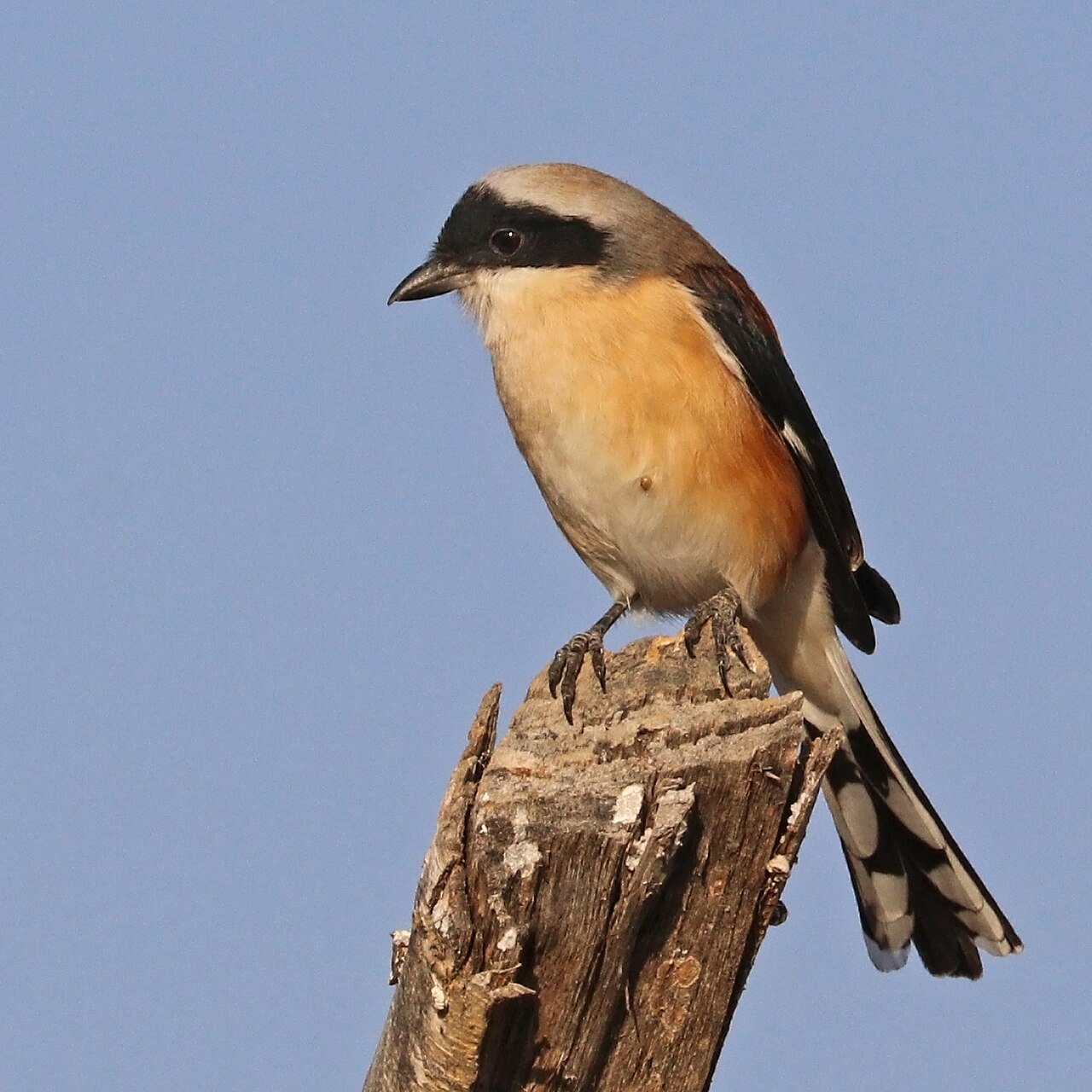
On 4 May 2018, researching the breeding of rare birds at Babudaing in Chapainawabganj, A N M Aminur Rahman, a bird and wildlife breeding and medicine specialist at Gazipur Agricultural University, saw a copper, orange, grey and white bird preening at the top of a sissoo tree. Soon he found its chick in another sissoo nearby, quietened when an adult pushed an insect into its mouth, and by the end of the day he had located the nest and both parents. He describes the encounter in Prothom Alo.
The bird is the bay-backed shrike (Lanius vittatus), family Laniidae. It has no common Bengali name in Bangladesh; some call it tamapith latora or koshai, and in West Bengal it goes by several names including chhoto latora, the name the writer chose because it is the smallest of Asia's shrikes. It is a rare resident in Bangladesh, though some birds arrive as winter migrants. He first saw one on 29 December 2015 on a bean trellis at Purbachal, and last on 25 December 2023 on char 10 of the Padma in Rajshahi.
The shrike is 17 to 20 centimetres long and weighs 18 to 26 grams. Adults have a broad black mask through the eye reaching across the forehead, an ash-grey crown and nape, a rust-brown back, black wings and tail with white patches, white underparts and deep orange-brown flanks. Males and females look alike.
It is found mainly in Chapainawabganj, Rajshahi, Dhaka and Chattogram, on farmland, along rows of acacia and sissoo, in thorny scrub and open orchards, alone or in pairs. It eats insects, lizards, snakes, frogs, young rats, small birds and nestlings, and like other shrikes impales live prey on the thorns of acacia, wood apple or other spiny trees. It can mimic other birds' calls.
It breeds from February to September, building a flat cup of grass and leaves in a fork 2 to 3 metres above the ground and laying 3 to 6 eggs. The eggs hatch in 14 to 15 days and the chicks fly 14 to 15 days later. Both parents incubate and feed the young. It lives up to 8 years.
Photo: Charles J. Sharp / Wikimedia Commons (CC BY-SA 4.0)
Source: Prothom Alo



Comments
(0)