
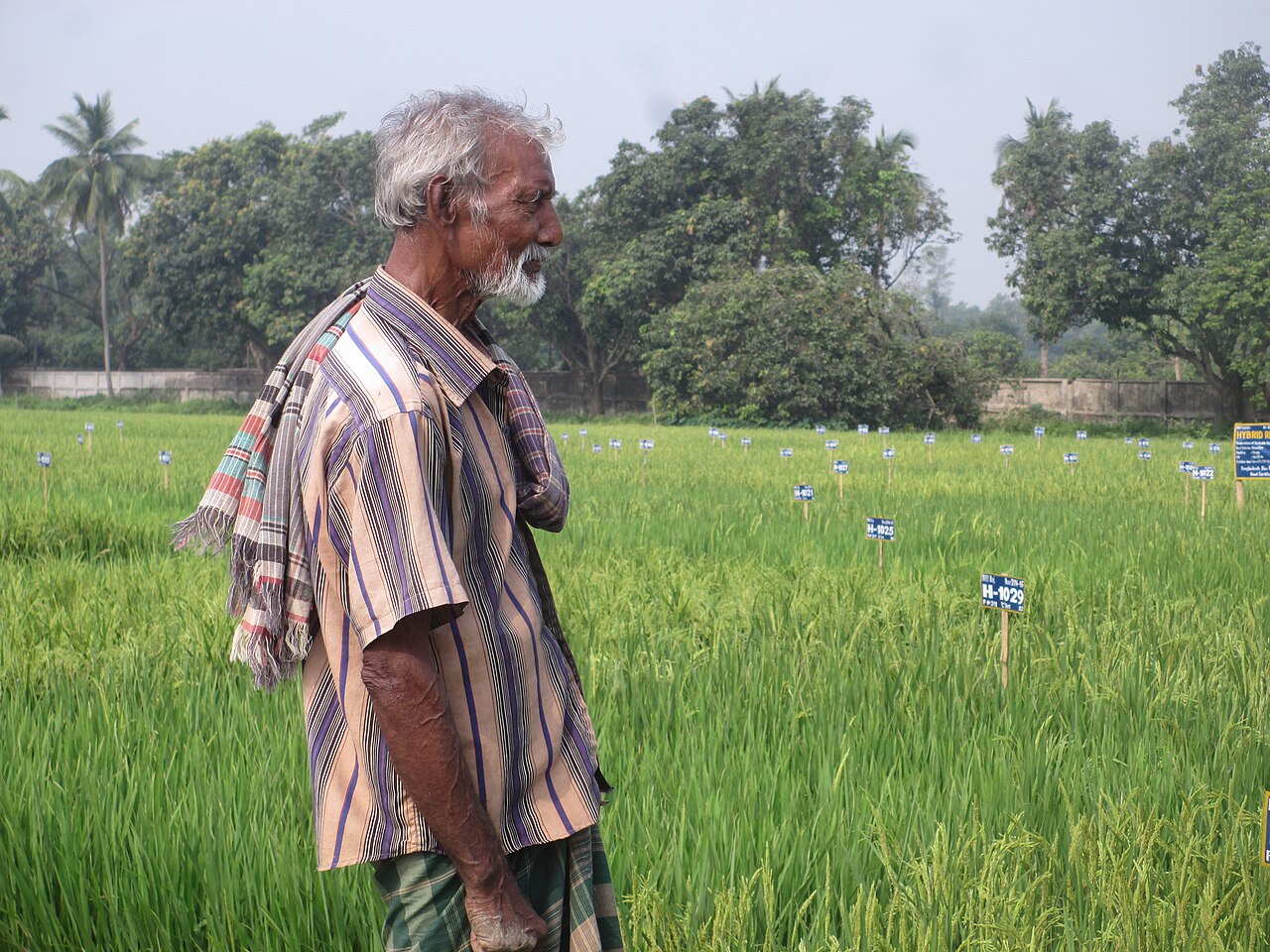
In Tanore upazila, Rajshahi, transplanted aman paddy is turning yellow and reddish under what farmers call a "satra" pest attack, and in many places the plants have slumped or died. The problem has spread across fields from Tanore to Mundumala, Krishi Shomoy reports, and farmers fear the affected plants will not produce ears.
Abul, a farmer at Billi in Kalma union, planted five bighas of transplanted aman; nearly all of it is affected, one bigha badly. Insecticides meant for brown planthopper and rot have done nothing, and he has spent Tk 12,000 to 14,000 on that bigha. Jaidur of Pranpur Pathakata village in Panchandar union has the problem on one of his 20 bighas, as do several neighbours.
Farmers believe this is the first year they have seen it, so they do not know how to control it. Many sprayed on the advice of pesticide shopkeepers, without result. Saheb Ali of Joshpur village said he first took it for planthopper or rot, but since spraying the leaves look more scorched every day. Farmers also complain that no one from the agriculture office has visited their fields.
They say the land suffered intense drought from planting onwards. Aman is normally grown on rain, but this year seedlings had to be transplanted with irrigation water and irrigated several times afterwards. Drought brought heavy weeds, costing Tk 4,000 to 6,000 a bigha to clear, and pesticide and fertiliser prices have risen. With the crop two and a half to three months old, costs have reached Tk 14,000 to 16,000 a bigha, about double a normal year.
Tanore upazila agriculture officer Saifullah Ahmed said zinc deficiency or nematodes could cause such symptoms, but nothing can be said for certain without visiting the fields. The problem is not unknown to them and has appeared in some places, he said.
Reporting: Rajshahi correspondent, Krishi Shomoy
Photo: Nasir4501 / Wikimedia Commons (CC BY-SA 4.0)
Source: Krishi Shomoy

Comments
(0)