
The Barahi, Swaramangala and Daya rivers once ran through the heart of Rajshahi. Boats carried goods on them and silk factories stood on their banks. As the city grew the rivers were buried, and much of their old courses are now drains that carry the city's wastewater into the Baranai river, which is becoming unusable and losing its fish, Banglanews24 reports.
The Swaramangala began at Talaimari; fed from the Padma, it gave rise to the Daya before reaching today's RUET area. After a flyover over the railway was taken up in 2019, the wetland beside the Rajshahi University graveyard was filled in, and the last visible stretch of the Daya's old course disappeared. The Barahi left the Padma and ran about 15 kilometres to join the Baranai at Mahanandakhali in Paba upazila; its mouth is now a large drain known locally as "Drain Number One".
Reporters found untreated waste from the city's hospitals and clinics, waste from the BSCIC industrial area, chemical-laden water from mills and factories, household waste and sewage flowing straight into the Baranai. The drain on the Barahi's course meets the Baranai at Duari in Paba, and the Paba Gangpara and Baya-Mahanandakhali canals carry polluted water to it as well.
Fish recently died and floated up along the Baranai from Bagmara in Rajshahi to Naldanga in Natore, as they also did in 2022. Md Omar Ali, the Natore district fisheries officer, said tests of water and fish samples this time showed a rapid fall in oxygen and a rise in ammonia. Several causes combined, he said: cloudy weather lowered the oxygen, while the city's waste and the residue of jute retting in the river flowed downstream together.
Residents say people along the river suffer ringworm, fungal infections, scabies and other skin diseases. A volunteer group in Nowhata, Paba, the Banchar Asha Sangskritik Sangathan, surveyed the basin last year and says about 300,000 people in seven upazilas of Rajshahi and Natore have skin diseases from using the river water. Its president, Golam Mostafa Bijli, said the health camps it ran with the civil surgeon's help fell far short of the need.
River researcher Mahbub Siddiqui said the city corporation and WASA must build a waste treatment plant. Jamat Khan, president of the Rajshahi branch of Bangladesh Poribesh Andolon (BAPA), called for the lost rivers to be recovered using the RS and CS land records. Rajshahi WASA's chief engineer, Parvez Masud, said a treatment plant project has been prepared and funding is being discussed with JICA. Sheikh Md Mamun, the city corporation's chief conservancy officer, said it is also planning a plant, but nothing has been finalised.
The report is by Banglanews24's divisional correspondent in Rajshahi.
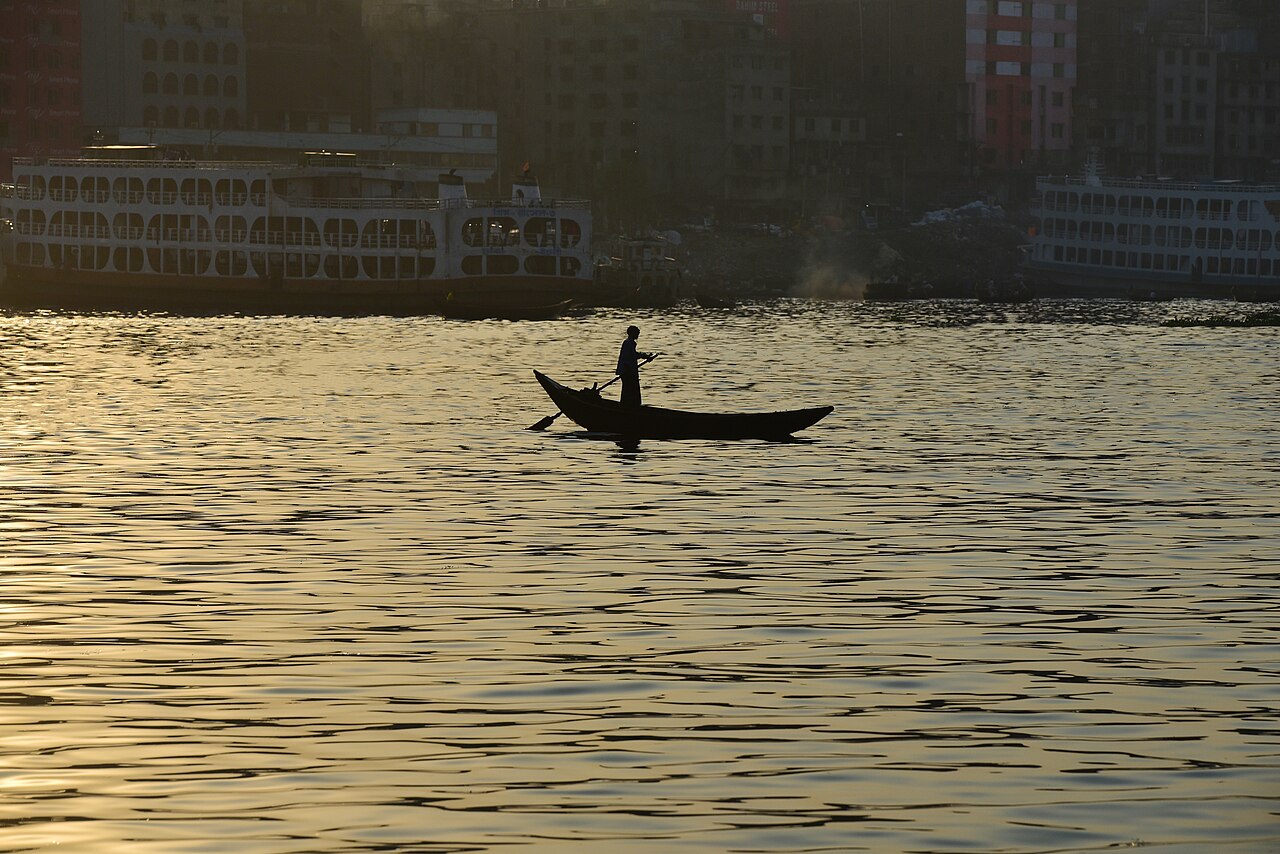
Photo: Emonjnu / Wikimedia Commons (CC BY-SA 4.0); an illustrative picture of polluted water in the Buriganga, Dhaka
Source: Banglanews24

Comments
(0)