
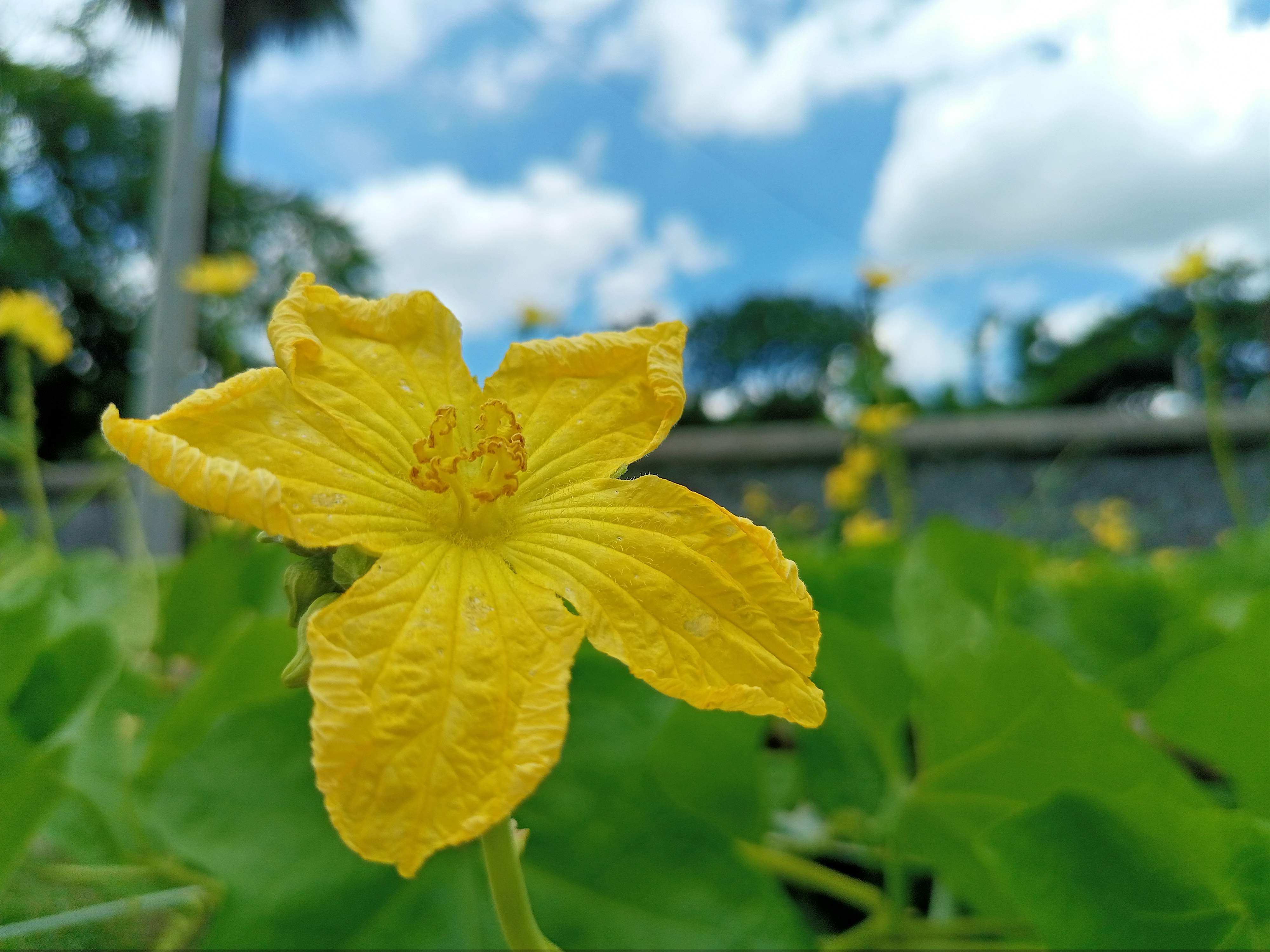
On Sunday, 18 January 2026, the lifestyle desk of Jagonews24, an online newspaper based in Dhaka, published a recipe for kumro phuler bhorta, or pumpkin flower bhorta. The desk described it as a dish of village kitchens in Bengal with a flavour all its own: it is made from very ordinary ingredients, yet its aroma and taste carry the familiar warmth of home cooking. When fresh pumpkin flowers turn up in the market, the paper noted, many people wonder what to cook with them. With a little care and the right method, the flowers make a tasty bhorta that goes very well with hot rice. The recipe follows, with background on the plant the flowers come from, how the crop is grown in Bangladesh, what the flowers contain according to United States Department of Agriculture data, and the other ingredients that give the bhorta its character.
The recipe as Jagonews24 published it
The paper gave the ingredients without a fixed weight of flowers, leaving the quantity to the cook. Its list was as follows.
- Pumpkin flowers, as many as needed, with the stalks and inner parts cleaned out
- Chopped onion, 1
- Green chillies, 2 to 3
- Chopped coriander leaves, 2 tablespoons
- Salt to taste
- Mustard oil, 1 to 2 tablespoons
- Black cumin (kalonji) or panch phoron, half a teaspoon
The method, in the order the desk gave it:
- Remove the tough stalks and the pollen-bearing parts inside the pumpkin flowers, wash the flowers well and let the water drain.
- Put a little water and salt in a pan and boil the flowers for 5 to 7 minutes. When they turn soft, drain off the water and set them aside.
- Take the boiled flowers in a bowl. Add the chopped onion, green chillies, chopped coriander leaves, salt and mustard oil, and mix everything well with the hands.
- In another small pan, heat a little mustard oil and lightly fry the black cumin or panch phoron.
- Pour this tempering over the bhorta and mix it in well.
- Serve the pumpkin flower bhorta with hot rice.
The recipe stops there. It does not name a pumpkin variety, and it does not say whether male or female flowers should be used; the sections below explain what the plant itself and agricultural sources say on that point.
What a pumpkin flower is
Banglapedia, the national encyclopedia of Bangladesh, describes the pumpkin, known locally as mistikumda, as a popular vegetable of the summer and rainy season. It names the plant Cucurbita maxima and calls it a good source of carbohydrate, vitamins A and C and minerals. The encyclopedia says the pumpkin is thought to be native to North and South America and that its leaves, vines, flowers and fruits are all eaten as vegetables. Its entry on gourds adds that the pumpkins most popular in Bangladesh are yellow-flowered, and that in rural areas gourds are largely grown in homestead gardens on bamboo platforms or over thatched roofs. Another common pumpkin species, Cucurbita moschata, is grown widely across the tropics; encyclopedic references note that its cultivars tolerate hot, humid weather better than most other domesticated squashes and that it is cultivated for its flesh, flowers, greens and seeds.
Pumpkins are monoecious: each plant carries separate male and female flowers. A guide on commercial pumpkin production from New Mexico State University's Cooperative Extension Service, revised in May 2018, explains that bees are usually needed to carry pollen from one to the other, and that the first flowers of the season are usually male, with the fruit-bearing female flowers following later. A fact sheet by Penn State Cooperative Extension adds that the first eight flower buds on a new plant usually form only male flowers, and that the first female flower typically opens about a week after the first male.
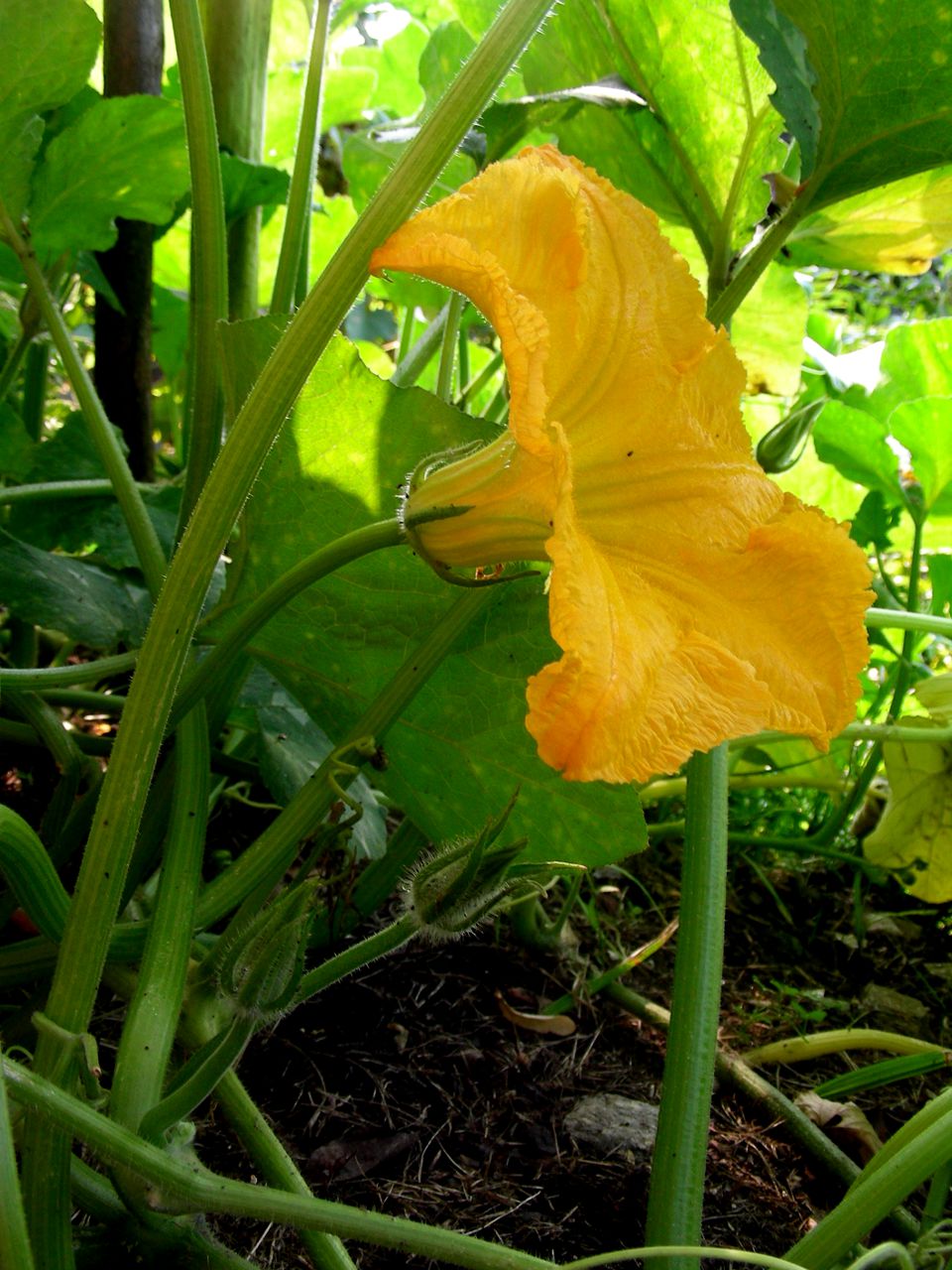
The two kinds are easy to tell apart. A female flower sits on top of a small swollen ovary, the young fruit that becomes a pumpkin if it is pollinated. A male flower grows on a plain, slender stalk and carries the pollen. According to the Penn State fact sheet, male flowers produce both nectar and pollen, while female flowers offer more nectar but no pollen. The flowers are short-lived: they open at dawn and, in most cultivars, close well before noon, staying open for only several hours.
Which flowers to pick, and why it matters to the crop
For a household or a farmer, the choice of flowers is not only a kitchen question. Penn State Extension states that pumpkin plants set fruit only if they are pollinated by insects, that bees carrying pollen from male flowers to female ones do this work, and that pumpkin pollen is relatively large and sticky. Poor pollination, the same fact sheet says, leads to aborted flowers or misshapen fruit. It also lists conditions that cut fruit set, among them drought, which can raise the ratio of male to female flowers, too much moisture in the soil for long periods, and very high temperatures over several days.
Because a female flower is a future pumpkin, picking it removes a fruit. New Mexico State University's guide says there are more male blossoms than female blossoms on a plant, and that a limited harvest of male blossoms probably will not affect yields. Encyclopedic references on squash blossoms make the same point: male and female flowers can be cooked in the same way, but picking only male flowers, and leaving some for pollination, lets the plant go on producing fruit.
Household custom does not always follow this. In a feature on edible flowers published on 9 March 2023, the Bengali edition of The Daily Star noted a common saying that it is usually the female pumpkin flower that is eaten, not the male. A grower who wants both flowers and fruit can follow the extension advice: take the slender-stalked male flowers, leave enough of them for the bees, and spare the flowers with a swelling at the base.
Timing also matters in the kitchen. Since the flowers open at dawn and close before midday, they are easiest to pick, check and clean in the morning. Squash blossoms are also highly perishable, which is why, encyclopedic references note, they are rarely stocked by supermarkets in countries where they are eaten. That perishability is part of why the Jagonews24 recipe speaks of fresh flowers bought at the market and cooked the same day.
Pumpkin in Bangladesh's fields and markets
Banglapedia's account of the crop gives the pumpkin an area of about 14,000 hectares in Bangladesh. The plant may be grown by sowing seed directly or by transplanting two-week-old seedlings, and fully ripe pumpkins are harvested within about 90 days of sowing. The average yield it gives is 20 to 25 tonnes a hectare, and it names two local varieties, Bikrampuri and Baromashi. Ripe whole fruits can be kept dry for several months. The encyclopedia's general entry on vegetables lists the pumpkin among the major summer vegetables of the country, and among the few, with brinjal, okra and red amaranth, that grow in both the summer and winter seasons.
Reports from the previous winter, the 2024-25 season, show how widely the crop is grown, and how hard its prices can fall. On 30 January 2025, the Bengali edition of The Daily Star carried a UNB report from Chandpur. Citing the district office of the Department of Agricultural Extension (DAE), it said pumpkin had been grown on a total of 1,135 hectares in the district that season, with a bumper yield everywhere and total output of 24,971 tonnes. The agriculture officer of Hajiganj upazila said pumpkin had been grown on at least 618 hectares in that upazila alone, against 286 hectares in 2023. With few wholesale buyers arriving, some farmers told the reporter they were selling pumpkins as cattle feed at 8 taka a kilogram.
Three days later, on 2 February 2025, the same paper reported from the Arial Beel, which spreads over a large part of Sreenagar upazila in Munshiganj in the middle of the country. The paper described the beel as covering 260 square miles, or 166,000 acres, of fields, water bodies and settlements, with not a single plot left fallow; in the dry season farmers grow pumpkins on the raised banks of its ponds and canals, which local people call danga. Farmers there said they had sold pumpkin for 30 to 32 taka a kilogram the year before, but that the price had dropped to 10 to 12 taka. They grow two kinds, a local pumpkin that grows large but suffers more from rats and insects, and hybrids. The DAE's deputy director in Munshiganj said pumpkin had been grown on 225 hectares in the district that season, and said farmers were selling at 15 to 20 taka a kilogram.
Those reports concern the fruit, not the flower, but they describe the same vines. Where pumpkins are grown on such a scale, and in countless homestead gardens besides, the male flowers that appear in large numbers before and alongside the female ones are a seasonal vegetable in their own right.
What the flowers contain, and how cooking changes it
The Jagonews24 desk called the bhorta nutritious. The United States Department of Agriculture's FoodData Central database, in its Standard Reference records published in April 2019, gives figures for pumpkin flowers that show what that means. Per 100 grams, raw pumpkin flowers contain 95.2 grams of water and provide 15 kilocalories, with 1.03 grams of protein, 3.28 grams of carbohydrate and 0.07 grams of fat. The same 100 grams carry 28 milligrams of vitamin C, 97 micrograms of vitamin A (as retinol activity equivalents), 59 micrograms of folate, 39 milligrams of calcium, 173 milligrams of potassium, 24 milligrams of magnesium, 0.7 milligrams of iron and only 5 milligrams of sodium.
The database also records pumpkin flowers that have been boiled and drained, as the recipe does. Boiled flowers still provide 15 kilocalories per 100 grams, with 1,040 micrograms of beta-carotene, 87 micrograms of vitamin A, 0.9 grams of dietary fibre and 0.88 milligrams of iron. Other figures change: vitamin C is listed at 5 milligrams, folate at 41 micrograms and potassium at 106 milligrams per 100 grams. Salt in the cooking water makes the biggest difference. Boiled without salt, the flowers carry 6 milligrams of sodium per 100 grams; boiled with salt, the USDA figure is 242 milligrams. The recipe adds salt twice, once to the boiling water and again when mixing, so the cook controls how salty the dish becomes.
The World Health Organization's fact sheet on a healthy diet, in the version in force at the time, advised adults to eat at least 400 grams, or five portions, of fruit and vegetables a day, not counting potatoes, sweet potatoes, cassava and other starchy roots, and recommended always including vegetables in meals and eating vegetables that are in season. It also noted that most people consume too much sodium, an average of 9 to 12 grams of salt a day, and recommended less than 5 grams a day, partly by limiting the salt added during cooking. Among its suggestions for cutting fat, it listed steaming or boiling instead of frying. These are general guidelines for healthy adults, not medical advice: anyone on a salt-restricted or other special diet should ask a doctor how much salt and oil suits them.
The other ingredients: onion, chilli, coriander and mustard oil
Every other item in the recipe is a familiar crop of Bangladesh. Banglapedia describes the onion, Allium cepa, as a bulbous herb whose pungency comes from a volatile oil, allyl-propyl disulphide, and which possibly originated in western Asia; it is grown in all districts, with Faridpur the largest producer, and is used both as a vegetable and as a spice. Chilli, the encyclopedia says, came originally from Mexico and is grown in both summer and winter; in rural areas green chilli is commonly eaten with panta bhat, and both green and dry chillies are used in curries.
Coriander, Coriandrum sativum, is a strong-smelling annual herb native to the Mediterranean region, which Banglapedia says is extensively grown as a winter crop in Bangladesh, sown in October and November and maturing in 90 to 105 days. Its young plants are used in chutneys, sauces, curries and soups. Encyclopedic references add that linalool is the main constituent of the essential oil that gives coriander its aroma, and that people perceive the taste of the leaves differently, partly for genetic reasons.
Mustard oil gives the bhorta its sharpness. Banglapedia notes that only a few decades ago mustard oil was the exclusive cooking oil of Bangladesh, traditionally pressed from the seed in a ghani, a mill turned by a bullock, and now in electric mills. Mustard is grown in almost every district, with comparatively larger areas in Chittagong, Sylhet, Dhaka, Tangail, Jessore, Bogra, Sirajganj and Pabna, but local oil meets only a fraction of the country's cooking oil needs. The oil's pungent flavour comes from allyl isothiocyanate, a compound found in plants of the mustard family, and the pressed oil is a feature of Bengali and Bangladeshi cooking.
Black cumin, panch phoron and the tempering
The last step of the recipe is a phoron, or tempering: whole spices fried briefly in hot oil and poured over the dish. The desk offered two choices. The first is kalonji, the seed of Nigella sativa, an annual flowering plant of the buttercup family, Ranunculaceae, native to western Asia and eastern Europe. Its seeds, also called black seed, black caraway or nigella, are used as a spice in many cuisines; the dry-roasted seeds season curries, vegetables and pulses, and they are one of the components of panch phoron. In the United States, the Food and Drug Administration classifies Nigella sativa as generally recognised as safe for use as a spice, natural seasoning or flavouring.
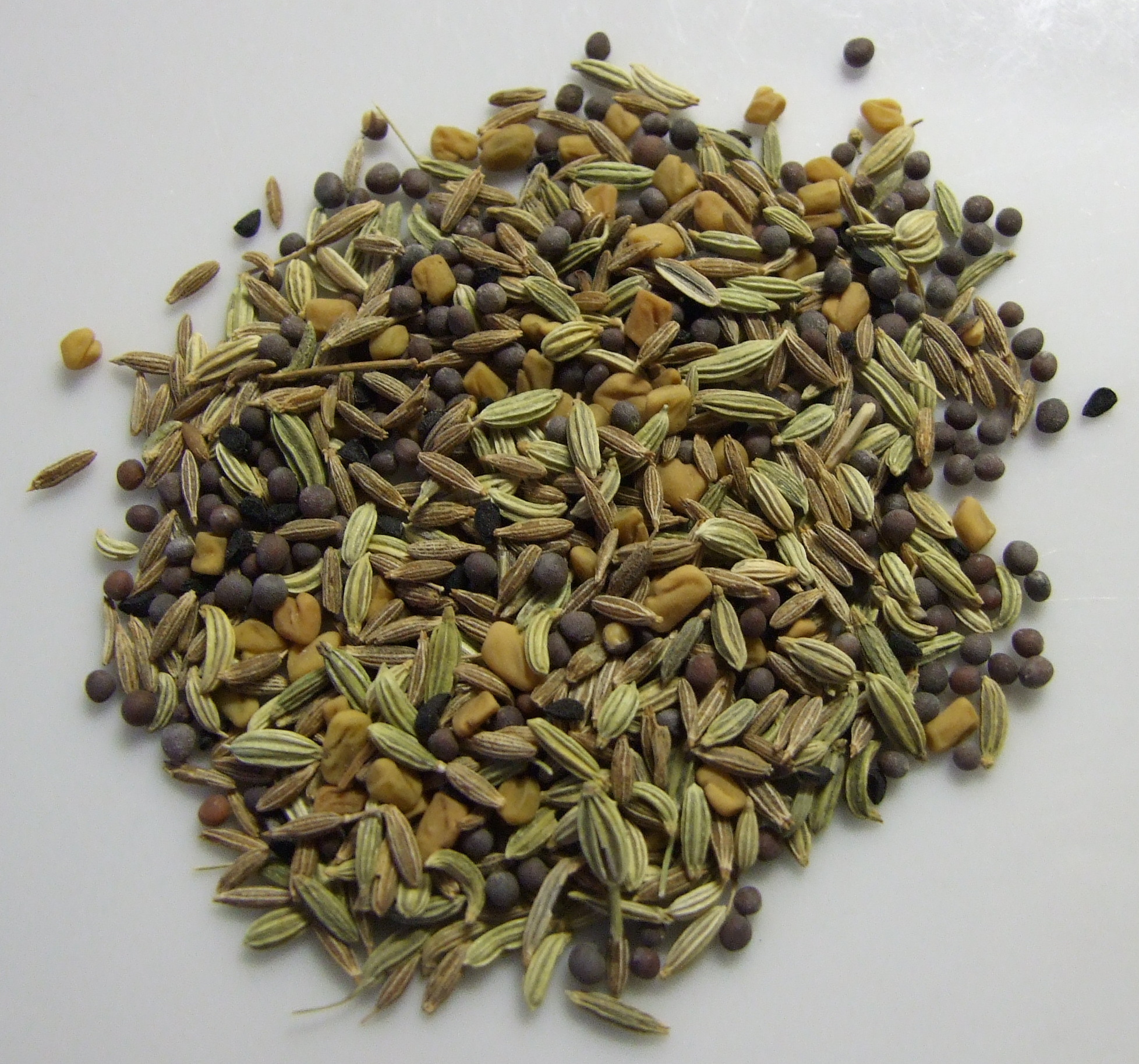
The second choice, panch phoron, means "five spices". It is a blend of whole seeds that originated in Bangladesh and eastern India and is used in the cooking of Bangladesh, West Bengal, Odisha, Assam and neighbouring regions. It usually consists of fenugreek, cumin, nigella, black mustard and fennel seeds in equal parts; black mustard is sometimes replaced by radhuni, the seed of wild celery, and some cooks use less fenugreek because of its mildly bitter taste. Unlike most spice mixes, panch phoron is always used whole, never ground, which is why it suits a quick tempering such as the one in this bhorta.
Flowers on the Bengali plate and beyond
Pumpkin flowers are one of several flowers that Bengali kitchens cook. In its feature of 9 March 2023, The Daily Star's Bengali edition described shapla, the water lily that is the national flower of Bangladesh, fried as fritters in rice flour or gram flour batter, with its stalks cooked as a curry; bok phul, which it said is most popular in the Mymensingh region and is usually fried; and the banana flower, mocha, which is peeled, steamed and cooked as a curry or fried. Pumpkin flowers, the feature said, are dipped in batter and deep-fried as bora, the form in which they are best loved, and some cooks also add them to curries. The writer recalled that in Humayun Ahmed's novel Nabani, pumpkin-flower fritters are made for special, happy occasions.
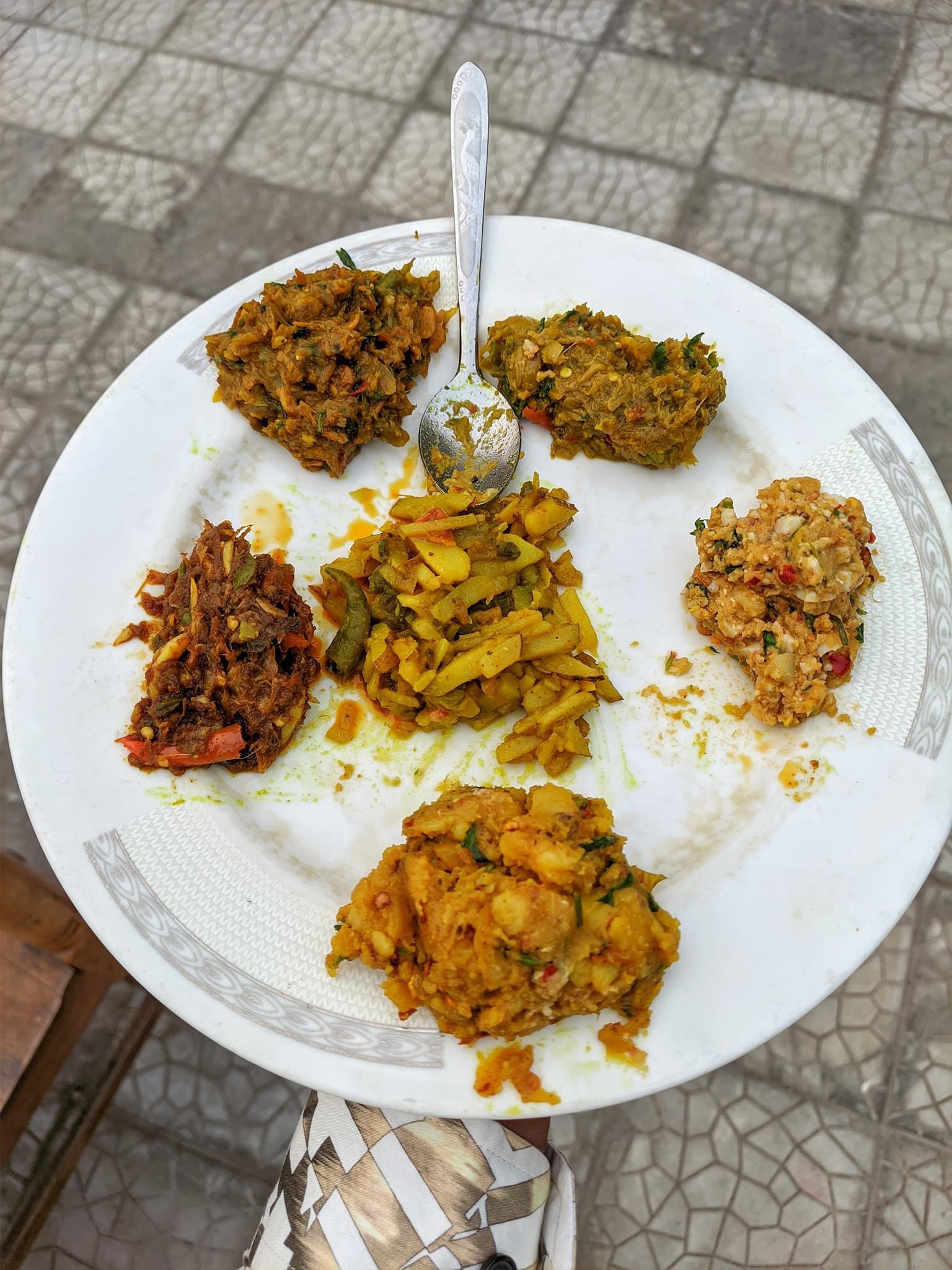
The bhorta in the Jagonews24 recipe takes a different route from the bora. The flowers are boiled rather than fried in deep oil, and the only oil in the dish is the one to two tablespoons of mustard oil used for mixing and for the tempering.
Elsewhere, squash and pumpkin blossoms are cooked in many ways. In central Mexico, flor de calabaza goes into soups and quesadillas, a use that dates back to pre-Hispanic indigenous cooking. In most regions of Italy, and parts of Catalonia in Spain, the flowers are made into fritters. In Turkey and Greece they are stuffed with rice, herbs and sometimes minced meat; the meatless version, cooked in olive oil, is served cold.
Cleaning and cooking the flowers safely
The recipe's first step, removing the stalk and the inner parts and washing the flowers well, is also its main food-safety step. The World Health Organization's Five Keys to Safer Food sets out five core messages for any home kitchen: keep clean; separate raw and cooked food; cook thoroughly; keep food at safe temperatures; and use safe water and raw materials. Applied to this dish, that means washing the flowers in safe water, using clean hands and utensils when mixing the bhorta by hand after boiling, and keeping the cooked bhorta apart from raw ingredients. WHO says the Five Keys poster has been translated into more than 87 languages and is used around the world to spread its food hygiene message.
Photo: MoonlitFrames / Wikimedia Commons (CC BY-SA 4.0)
Sources: Jagonews24, New Mexico State University Cooperative Extension Service, Penn State Cooperative Extension, USDA FoodData Central, World Health Organization, The Daily Star (Bangla), UNB, Banglapedia, Wikipedia



Comments
(0)