
When the words a person has prepared will not come out, the prayer of Prophet Musa (Moses) recorded in the Quran can be recited, writes Nahida Sultana, an Islamic scholar and essayist, in Prothom Alo. The prayer asks for calm of heart, ease in one's task, release from stiffness of the tongue and for speech that listeners understand.
God commanded Musa to go to Pharaoh, a powerful ruler, and call him to God's path. Before that hard task Musa prayed: 'Rabbishrah li sadri, wa yassir li amri, wahlul uqdatam min lisani, yafqahu qawli.' Its meaning: 'My Lord, expand for me my chest. Ease for me my task. Untie the knot from my tongue, so that they may understand my speech.' (Surah Taha, verses 25-28)
The writer reads the prayer in four parts. It first asks for an open chest, so that anxiety, hesitation and restlessness do not stand in the way of a heavy duty. It then asks for the task to be made easy, since human ability is limited; asking for ease before a speech, a lesson or an important discussion is, she writes, a fine lesson for a believer.
The third part asks directly for the knot in the tongue to be loosened, for the ability to speak clearly and fluently. The last asks that listeners understand. Speaking well, the writer says, achieves its purpose only when the meaning reaches the listener.
Its background is in Surah Ash-Shu'ara, verse 13, where Musa says his chest tightens and his tongue does not flow, and so asks for his brother Harun (Aaron), a more eloquent speaker, as a helper: 'And my brother Harun is more fluent than me in speech, so send him with me as a helper to confirm me.' (Surah Al-Qasas, verse 34) Admitting one's limits and seeking the help of the right person, the writer says, is wisdom rather than weakness.
The prayer can be recited when words get stuck, when nerves rise before speaking, and before teaching, speeches, examinations, interviews or important meetings. If a speech difficulty is long-lasting or seriously affects daily life, the writer advises practising slow speech and clear pronunciation alongside prayer, and seeing a speech therapist where needed.
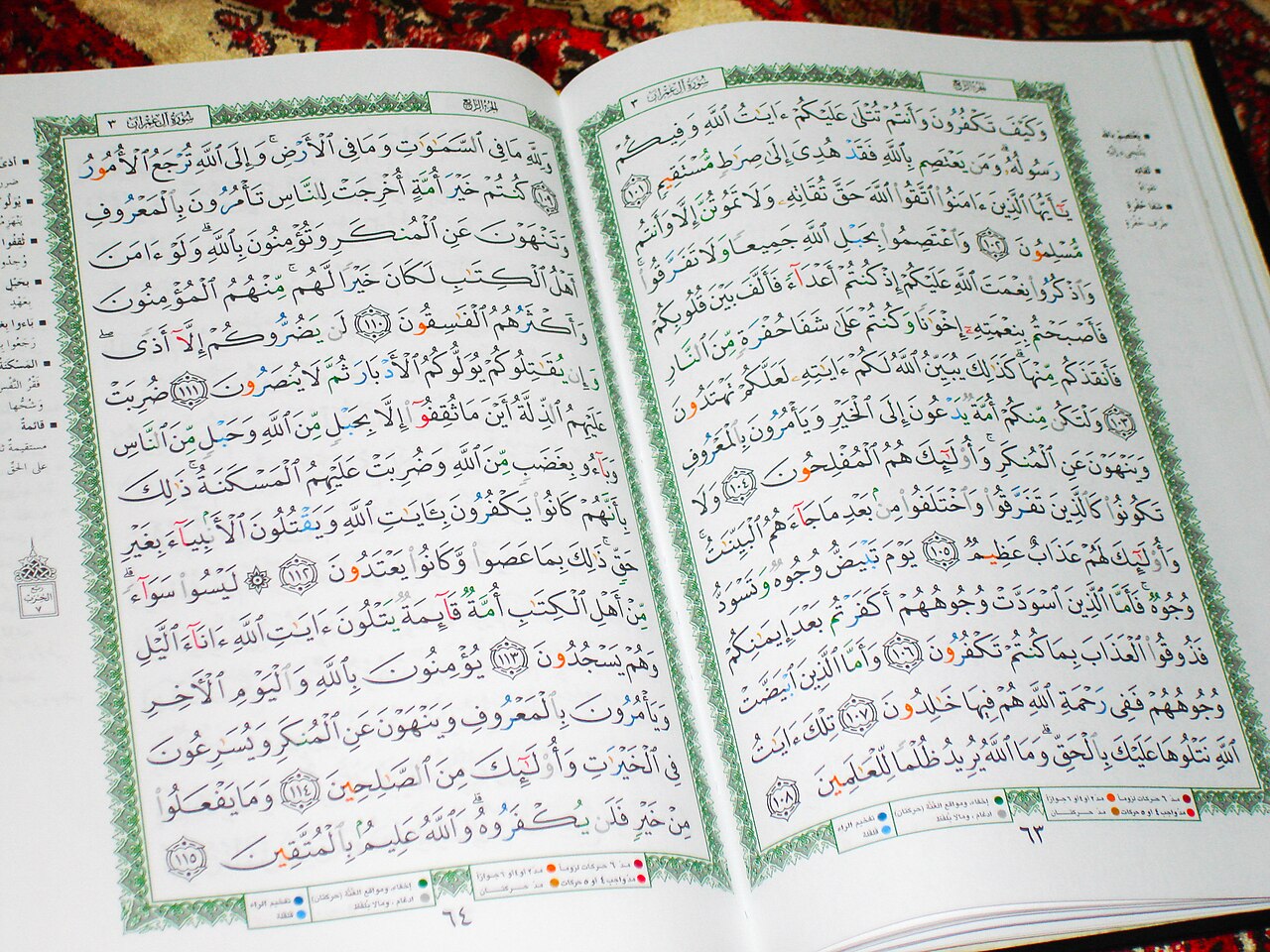
Photo: Amr Fayez / Wikimedia Commons (CC BY 2.5); a representative picture of the Quran
Source: Prothom Alo

Comments
(0)