
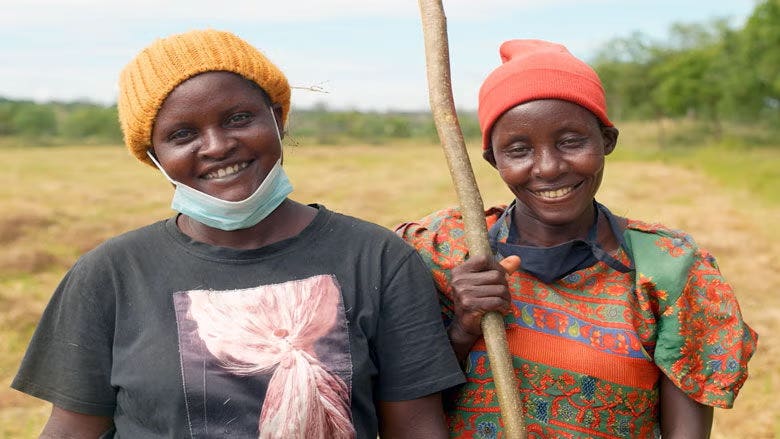
At 37, Sauli Bahati does not look like a typical farm manager. His arms are tattooed and his university degree is in mathematics. In Kenya's changing rural economy, he says, the stereotypes are breaking.
With Paul Sirari, his 31-year-old fodder manager, he surveys 3,000 acres of drought-resistant Maasai love grass — named for its heart-shaped seed, grown here as nutritious livestock feed that also improves soil health across African rangelands.
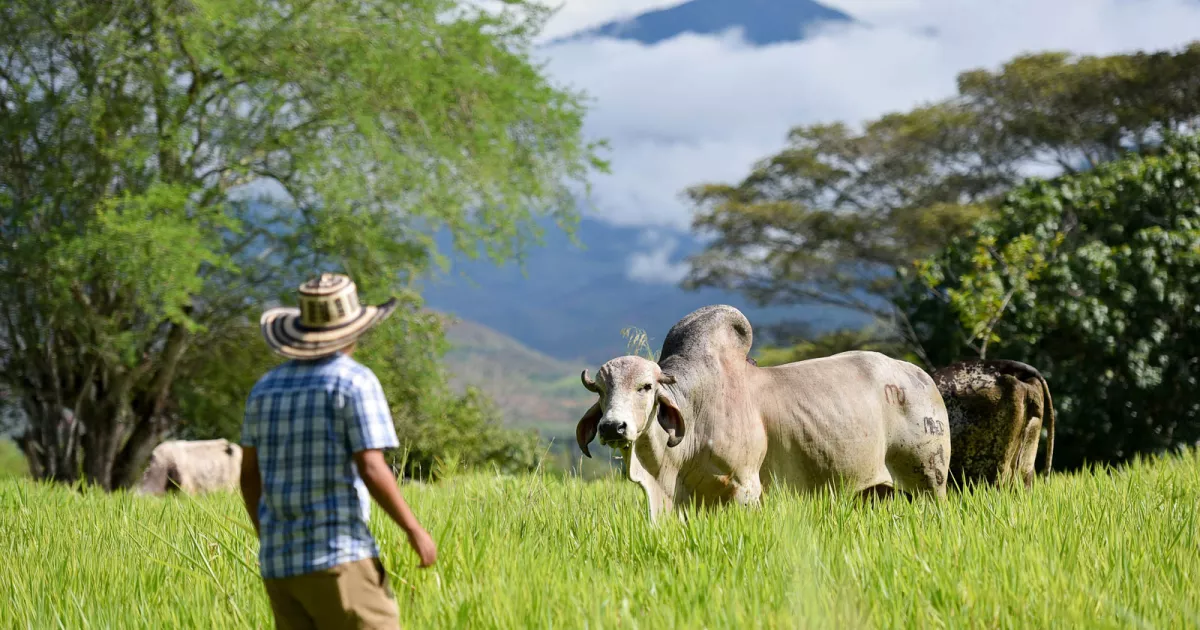
The commercial logic is simple. Kenya has a cattle population of about 18 million, and feeding it means hay production can be profitable, particularly in the drought years the country meets with grim regularity.
The farm, run by Eastern Green Ltd in Makueni County 130 km southeast of Nairobi, took a loan under DRIVE, a World Bank-backed programme designed to make cattle farming less risky across the Horn of Africa. At 9 percent a year the money is affordable in a country where borrowing rarely is. "If you were to take a normal loan to do a fraction of what we are doing, you would be splitting your money with the bank," Bahati said.
DRIVE identified ten private-sector opportunities linked to pastoralism and allocated $40 million between them. Eastern Green is the only one focused on fodder, and has put its investment into conservation agriculture.
The output travels. Workers winnow hay by hand before a tractor baler compresses it into 17-kilogram bundles that are trucked hundreds of kilometres to feed cattle and sustain pastoral economies. Each bale sells for between $0.60 and $0.90.
Profit is not guaranteed. Eastern Green needs about $30,000 a quarter in hay sales to cover its costs, and in the first quarter of 2025 — good rains, weaker demand — it came in just under that. Good weather is not always good business when your product is insurance against bad weather.
The scale of what is at stake is large: as many as 50 million people are pastoralists in the Horn of Africa, the biggest concentration of livestock keepers in the world, about 7 million of them in Kenya, where more than 60 percent of the population keeps at least a few animals.
Source: World Bank

Comments
(0)