
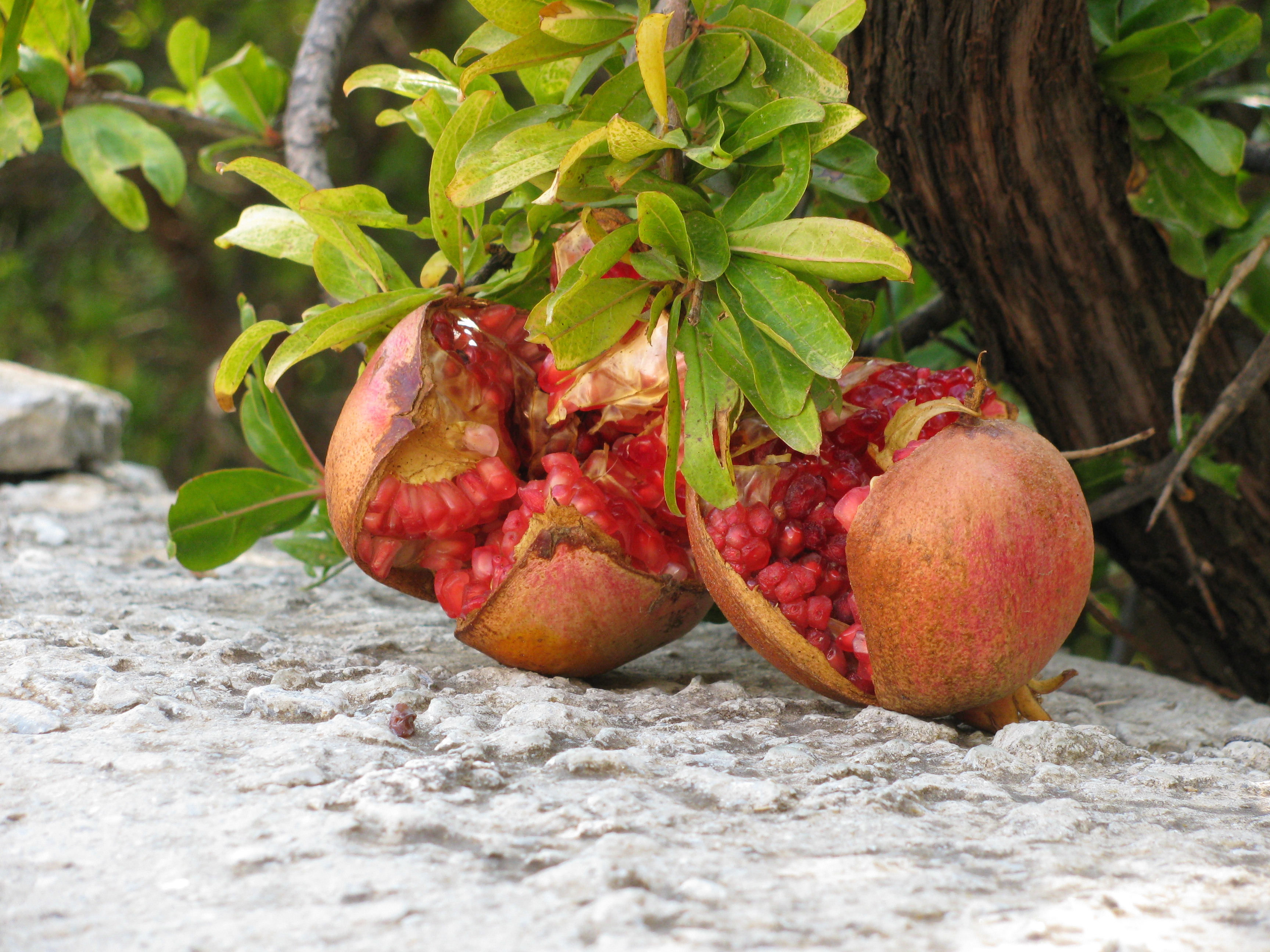
Abdullah, a 25-year-old student of Dawrah-e-Hadith from Jogihuda village in Maheshpur upazila of Jhenaidah, chose to grow pomegranates rather than spend years chasing a job, Jagonews24 reported on 13 September 2025. The orchard he planted on one bigha of his own land in late 2022 came into fruit two years later, and by September 2025 its trees were hanging with bright red pomegranates that he was selling in the local market.
He grew the Indian Bhagwa variety, looked after the trees himself and was selling the fruit at 300 to 350 taka a kilogram, he told the newspaper. The Maheshpur upazila agriculture officer, who had visited the orchard, described the fruit's taste, aroma and quality as very good. The state news agency BSS had carried a report on the same orchard two days earlier, on 11 September 2025.
A one-bigha orchard across the Kapotaksha
The orchard lies in Jogihuda, across the Kapotaksha river, according to the Jagonews24 correspondent who visited it. It held 91 trees on one bigha of land. Every tree was bearing, with an average of 50 to 65 fruits each, and some were putting out new buds at the time of the visit. The BSS report of 11 September, filed by the same Jhenaidah correspondent, gave slightly different figures: 87 trees, an average of 60 to 65 fruits per tree, and Abdullah's age as 24.
Abdullah said he did the work in the orchard himself. To keep insects down he used light traps and water traps alongside pesticides. Demand for his pomegranates was strong in the local market, he said, and the price he quoted, 300 to 350 taka a kilogram, appears in both reports. Besides pomegranates he grew other crops. Neither report gives the orchard's costs or its total earnings.
He wanted the orchard to show that study and farming can go together. "Getting a job is not the only purpose of education. I study to enrich my own knowledge," he told Jagonews24. "I think that instead of chasing a job year after year, one should do something of one's own. That thought is what led me to start growing pomegranates. Apart from pomegranates I have other crops as well."
An idea from YouTube, seedlings from Chuadanga
Abdullah said he was first drawn to the crop by pomegranate-growing videos on YouTube. He then collected seedlings from Mokarram, a pomegranate grower in Chuadanga, and began a trial on his own one bigha beside his home, planting 91 seedlings in late 2022. By the time of the reports every tree had fruit on it.
Chuadanga is Maheshpur's neighbour to the north. Banglapedia describes Chuadanga district as covering 1,174.10 square kilometres, bounded by Jhenaidah on the south and east and by the Indian state of West Bengal on the west, with four upazilas; it was part of Nadia district before the partition of 1947 and became a district in 1984. Its Jibannagar upazila borders Maheshpur.
Earlier reports show that Chuadanga had already become a source of pomegranate saplings for growers elsewhere in the country. In January 2022 Bangla Tribune reported that a college student in Pakundia upazila of Kishoreganj had planted 150 saplings of an Indian pomegranate variety on one bigha of fallow land beside his house after learning about the crop on YouTube, and that he had bought the saplings from Chuadanga with the help of the local agriculture office. A sub-assistant agriculture officer in Pakundia told the paper that pomegranate farming was new in Bangladesh and that saplings had been hard to find. The deputy director of the agriculture department's Khamarbari office in Kishoreganj said local farmers had not known that the fruit could be grown in the country, and that it was imported and expensive.
Why pomegranate: a fruit the country imports
Asked why he chose pomegranate over other fruits, Abdullah said: "Pomegranate is a very valuable fruit. Pomegranates worth crores of taka are imported from abroad every year. If we can increase pomegranate cultivation in the country, dependence on imports will fall. At the same time the country's economy will be enriched." He made the same point to BSS, adding that growing more at home would save foreign currency.
Banglapedia, the national encyclopedia, lists pomegranate among the fruits cultivated in Bangladesh and, at the same time, among the common imported fruits, together with orange, apple, grape, date and mandarin. In August 2017 Prothom Alo reported that about 31.8 million kilograms of pomegranates had been imported in the 2016-17 fiscal year, making pomegranate the fourth largest imported fruit, and that Bangladesh was buying fruit from 46 countries.
Most of these pomegranates come from India. Indian export figures for 2020-21, reported in January 2022, showed India exporting 68,502.9 tonnes of pomegranates that year, of which 36,906.77 tonnes, more than half, went to Bangladesh. The reasons given were ease of transport, relatively relaxed import rules and the fact that shipments to Bangladesh can continue all year. A brochure published by India's National Horticulture Board in October 2022 showed Bangladesh taking 41 per cent of India's fresh pomegranate exports, ahead of the United Arab Emirates at 28 per cent, Nepal at 7 per cent and the Netherlands at 5 per cent.
Imported fruit became costlier from 2022. The Daily Star reported in February 2023 that the National Board of Revenue had raised the regulatory duty on all types of fruit from 3 to 23 per cent on 24 May 2022, during a dollar shortage, and that fruit imports in July to January of the 2022-23 fiscal year had fallen by 37.79 per cent to 157.38 million dollars, according to Bangladesh Bank data. The paper named India as the source of the pomegranates sold in the country. A leader of the fresh fruit importers' association told it that about 40 per cent of national fruit demand was met by local production, and that demand for imports stays high from September to January, when local supply falls.
What the Bhagwa variety is
Bhagwa was released in 2003 by Mahatma Phule Krishi Vidyapeeth (MPKV), the agricultural university at Rahuri in the Indian state of Maharashtra, according to the university's catalogue of its fruit varieties. MPKV describes a large fruit of 405 to 420 grams with a glossy, attractive saffron-coloured rind about 0.35 centimetres thick, soft seeds and 180 to 190 days to maturity, and gives its productivity as 22.5 tonnes per hectare. It calls the variety resistant to internal breakdown, suitable for export to European markets as well as for the domestic market, and moderately susceptible to thrips, leaf spot and fruit spot.
The same catalogue traces the line of Maharashtra pomegranates behind it. Ganesh, released in 1952 by the fruit research station at Ganeshkhind in Pune, has yellow fruit with a red tinge and light pink arils, and is listed as highly susceptible to blackening and susceptible to the fruit borer. Mridula, released by MPKV in 1994, has deep blood-red arils. Phule Bhagwa Super, a later selection with a darker saffron rind, followed in 2013.
India's National Horticulture Board, in its 2022 brochure on pomegranates from Chitradurga in Karnataka, wrote that Bhagwa recorded the highest fruit weight and aril weight in the comparison it cited, 320.60 grams and 220.80 grams, and the best score for overall eating quality, 90.80 out of 100. It said the variety matures in 180 to 190 days with an average yield of 30.38 kilograms of fruit per tree, that its thick peel makes the fruit suitable for long-distance transport, and that Bhagwa fetches two to three times the market price of Ganesh. Tamil Nadu Agricultural University's farm portal also lists Bhagwa as a preferred variety in that state's markets.
How a pomegranate tree grows and bears
The pomegranate (Punica granatum) is native to the region from Iran to the Himalayas in northern India, wrote the American botanist Julia F. Morton in her 1987 reference work Fruits of Warm Climates. It reached central and southern India from Iran around the first century AD, and Morton lists Bangladesh among the important growing regions of the fruit, together with Egypt, China, Afghanistan, Pakistan, Iran, Iraq, India, Burma and Saudi Arabia. Morton notes that most of its regional names in India are variations on the Sanskrit dadima or dalim and the Persian dulim.
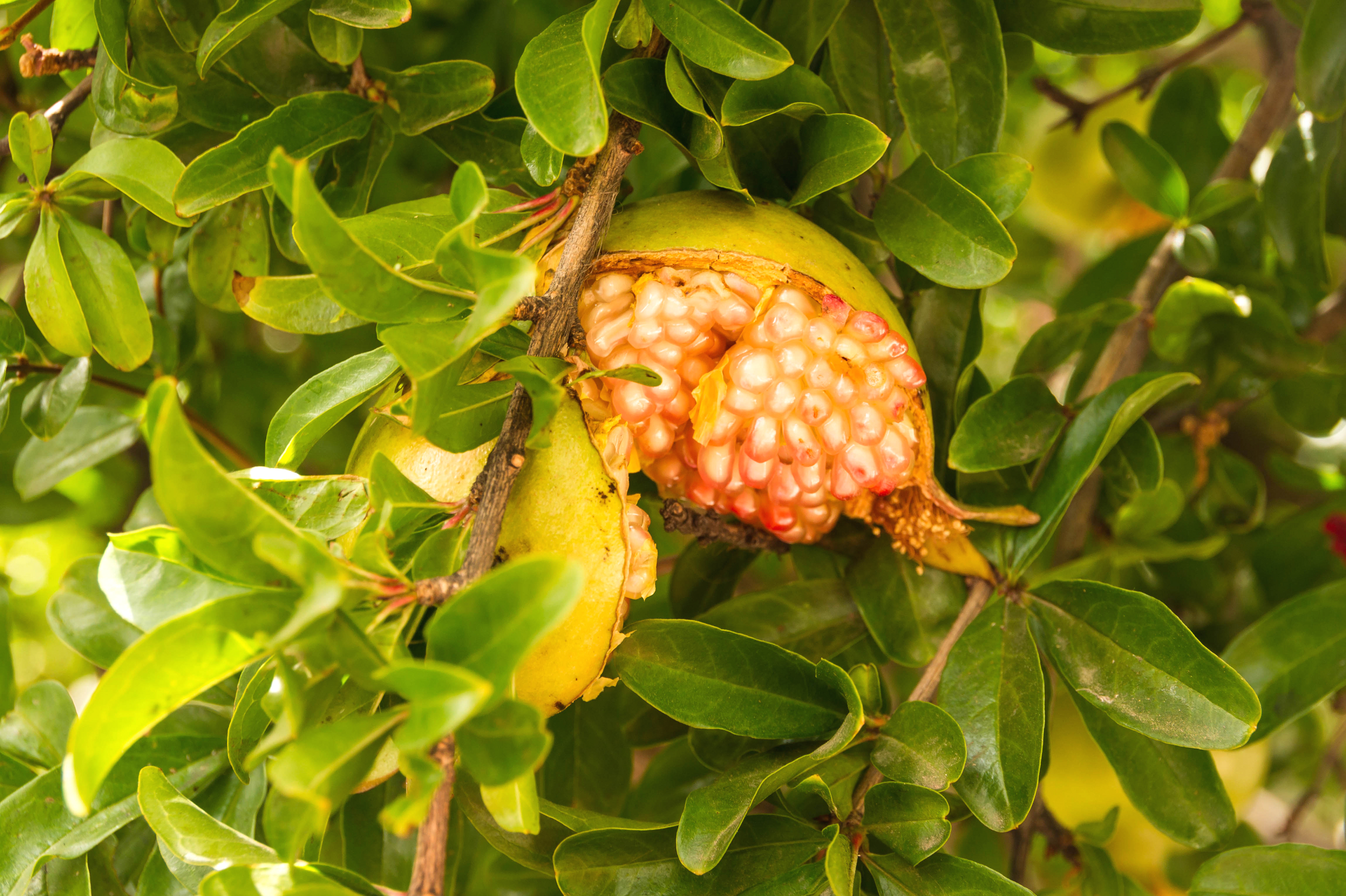
Morton describes a much-branched, more or less spiny shrub or small tree that can reach 6 to 10 metres, with showy red flowers at the branch tips. The fruit, 6.25 to 12.5 centimetres wide, has a tough leathery rind; inside, membranes divide it into compartments packed with juicy sacs, the arils, each holding one seed. The seeds make up about 52 per cent of the weight of the whole fruit. The plant is both self-pollinated and cross-pollinated by insects: bagged flowers that could only self-pollinate set 45 per cent fruit, and cross-pollination raised the figure to 68 per cent.
The species is adapted to cool winters and hot summers, favours a semi-arid climate and is extremely drought tolerant, Morton writes, and it grows on soils ranging from calcareous and alkaline to deep acidic loam. Tamil Nadu Agricultural University adds that it tolerates salinity and alkalinity, but that a cool winter and a dry summer are needed for high-quality fruit.
Selected varieties are not grown from seed, which varies, but from hardwood cuttings, air layers or suckers taken from a parent plant. Morton describes rooted plants set out in pits about 60 centimetres deep and wide, spaced 3.5 to 5.5 metres apart depending on soil fertility; the Tamil Nadu university recommends rooted cuttings or layers 12 to 18 months old in pits of 60 by 60 by 60 centimetres at 2.5 to 3 metres. Because the fruit is borne only at the tips of new growth, the branches are shortened each year for the first three years to build a strong frame, after which only suckers and dead wood are removed. The plant must be irrigated for good fruit production.
A pomegranate may begin to bear one year after planting out, but two and a half to three years is more common, according to Morton; Abdullah's trees came into fruit about two years after planting. The fruit ripens six to seven months after flowering and cannot be ripened off the tree. Growers often judge it ready when it makes a metallic sound when tapped, and it should be clipped rather than pulled. Ripe fruit left too long can crack if rained upon or if irrigation is uneven, too much sun scalds the rind, and excessive rain during ripening can cause soft rot. Stored at 0 to 5 degrees Celsius and 80 to 85 per cent relative humidity, pomegranates can keep for up to seven months.
Per 100 grams of edible portion, Morton's table of analyses gives 63 to 78 calories, 15.4 to 19.6 grams of carbohydrate, 3.4 to 5.0 grams of fibre, 259 milligrams of potassium and about 4 milligrams of vitamin C. In the Tamil Nadu university's figures, pomegranate yields an average of 20 to 25 tonnes per hectare a year, depending on the variety.
The fruit borer, and the light trap
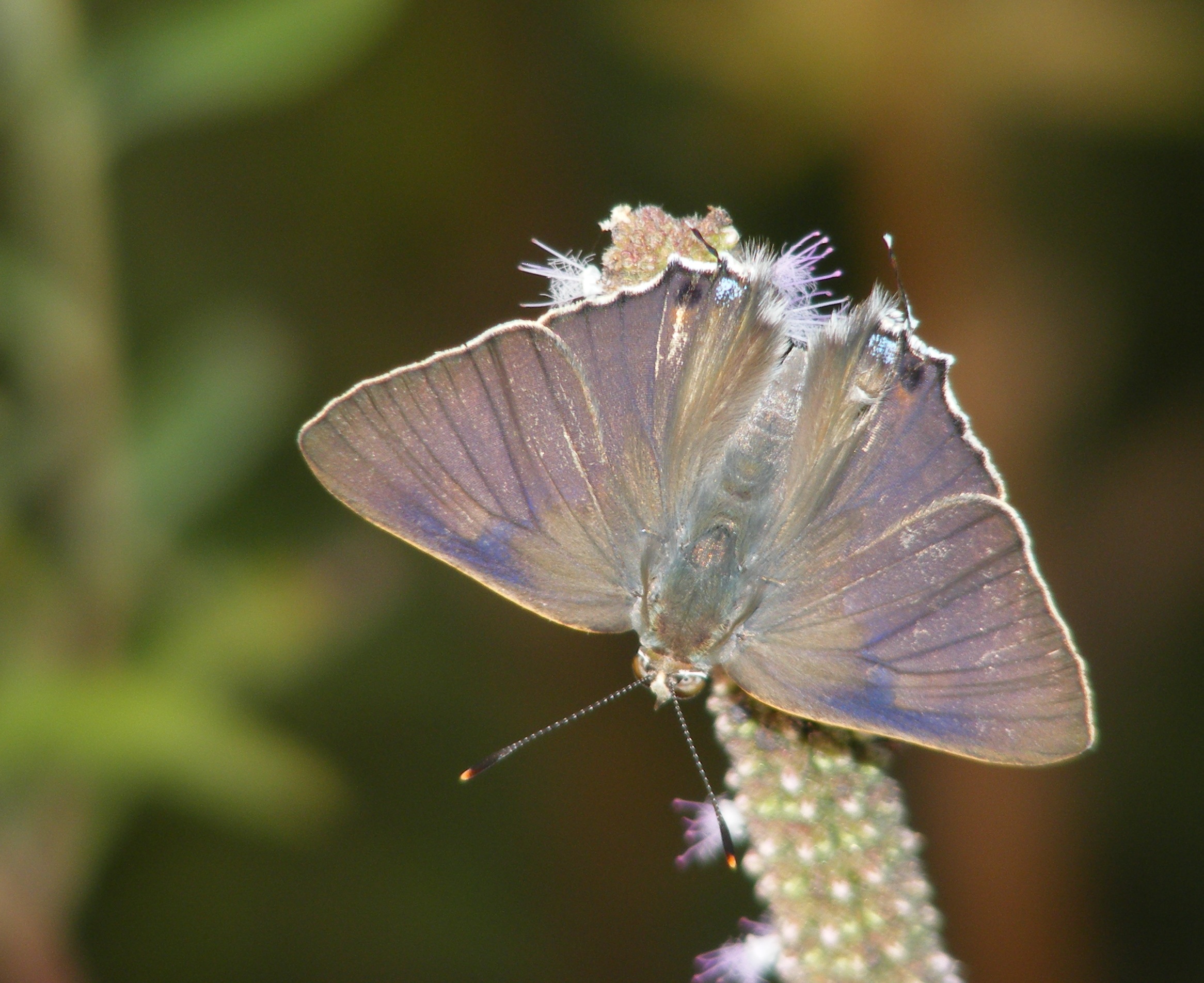
The most serious pest of pomegranate in Bangladesh is the fruit borer, the caterpillar of the pomegranate butterfly Virachola isocrates. Banglapedia calls it the most destructive pest of pomegranate in all parts of the country. The butterfly belongs to the Lycaenidae family, one of the families among the roughly 124 butterfly species described from Bangladesh. Other pests recorded on pomegranate in the country include caterpillars of Porthesia scintillans and Achaea janata, which feed on the leaves, and the scale insect Icerya purchasi, which sucks the sap.
Morton explains how the borer works: the butterfly lays its eggs on flower buds and on the calyx of developing fruit, and within a few days the caterpillars enter the fruit through the calyx. Unchecked, the borers can destroy an entire crop. In India growers put paper or plastic bags or other covers over the fruit to protect it from borers, birds, bats and squirrels, and the Tamil Nadu university advises bagging the fruit with polythene covers during flowering, while the fruits are no more than 5 centimetres across, to stop the butterflies laying eggs on them.
Light traps like the ones Abdullah used are set up by agriculture offices in Bangladesh to monitor pests. In September 2020 Ittefaq described solar-powered light traps in the Aman rice fields of Bhola: a panel charges a battery by day, a lamp switches on by itself at night, and insects drawn to the light fall into a basin of water mixed with detergent beneath it. The upazila agriculture officer there said the catch showed which harmful insects were present, so that officials could recommend a specific pesticide instead of unnecessary spraying, as part of integrated pest management. The reports on Abdullah's orchard do not describe his water traps or name the pesticides he used. Which pesticide to use, and how much, is a question for the upazila agriculture office.
Visitors, and the agriculture office's view
People came from far away to see the orchard, and entrepreneurs visited regularly to take advice, the Jagonews24 correspondent found; visitors were pleased to see pomegranates growing and bearing in the country's own soil. Nazmul Hasan of Gadkhali in Jashore said: "I came to see Abdullah's pomegranate orchard after seeing a video on Facebook. I am amazed at the abundance of fruit in the orchard. A pomegranate harvest like this on the plains is raising new hope. I too want to plant a pomegranate orchard." Gadkhali is a union of Jhikargachha upazila in Jashore district, south of Maheshpur.
Maheshpur upazila agriculture officer Yasmin Sultana told Jagonews24: "Abdullah is a hard-working young man. He has taken training from us on making vermicompost. He has grown guava and malta. But he has made a stir with his pomegranate orchard. I have visited his orchard. The taste, aroma and quality of the pomegranates are very good. Seeing his pomegranate farming, others will be encouraged. We are giving him all-round advice." BSS also reported that the upazila agriculture officer praised the venture and said it could encourage other young people to grow pomegranates.
Vermicompost, the subject of the training she mentioned, is organic fertiliser made by earthworms. A Bangla Tribune report of September 2022 described how worms of the species Eudrilus eugeniae and Eisenia fetida turn organic matter, usually cow dung, into compost in rings, tanks or large containers, and noted that local worms can be used. In the ring method it described, each ring takes 60 to 70 kilograms of dung and half a kilogram of worms, and 30 to 35 kilograms of compost is ready in 25 to 30 days. The report said vermicompost contains 10 of the 16 essential plant nutrients, and that the Agriculture Information Service under the agriculture ministry holds regular film shows on it for farmers.
Maheshpur, its land and its river
Maheshpur is a border upazila in the south-west of Jhenaidah district, in Khulna division. Banglapedia gives its area as 417.85 square kilometres and describes it as bounded by Jibannagar and Kotchandpur upazilas on the north, Chaugachha upazila and West Bengal on the south, Chaugachha on the east and West Bengal on the west. It has one municipality, 12 unions, 144 mouzas and 196 villages. The 2011 census counted 332,514 people; the 2022 census counted 371,293. Maheshpur thana became an upazila in 1983.
It is a farming upazila. In Banglapedia's figures agriculture is the main source of income for 74.79 per cent of households, and the main crops are paddy, jute, wheat, sugarcane, cotton, onion, garlic, tomato, potato and vegetables. Its main fruits are listed as mango, jackfruit, banana, blackberry, papaya, coconut, star apple, watermelon and date; pomegranate is not among them, and the upazila's main exports are banana, jackfruit, date molasses, potato and vegetables.
Jhenaidah district as a whole covers 1,964.77 square kilometres in six upazilas, bordered by Kushtia to the north, Jashore and West Bengal to the south, Rajbari and Magura to the east, and Chuadanga and West Bengal to the west. It became a district in 1984, and Banglapedia gives agriculture as the main source of income for 67 per cent of its people.
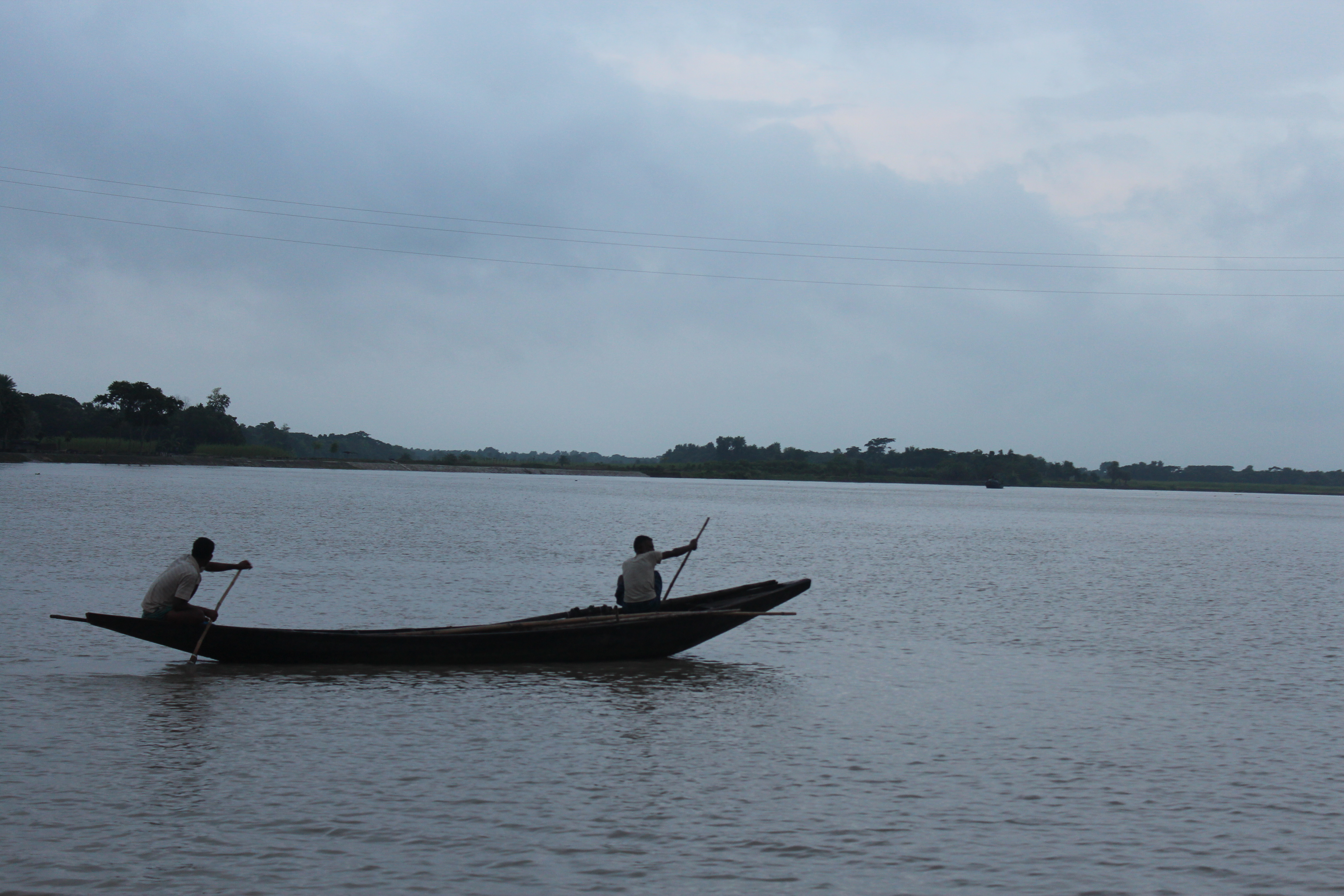
The Kapotaksha that Abdullah's orchard lies across is the Kobadak of the maps. Banglapedia explains the name as a Sanskrit form meaning "pigeon-eyed", from a time when its water was as clear as a bird's eye. The river, about 260 kilometres long, flows through Jibannagar, Kotchandpur, Chaugachha, Jhikargachha, Tala and on towards the Shibsa near Paikgachha in Khulna. Cut off from the Mathabhanga, it receives little more than local rainwater and seepage in the monsoon, and it almost dries up near Jhikargachha in summer. The poet Michael Madhusudan Dutt was born on its bank in Jashore district.
Photo: Kritzolina / Wikimedia Commons (CC BY-SA 4.0)
Sources: Jagonews24, Bangladesh Sangbad Sangstha (BSS), Banglapedia, Bangla Tribune, Prothom Alo, The Daily Star, Drishti IAS (Indian Express export figures), National Horticulture Board of India, Mahatma Phule Krishi Vidyapeeth, Tamil Nadu Agricultural University, Julia F. Morton, Fruits of Warm Climates (Purdue University), Ittefaq, Wikipedia
Comments
(0)