
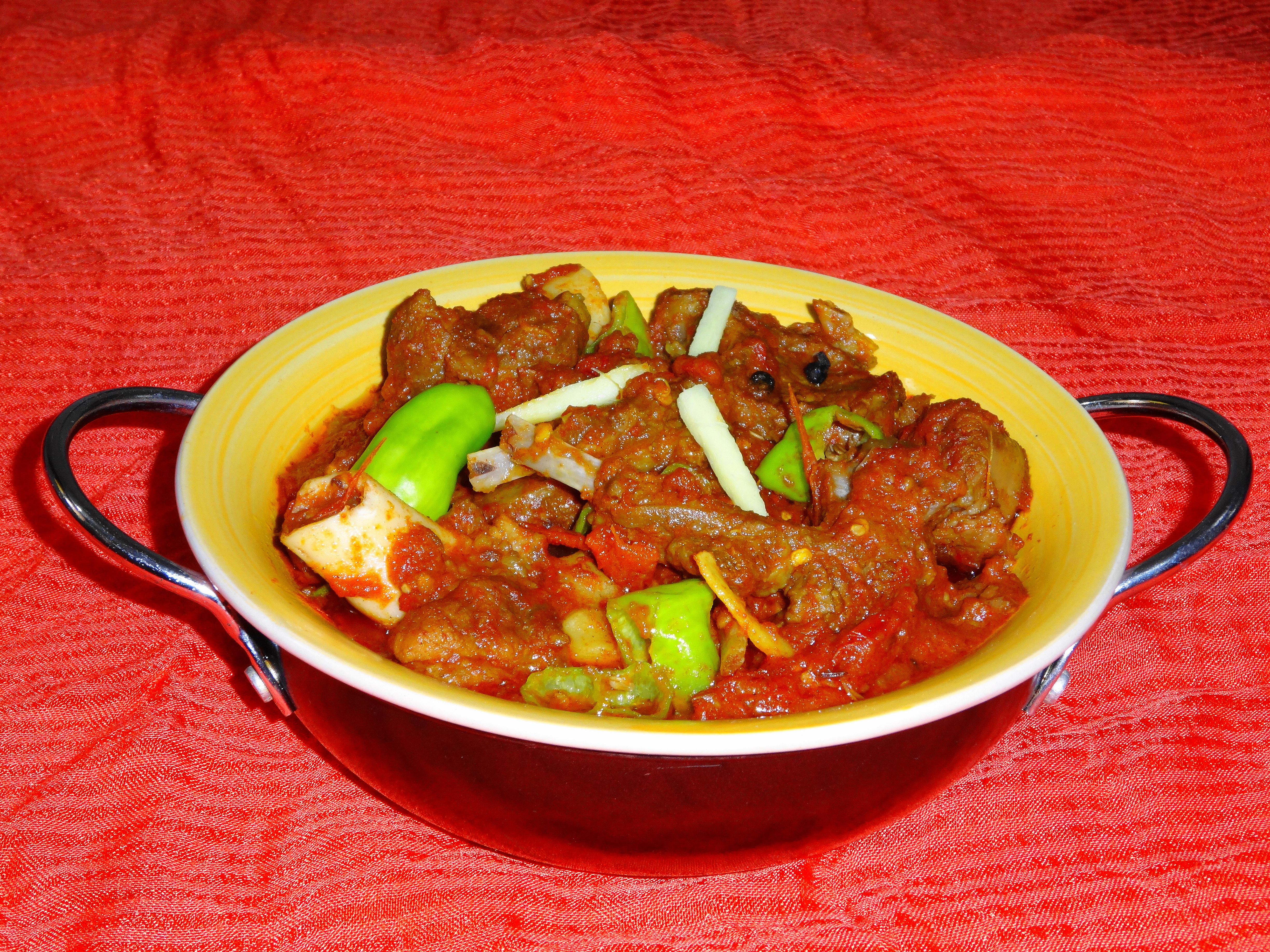
On 14 January 2026 the lifestyle section of Jagonews24 published a recipe for Peshawari gosht, a beef or goat dish named after Peshawar, the capital of Pakistan's Khyber Pakhtunkhwa province. The idea behind the recipe is that good meat, the right timing and a slow flame can carry the flavour, so the cook does not need a long list of spices. Everything goes into one heavy-bottomed pot with a spoon of ghee, tomatoes, ginger, green chillies, black pepper, whole potatoes and salt, and the meat cooks covered until it is tender.
Jagonews24 described the result as not hot but deep, not heavy but satisfying, and presented the method as a way of honouring the meat's own taste. Its headline promised so much flavour "without spices". The ingredient list does in fact include spices: black pepper, ginger, green chillies and coriander leaves. What the recipe leaves out is the usual set of ground spices and garam masala used in many meat curries. This report sets out the recipe as published, explains where this style of cooking comes from, and adds what food-safety and health authorities advise about cooking and eating red meat.
The ingredients Jagonews24 listed
The recipe is written for one kilogram of meat. Some items are measured; others are left to the cook's judgement:
- Beef or goat meat, 1 kg
- Ghee, 1 spoon
- Salt, to taste
- Potatoes, a few, left whole
- Green chillies, 2
- Coriander leaves, as needed
- Chopped ginger, 2 tablespoons
- Tomatoes, 2
- Ground black pepper, as needed
- Water, as needed
There is no onion, garlic, turmeric, chilli powder, cumin, ground coriander or garam masala in the list. Banglapedia, the national encyclopedia of Bangladesh, lists ginger, garlic, turmeric, onion, red pepper and coriander among the spices commonly cultivated in the country, and notes that garam masala, a mixture of clove, black pepper, cinnamon and cardamom, is used mostly in special meat curries and rice dishes. Of that familiar range, the Peshawari recipe keeps only ginger and black pepper, together with green chilli and fresh coriander leaves.
By Banglapedia's definition, a spice is any aromatic plant, plant part or plant product used as a condiment or to flavour food. Its list names ginger as a spice taken from the rhizome, pepper and chilli as spices taken from the fruit, and coriander leaf as one taken from the leaves. The dish is therefore better described as cooked with few spices than without them. The point of the recipe is restraint: a handful of seasonings that sharpen the taste of the meat rather than cover it.
How the dish is cooked
The method Jagonews24 published is short:
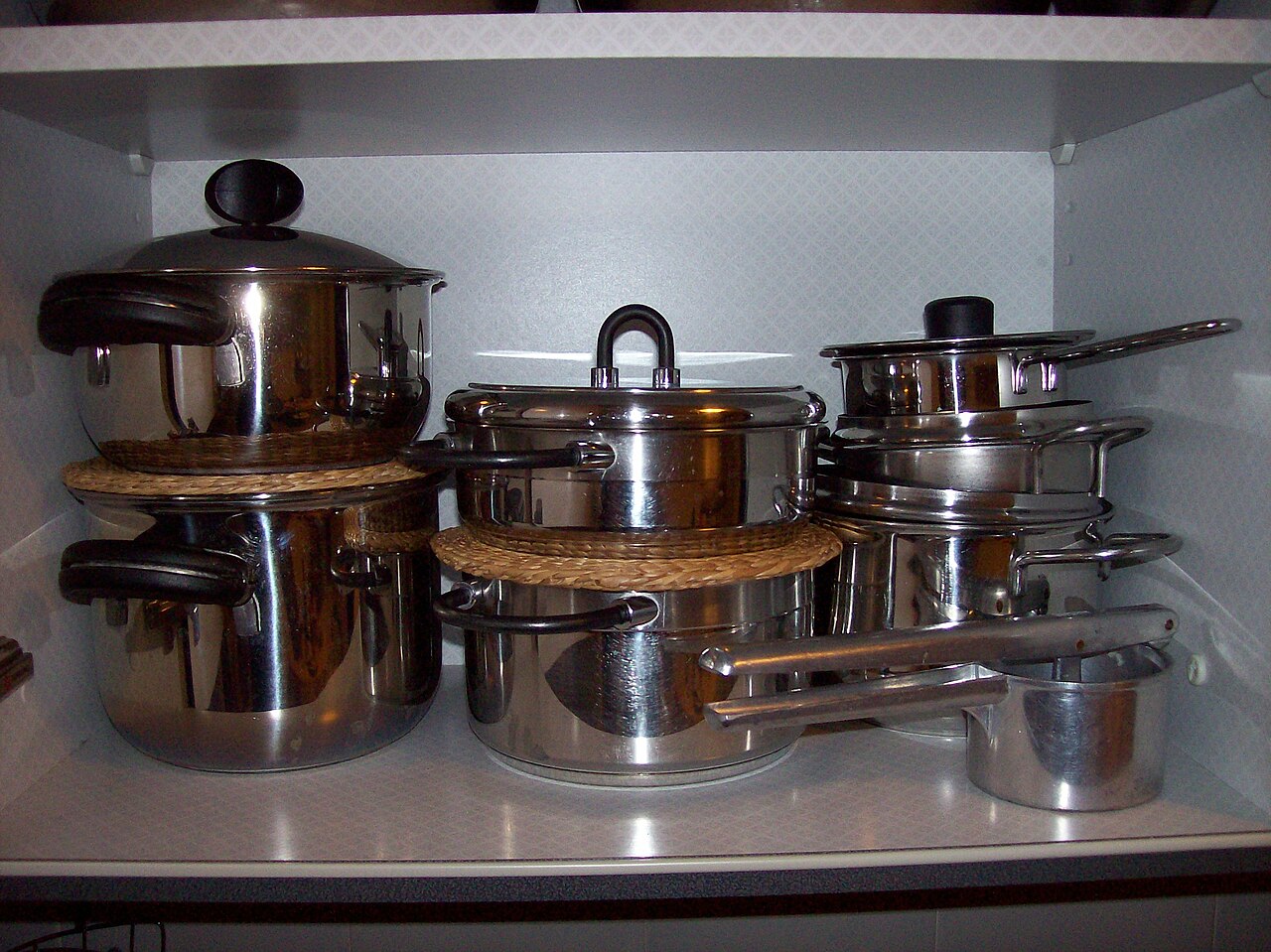
- Take a heavy-bottomed pot.
- Put all the ingredients in together, cover and cook.
- Add a little water if needed.
- From time to time lift the lid, stir, and cover the pot again.
- When the meat is cooked through and tender, take the pot off the heat.
The paper suggested serving the gosht with roti, paratha, pulao or khichuri. The recipe gives no cooking time; the cook judges by the tenderness of the meat.
Cooking meat covered with only a little added liquid is, in effect, braising or stewing, the moist-heat methods recommended for less tender cuts. A note published in October 2013 by the University of Nebraska-Lincoln's extension service explains that collagen, the protein that helps hold muscle together, turns "tough as shoe leather" when it is cooked at dry, high heat, while slow, moist heat tenderises it because the moist collagen cooks down into gelatin. The same note lists tomatoes among the acidic ingredients that help break down collagen in marinades for less tender cuts, and advises cooking chuck or round roasts for several hours, tightly covered with foil or a lid, in a slow cooker or a low oven.
Whatever the cut, the World Health Organization's Five Keys to Safer Food say meat should be cooked thoroughly. For soups and stews WHO advises bringing the food to boiling to make sure it has reached 70°C, and for meat it advises checking that the juices are clear, not pink; ideally a thermometer should be used. WHO explains that proper cooking kills almost all dangerous microorganisms, that studies have shown cooking food to 70°C can help ensure it is safe to eat, and that minced meat, rolled roasts, large joints of meat and whole poultry need special attention.
Peshawar, the city behind the name
Peshawar is the capital and the largest city of Khyber Pakhtunkhwa, in north-western Pakistan. It lies in the Peshawar Valley, a broad valley of about 7,176 square kilometres crossed by the Kabul River and surrounded by mountains on three sides. To the west of the valley is the Khyber Pass in the Safed Koh range, which links it with the Kabul Valley in Afghanistan. For centuries most trade between Central Asia and the Indian subcontinent passed along that route, and Peshawar's economic importance has long been tied to its position at the entrance to the pass.
The city is one of the oldest continuously inhabited places in South Asia, with a recorded history going back at least to the sixth century BC. Under the name Purushapura it was a principal city of ancient Gandhara and, in the second century CE, the capital of the Kushan Empire under Kanishka. Pakistan's 2023 census counted 1,905,975 people in the city, making it the eighth-largest in the country. Pashto is now its main language, while Hindko, historically the language of its streets, is still spoken in the old walled city.
Peshawar has a hot semi-arid climate, with long and very hot summers. Winter runs from November to late March, and in the coolest month the mean minimum temperature is about 4°C. Jagonews24's recipe appeared in the middle of the cool season in Bangladesh, and the paper linked it to other seasonal recipes, among them a duck dish for winter afternoons.
The food of Peshawar belongs to Pashtun cuisine, which is largely based on meat, including mutton, beef, chicken and fish, eaten with rice and vegetables and accompanied by dairy products such as yogurt, nuts, and fresh and dried fruit. Peshawar, Kabul, Herat, Bannu, Quetta and Mardan are counted among its centres. Breakfast commonly comes with green tea flavoured with cardamom, known as kahwa.
Namak Mandi and the salt-led style of cooking
Namak Mandi, the "Salt Market" in the heart of Peshawar, is the best-known place to eat this kind of food. A report by the news agency AFP in January 2019 described a maze of old alleyways filled with the smell of mutton smoke, and said the cooking came from generations-old recipes of the Pashtun tribal lands along the border with Afghanistan. AFP noted that the food is known for its simplicity compared with the intricate curries and spicy dishes of Pakistan's eastern plains and southern coast, and that one of the market's most famous tikka houses credits its decades of success to using very little in the way of spices.
At that restaurant, AFP reported, cuts of meat for tikka are generously salted, threaded on skewers between cubes of fat for tenderness and taste, and slow-cooked over a wood fire. Its karahi, a stew cooked in a deep pan, is made with slices of mutton cooked in chunks of white fat cut from the sheep's rump, with sparing amounts of green chilli and tomato. Both are served with stacks of oven-fresh naan and bowls of fresh yogurt. Customers usually arrive in large groups, order meat by the kilogram and point the butchers to their preferred cuts, which are then cooked at once; orders take close to an hour, and meals often go on long afterwards over cups of green tea. A Pakistani cookbook author told AFP that the cuisine's popularity across the country comes from its being mainly meat-based.
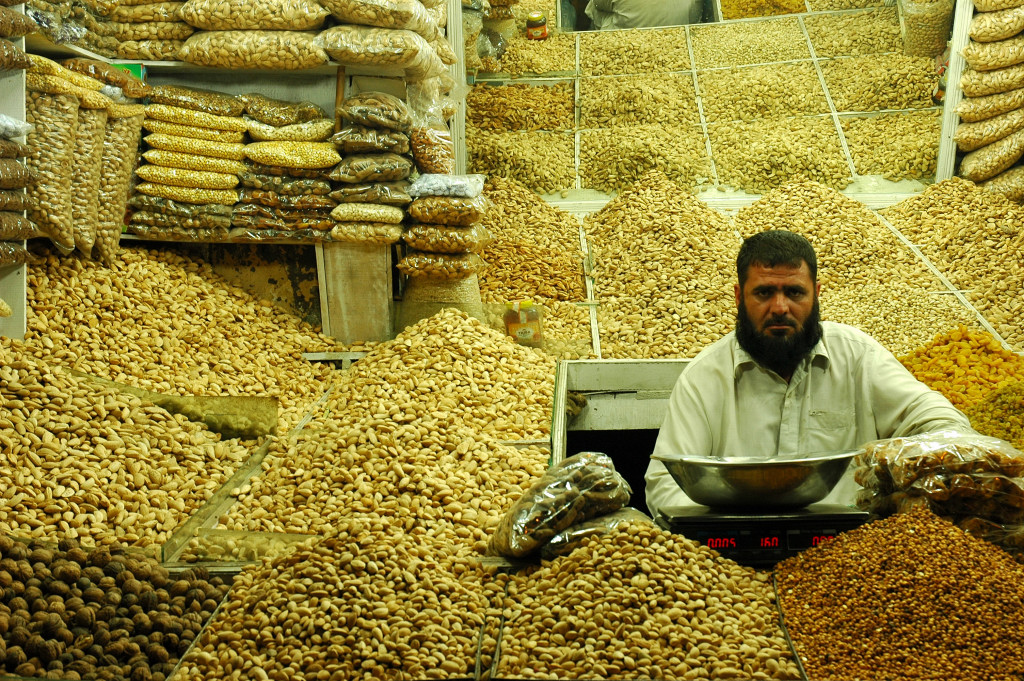
Pakistan's Dawn newspaper described the same principle in March 2016, in a report on a restaurant in Islamabad's Saidpur village that copies the Namak Mandi style. Its namkeen, or salted, tikka is dusted with coarse salt, grilled on an open spit, turned every few minutes and brushed lightly with ghee for about 45 minutes. Its namkeen karahi, for those who want some gravy, is diced meat tossed into a wok with fresh tomatoes, green chillies, garlic, vegetable stock and animal fat, salted and cooked over charcoal for about an hour. Dawn wrote that in Khyber Pakhtunkhwa food is not heavily spiced and the taste of the main ingredient shines through, and that the karahi is customarily followed by green tea because the gravy is rich in animal fat.
The Jagonews24 recipe carries the same idea into a home kitchen: tomato and green chilli with the meat, a little fat, salt and time. It replaces the charcoal fire and the sheep's rump fat with a covered pot on a stove and a spoon of ghee, and adds ginger, black pepper, potatoes and coriander leaves.
The chapli kebab: Peshawar's spicier side
Peshawar's cooking is not plain across the board. Its best-known street food, the chapli kebab, is a flat patty of minced meat. Dawn's 2016 report said the name means "flat kebab" in Pashto, and that parsley, salt, pomegranate seeds, chilli flakes and tomatoes are mixed into fresh mince, which is shaped into thick patties and shallow-fried in animal fat over high heat so that the outside chars while the inside stays juicy. In the restaurant Dawn visited, the kebabs were topped with a half-fried egg and bone marrow.
AFP's 2019 report described the kebab as minced beef with a mix of spices kneaded into patties and fried on a simmering iron skillet, and said it is most popular on cold winter days, when customers crowd the city's kebab houses. The chapli kebab has since spread from Peshawar to Afghan and Pakistani restaurants in many countries. Set beside it, the salted tikka and karahi of Namak Mandi, and home dishes such as this Peshawari gosht, show the restrained side of the same kitchen.
Black pepper and ginger: the two spices that carry the dish
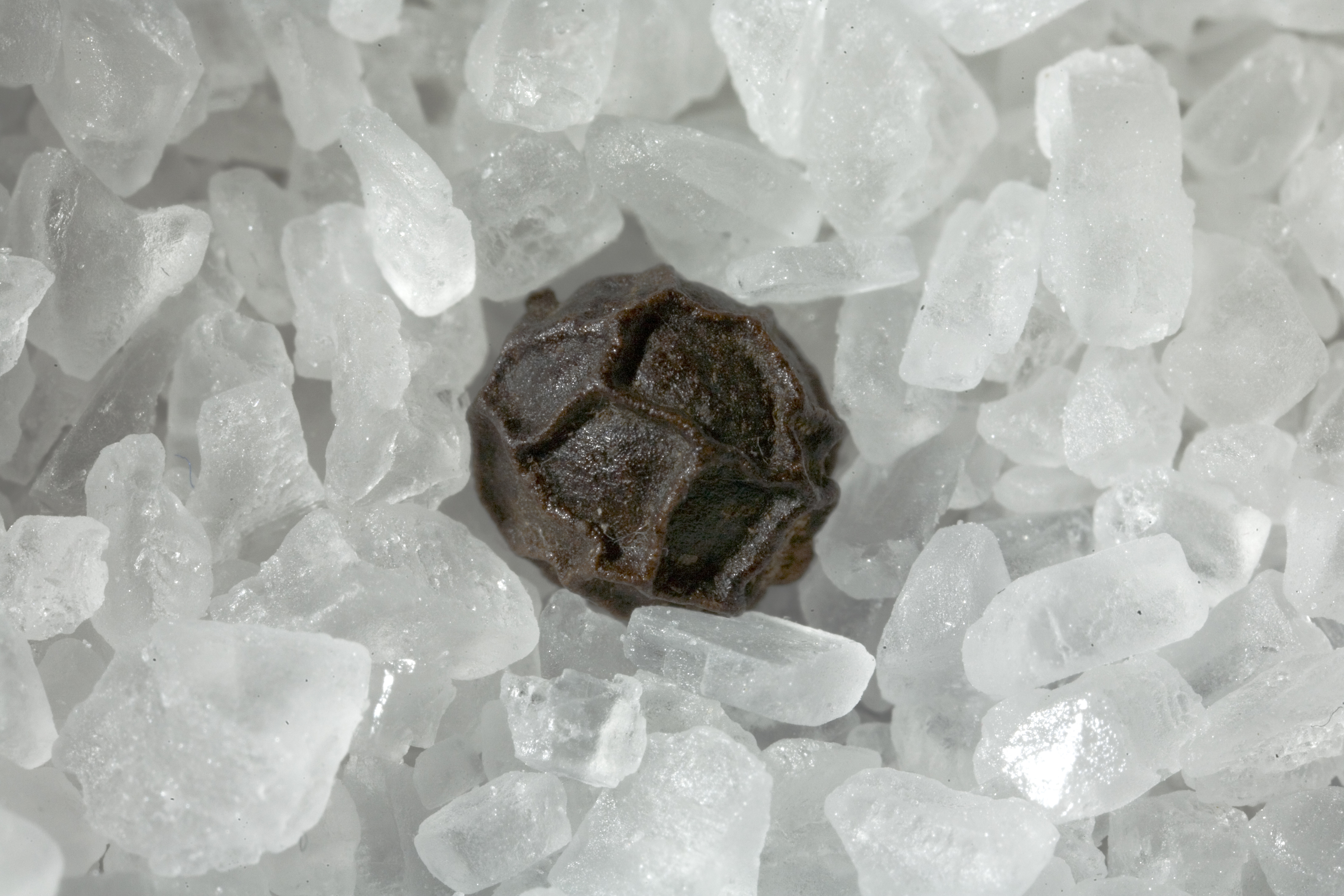
Black pepper (Piper nigrum) is a flowering vine of the family Piperaceae, grown for its fruit, the peppercorn. It is native to South Asia and is one of the most widely traded spices in the world. Black peppercorns are made from the green, unripe fruit, which is cooked briefly in hot water and then dried in the sun or by machine for several days, until the skin around the seed shrinks into a thin, wrinkled black layer. Ground pepper is made by crushing the dried berries. The heat of pepper comes from the compound piperine, a different kind of pungency from the capsaicin of chilli peppers; this recipe uses both, ground pepper and fresh green chilli.
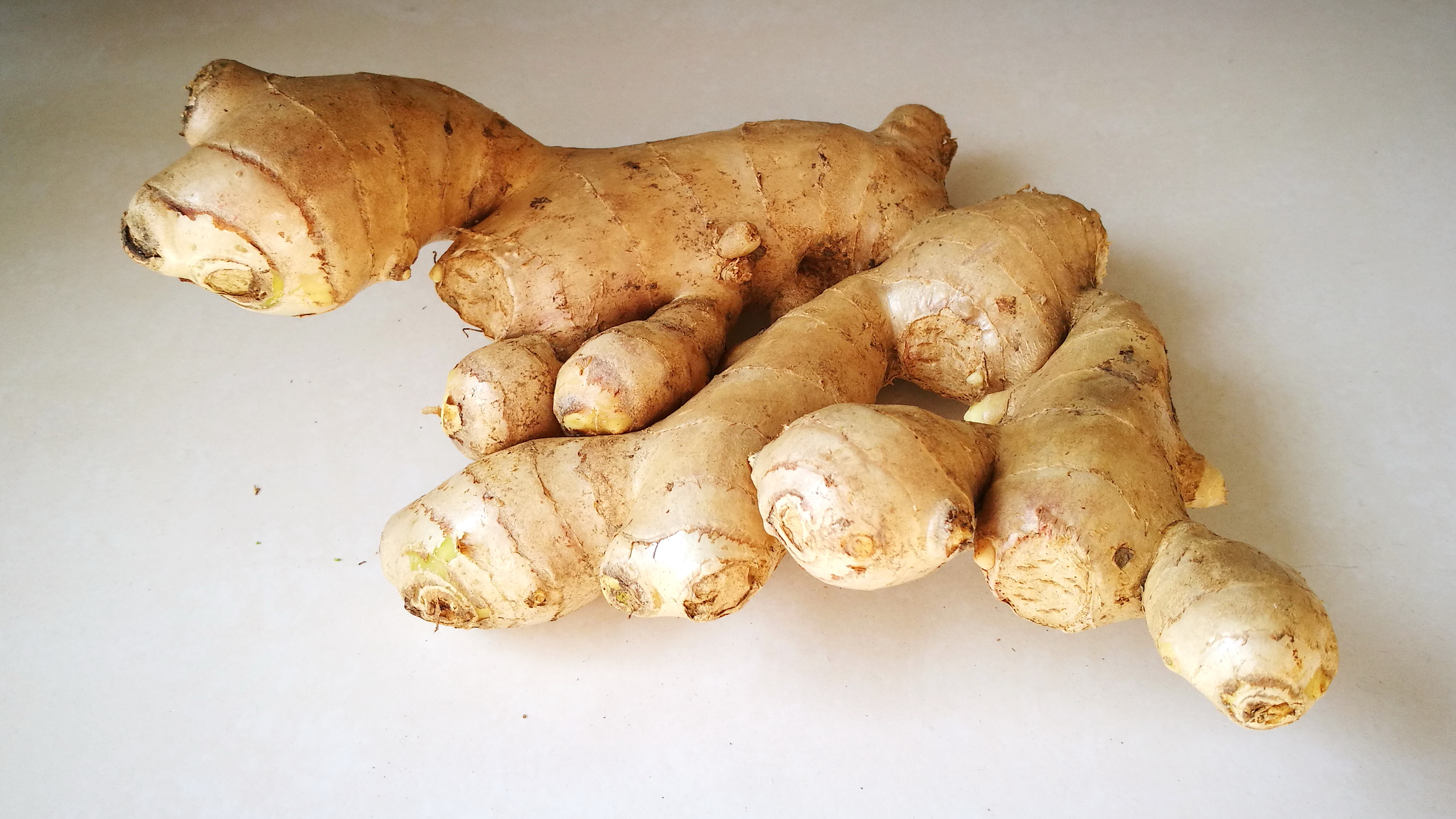
Ginger (Zingiber officinale) is an aromatic perennial herb of the family Zingiberaceae, native to South-East Asia, according to Banglapedia. The part used in cooking is the rhizome, an underground stem that is pale yellow outside and greenish yellow inside. Its aroma comes from an essential oil, about 2.5 per cent of the rhizome, and its pungent taste from a non-volatile oleoresin, gingerol. Banglapedia notes that ginger is used more as a condiment than as a spice, and that its essential oil is used to flavour foods and drinks.
Ginger is also a Bangladeshi farm crop. Banglapedia records that it is grown as a rain-fed annual crop on uplands and hill slopes, that Dinajpur, Rangpur, Tangail, Chittagong and Rangamati are important growing districts, and that many farmers grow it on homestead land. Its entry puts the country's output at about 49,405 tonnes a year from about 19,055 hectares, and notes that ginger appears in ancient and medieval texts of the region and was exported on a very large scale in the eighteenth and nineteenth centuries. The two tablespoons of chopped ginger in this recipe are therefore one of its most local ingredients.
The other plant ingredients are everyday ones. Banglapedia notes that the young coriander plant is commonly used as a flavouring in vegetable and fish curries in Bangladesh, and red pepper, the chilli, is among the spices most commonly cultivated in the country. In this recipe the coriander leaves and green chillies go into the pot with everything else, and the whole potatoes cook in the same liquid as the meat.
Beef or goat, and a spoon of ghee
The recipe lets the cook choose beef or goat. In Bangladesh goats are kept mostly in villages: Banglapedia's entry on the goat says more than 90 per cent of the country's goats are kept by rural people, puts the national population at about 30.33 million, and says the Black Bengal breed makes up more than 90 per cent of it, with the Jamunapari and its crosses making up the rest. It describes chevon, or goat meat, as famous for its tenderness, flavour and leanness, and the Black Bengal goat as a small, early-maturing breed well adapted to the country's conditions, grazed on fallow land, field borders, roadsides and embankments and kept largely by women and children, which keeps its production cost low.
For beef, the University of Nebraska-Lincoln note explains that tenderness depends on both the cut and how it is prepared. Many cuts from the round and the chuck are less tender because they contain more collagen, and they suit long, slow, covered cooking. Rib, loin, sirloin and tenderloin are tender enough to be cooked almost any way. A covered one-pot dish such as Peshawari gosht is the kind of moist, slow method the note recommends for the tougher cuts.
The only cooking fat in the recipe is one spoon of ghee. Ghee is clarified butter, made by simmering butter, skimming impurities from the surface and keeping the clear fat while the solid residue that settles at the bottom is discarded. It is usually made from cow or buffalo butter and is valued for its nutty flavour and a high smoke point that lets it be heated without burning. In Peshawar's restaurants, as AFP and Dawn described, much of the fat comes from the animal itself; the home recipe relies on the fat in the meat and that small amount of ghee.
Handling raw meat safely at home
Because the dish starts from raw meat, the World Health Organization's Five Keys to Safer Food, first published as a manual in 2006, apply at every stage. WHO explains that while most microorganisms do not cause disease, dangerous ones are widely found in soil, water, animals and people, and can be carried on hands, wiping cloths and utensils, especially cutting boards. Raw meat and its juices can contain dangerous microorganisms that may pass to other foods during preparation and storage. The five keys are:
- Keep clean: wash your hands before handling food and often during preparation, and after going to the toilet; wash and sanitise all surfaces and equipment used for preparing food; protect kitchen areas and food from insects, pests and other animals.
- Separate raw and cooked: keep raw meat, poultry and seafood away from other foods; use separate knives and cutting boards for raw foods; store food in containers so that raw and prepared foods do not touch.
- Cook thoroughly: bring stews to boiling to make sure they reach 70°C, check that meat juices are clear, not pink, and reheat cooked food thoroughly.
- Keep food at safe temperatures: do not leave cooked food at room temperature for more than two hours; refrigerate cooked and perishable food promptly, preferably below 5°C; keep cooked food piping hot, above 60°C, before serving; do not store food too long even in the refrigerator; do not thaw frozen food at room temperature.
- Use safe water and raw materials: use safe water or treat it to make it safe; choose fresh and wholesome food; wash fruit and vegetables, especially if they are eaten raw; do not use food beyond its expiry date.
WHO notes that microorganisms can multiply very quickly in food stored at room temperature, and that holding food below 5°C or above 60°C slows or stops their growth, although some dangerous microorganisms still grow below 5°C. For a dish made in a large pot, such as a kilogram of meat with potatoes, that means cooling and refrigerating leftovers promptly and reheating them thoroughly before they are eaten again.
Salt, fat and red meat in the diet
With few spices in the pot, salt does much of the seasoning, and the recipe leaves its amount to taste. The World Health Organization's guideline on sodium, issued in 2012, recommends that adults eat less than 5 grams of salt a day, just under a teaspoon, because too much sodium raises blood pressure, which in turn increases the risk of cardiovascular disease.
WHO's guideline on fats, updated in July 2023, says that for everyone aged two and over no more than 10 per cent of total energy intake should come from saturated fatty acids, and that adults should limit total fat to 30 per cent of energy or less. It names fatty meat, dairy foods and hard fats and oils such as butter, ghee, lard, palm oil and coconut oil among the main sources of saturated fat, and suggests replacing saturated fat with polyunsaturated fats, plant-based monounsaturated fats, or carbohydrates from whole grains, vegetables, fruits and pulses.
In October 2015 the International Agency for Research on Cancer (IARC), the cancer agency of WHO, classified the consumption of red meat, which it defines as all mammalian muscle meat including beef, veal, pork, lamb, mutton, horse and goat, as probably carcinogenic to humans (Group 2A). The working group of 22 experts from 10 countries based this on limited evidence in people, mainly for colorectal cancer, and strong mechanistic evidence. It classified processed meat, such as ham, sausages and corned beef, as carcinogenic to humans (Group 1), and concluded that each 50-gram portion of processed meat eaten daily increases the risk of colorectal cancer by 18 per cent. Peshawari gosht is made from fresh, not processed, meat. IARC's director said at the time that the findings supported public health recommendations to limit meat intake, while noting that red meat also has nutritional value.
People with high blood pressure, heart or kidney disease, or anyone who has been told to limit salt, fat or red meat, should ask a doctor or a qualified dietitian how often and in what amount a dish like this suits them.
Photo: Miansari66 / Wikimedia Commons (CC0)
Sources: Jagonews24, AFP (via Egypt Independent), Dawn, Banglapedia, University of Nebraska-Lincoln Extension, World Health Organization, International Agency for Research on Cancer, Wikipedia


Comments
(0)