
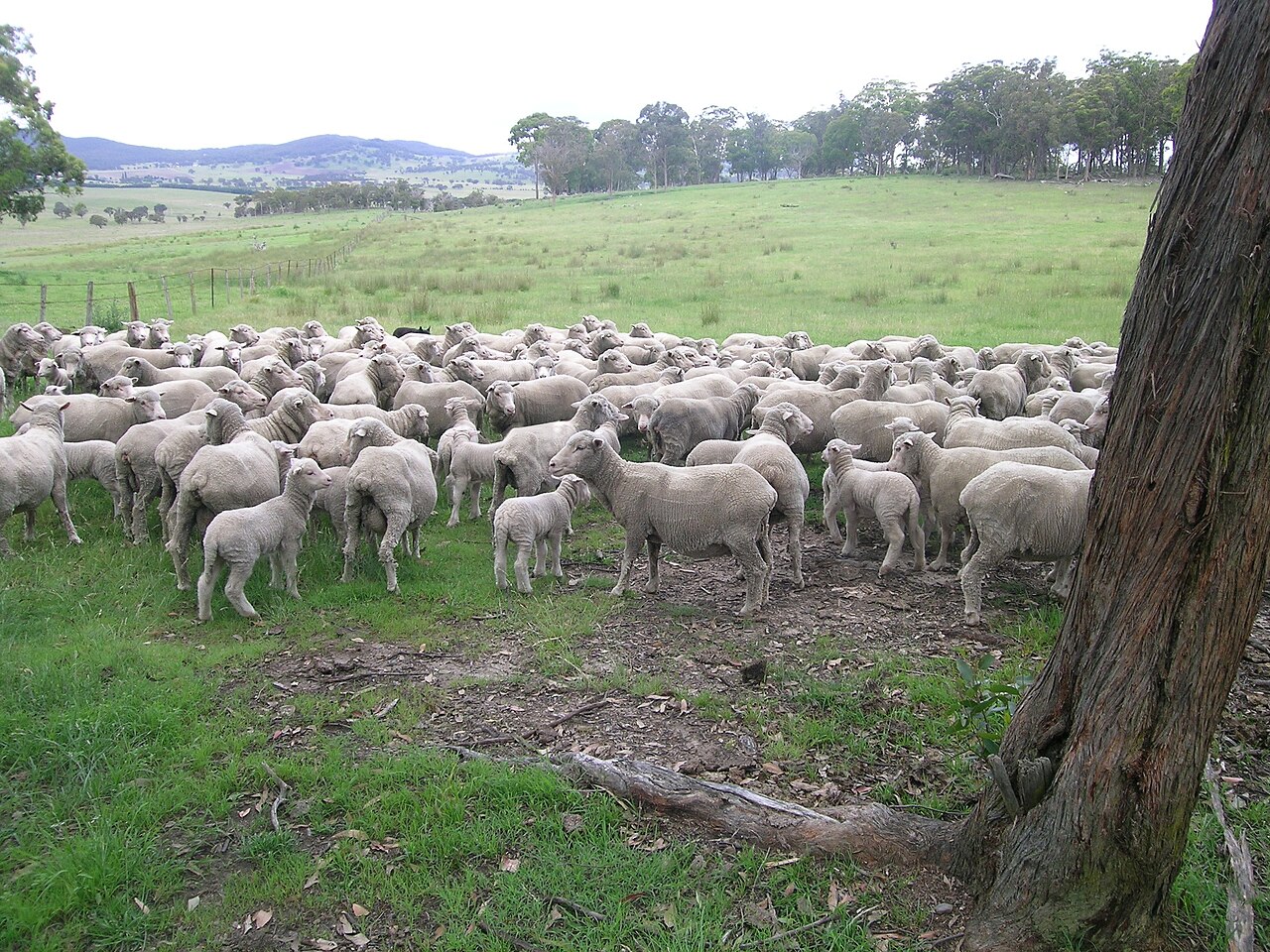
On Perdefontein, in the Agter-Pakhuis area outside Clanwilliam, rainfall is 150 to 180 mm a year and summer temperatures often pass 40°C. Martin de Klerk breeds Dohne Merinos there with one rule: a sheep has to earn its place. "It is simple for me. It is the ewe and ram that make the most money," he told Farmers Weekly South Africa's Henning Naude.
The family moved to the dual-purpose Dohne from another meat breed because of adaptation and profit, and De Klerk was drawn by the breed's use of predicted breeding values and BLUP to select for measurable traits. Perdefontein began breeding Dohnes in 2015 with older ewes bought from John Morris of Terra Vino Dohnes, and grew slowly because culling was strict.
The stud holds about 250 ewes, a ceiling De Klerk keeps so he can select hard and still sell 40 to 50 top rams a year, with the BKB Decision Support Services system helping. Replacement ewes are first chosen at about 100 days and properly at 16 months, once performance data and wool can be judged. Young ewes are mated at about 20 months over a 34-day joining with about 40 ewes per ram, and a ewe that misses gets one more chance. Lambing runs at 120% to 140%; annual laparoscopic artificial insemination lowers conception slightly, a cost he accepts for faster genetic progress. Lambs are weaned at 100 days at a target of more than 38 kg.
After weaning, young sheep go to the veld until the 12-month performance test without supplementary feed, so that weaknesses show. "Our clients and commercial farmers run their sheep on the veld. We need sheep that can perform on the veld," he said. Ewes are well fed where it counts, in late pregnancy and early lactation, with self-mixed rations, planted pasture and creep feed for lambs. Bluetongue spread by midges and parasites on pasture are the main health pressures.
When buying rams he starts with the figures, General Merit first, then fertility and growth, and only then looks at the animal. "We look for good balance where no trait is weak," he said. To limit inbreeding he keeps one homebred ram a year, buys new rams and semen with other Western Cape studs, and drops a sire whose updated figures slip. Wool brings about 20% to 25% of income, so he is now working on staple length and clean fleece weight, preferring fibre of 18.5 to 19.5 microns.
Asked which trait will matter more in Dohne breeding over the next decade, his answer was immediate: "Definitely fertility." His aim is a flock whose rams commercial farmers can buy with confidence. "Good rams are the by-product of a good ewe flock," he said.
Photo: Cgoodwin / Wikimedia Commons (CC BY-SA 3.0)
Source: Farmers Weekly South Africa

Comments
(0)