
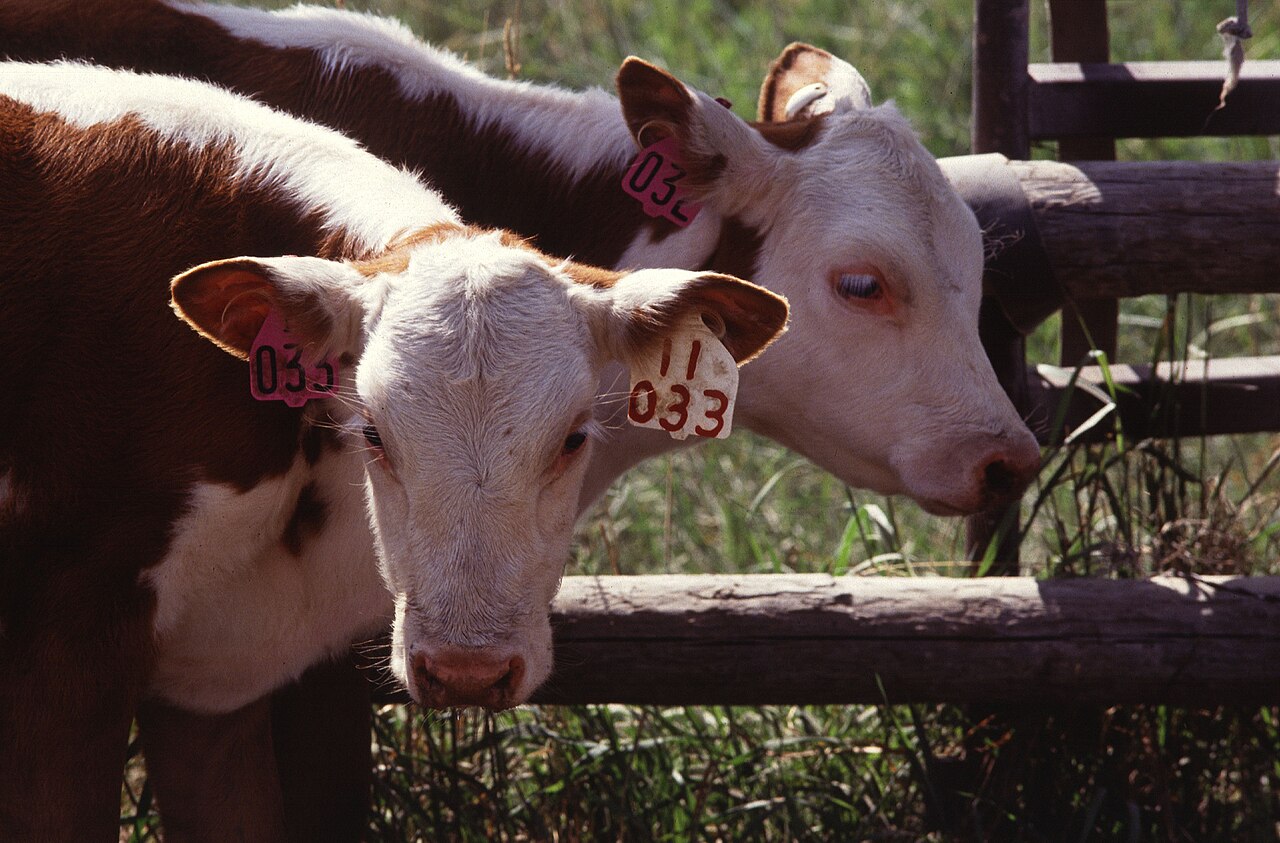
A study of online cattle sales has found clear patterns that can help cow-calf producers get more for their calves, Manitoba Co-operator’s Greg Price reports. Kathy Larson, an extension economist in the University of Saskatchewan’s department of agricultural and resource economics, examined 1,164 feeder calf lots sold online across Western Canada in 2025 through the TEAM marketing platform, looking at sex, weight and vaccination history.
Weaned calves are the main product of a cow-calf business, Larson said, making up 80 to 85% of its revenue; cull breeding stock accounts for the rest. With online sales growing against live auctions, she used hedonic pricing, a statistical method that puts a value on each attribute of a sale lot, to see what buyers pay for. Lots of mixed sexes, replacement heifers, bulls and Holstein-influenced cattle were excluded, and weights were kept between 400 and 800 lb.
Steers outsold heifers: at 550 lb steers fetched $72 per hundredweight more for November 2025 delivery, and about $50 more at 650 lb. Prices per hundredweight fell as calves got heavier, the familiar price slide; two-thirds of lots were 500 to 700 lb, averaging 630 lb.
Uniformity paid. Most lots had a weight spread of 126 to 175 lb, but those under 125 lb earned a statistically significant $3.72 per cwt more, about $23 a head at 629 lb. Larson recommends a defined breeding season of 63 days or less, with 60% or more of females calving in the first 21 days. Bigger lots also earned more per hundredweight; her figures pointed to an optimal lot of about 260 head, against an average of 100.
Information adds value too. Listing sex, head count, average weight and range, breed and frame, the health programme, implant use, age verification and weaning status helps buyers bid with confidence. Adding one or two vaccinations, with the product and timing recorded, was worth an extra $55 to $67 a head. Growth implants added about 23 lb of weaning weight, roughly $50 a head at the prices used, though Larson called that a choice for each operation.
Photo: USDA Agricultural Research Service / Wikimedia Commons (public domain)
Source: Manitoba Co-operator

Comments
(0)