
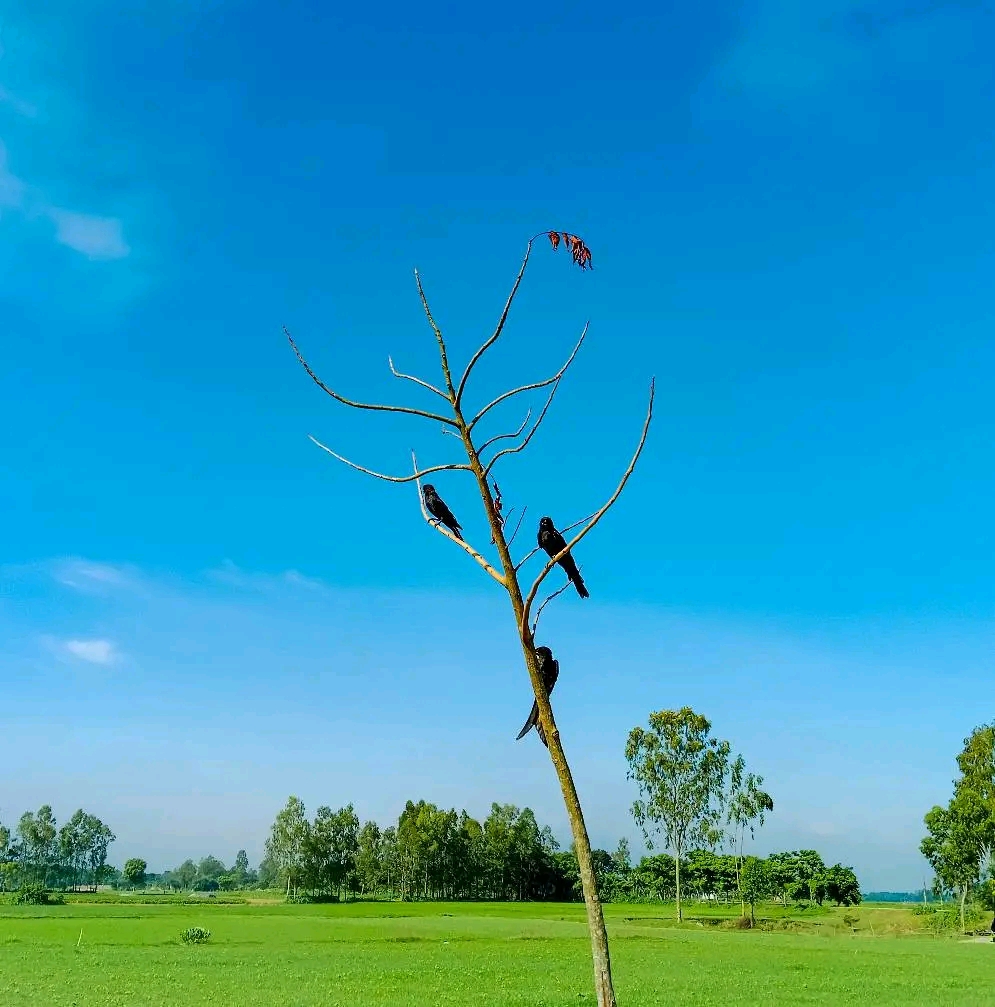
Perching is the simplest pest control there is: sticks in the field for birds to sit on. The birds come for the perch and stay for the insects, and the farmer sprays less.
How it works
- Sticks: bamboo 4–5 ft tall, planted 10–15 m apart across and around the field.
- The perch: a light crossbar or branch on top, so a bird can land and watch.
- The birds: drongos, mynas, egrets and others take stem borers, caterpillars, leaf-folders and other pests from the crop.
- The result: fewer pests, less chemical pesticide, and cleaner soil and water.
The benefits
- Environmentally sound: no poison in the field.
- Almost free: a few bamboo sticks.
- Higher yield, because the pests that would have eaten it were eaten first.
- Food for birds and a field alive with them — biodiversity as a farm input.
Where it works
- Rice: the commonest use, against stem borer, caterpillars and leaf-cutting pests in the boro, aman and aus seasons.
- Vegetables: gourd, pumpkin, tomato and brinjal, against fruit borers and caterpillars.
- Pulses: lentil, chickpea and mung, protecting the grain.
Set the perches when the crop is young, before the pests build up, and take them out at harvest. It costs almost nothing and it works.
Photo: Black drongos (Dicrurus macrocercus) in Bangladesh — R trisha / Wikimedia Commons (CC BY 4.0)

Comments
(0)