
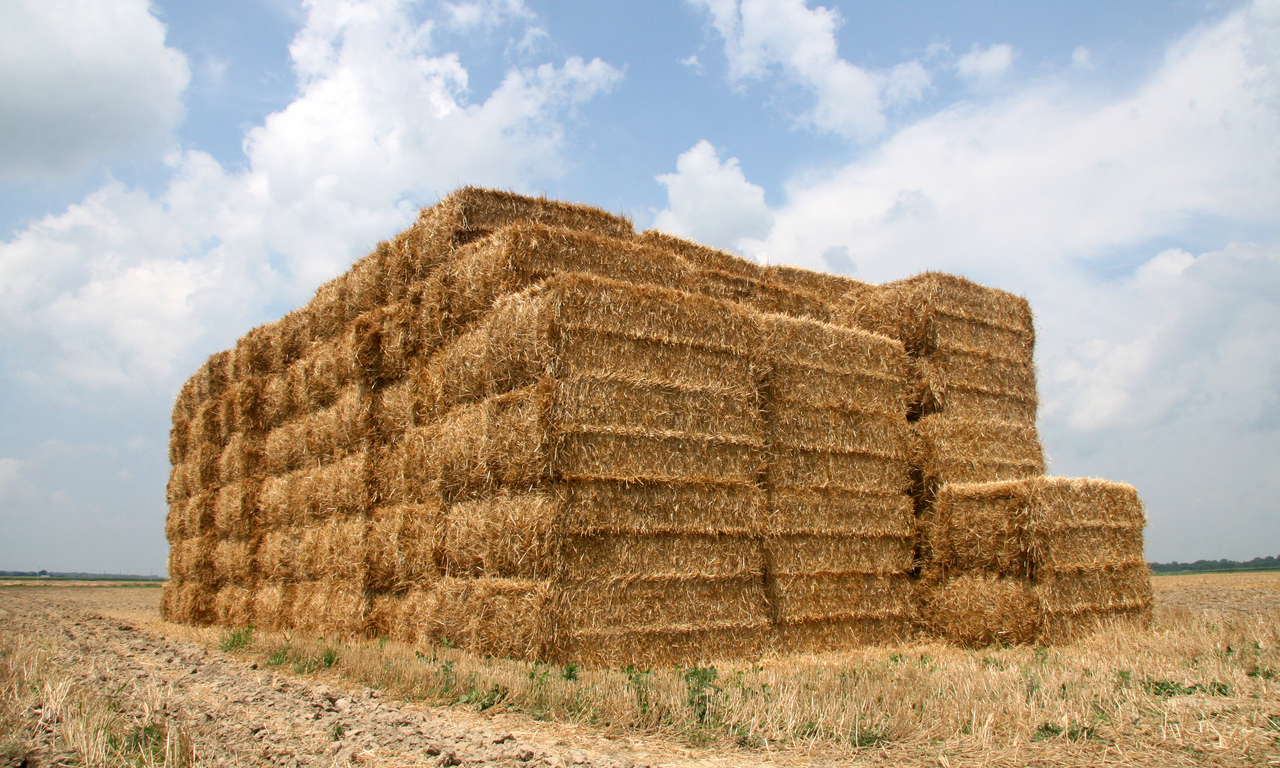
How crop straw is processed before it goes back to the field can change how much nitrous oxide the soil gives off, according to a study led by Yuping Zhuge of Shandong Agricultural University in China. Of the forms tested, pelletised straw cut emissions the most.
The researchers used soil from a saline-alkali land improvement site in Shandong Province, where soils are salty, high in pH and low in organic carbon, and compared crushed straw, pelletised straw, compost of manure from straw-fed cattle and straw biochar with a no-straw control, at nitrogen rates equivalent to 120 and 240 kilograms a hectare over a 90-day incubation.
Raising the nitrogen rate increased cumulative nitrous oxide emissions by an average of 41.6 percent, but every straw treatment reduced emissions compared with no straw. Pelletised straw cut them by 45.7 percent at the lower nitrogen rate and 43.2 percent at the higher. Straw also delayed the emission peak from about day 30 to about day 60.
The team linked the reductions to ammonia-oxidising bacteria: the abundance of their amoA gene tracked cumulative emissions, and straw generally lowered it. "Our results suggest that straw return should not be treated as a single management practice," Zhuge said. Nitrous oxide is a powerful greenhouse gas commonly produced in fertilised farm soils.
Photo: Huw Williams / Wikimedia Commons (Public domain)
Source: Farms.com

Comments
(0)