
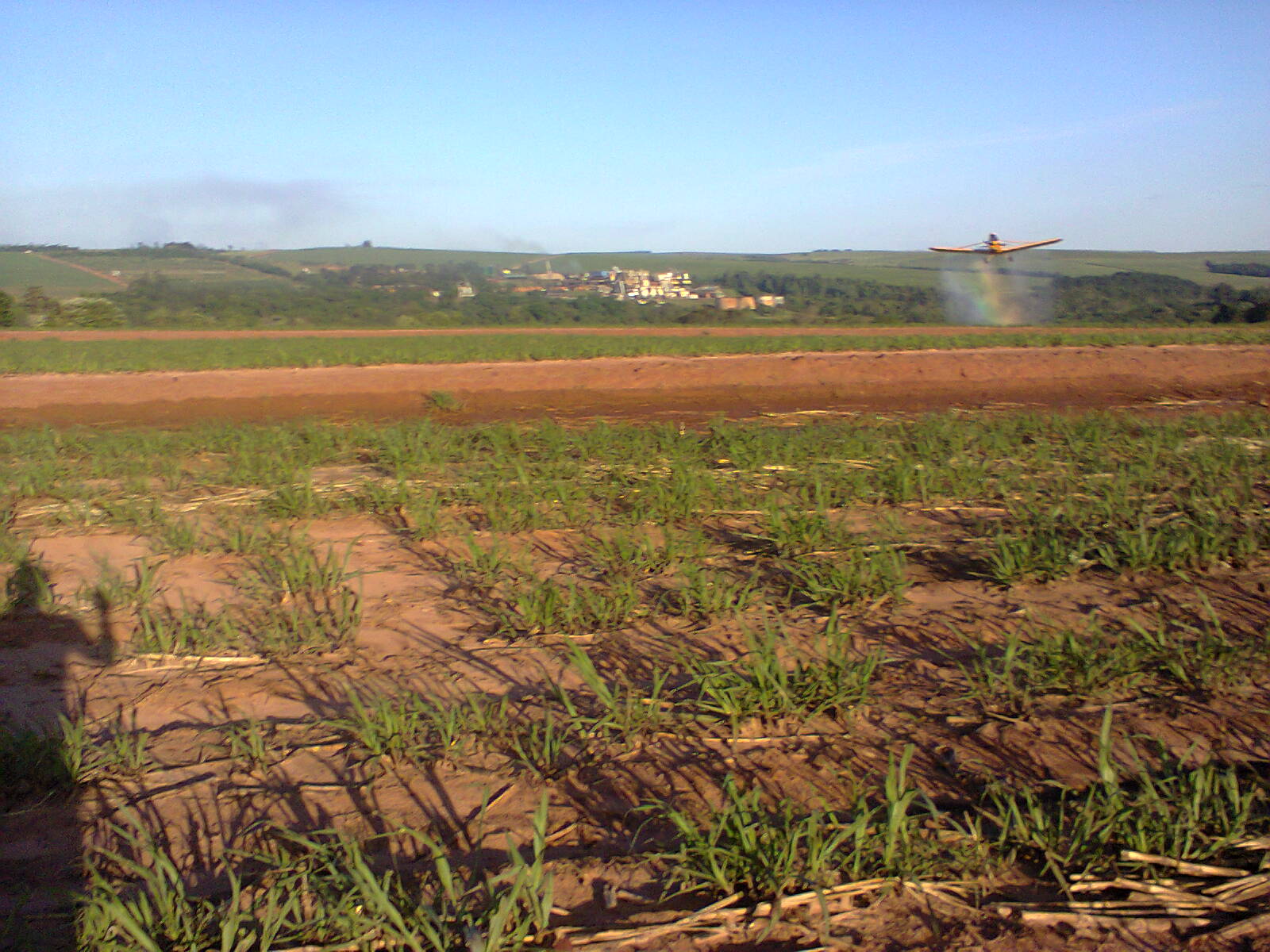
Brazil imported about 15,000 tonnes of pesticides that are banned for use inside the European Union in 2024, making it the second-largest destination for such products after the United States, according to a report from Oxfam Novib published on 16 October.
The 40-page report, "Toxic Trade: The European Union's double standard on highly hazardous pesticides", by Anouk Franck, Eline Achterberg and Jacqueline Schuiling, says EU member states exported nearly 122,000 tonnes of pesticides banned in the bloc in 2024, more than double the volume of 2018. Ninety-three countries received them that year, and Oxfam says 75 percent of those are low- or middle-income countries. Other destinations named include South Africa, Uganda and Peru.
Brazil-specific figures, reported by Agência Brasil and Visão Agro, show how deep the products run in the country's farming. Highly hazardous pesticides, a WHO and FAO classification for products with severe acute toxicity, chronic health effects or environmental persistence, make up 49 percent of all pesticide sales in Brazil, against 12 percent in Germany. Six of Brazil's ten best-selling pesticides are banned for use in the EU. Oxfam ties their use to large export monocultures, especially soybeans, coffee and sugarcane, where they are applied by tractor, aircraft and, increasingly, drone, sometimes near forest.
Globally, Oxfam estimates that four companies control 61 percent of the pesticide market and earned a combined 2.7 billion euros from sales of highly hazardous pesticides; the companies are not named in the parts of the report available for review.
Viviana Santiago, director of Oxfam Brasil, said it is not acceptable for the EU to ban pesticides to protect its own people while allowing the same substances to be made and exported elsewhere, and called for an end to such exports and for trade rules that put health and the environment ahead of commercial interests. Brazil's Ministry of Agriculture, Livestock and Supply had not responded to Agência Brasil's request for comment.
Brazil's market keeps growing regardless: the country approved 725 new pesticide products in 2025, up from 663 in 2024. Its agriculture, health and environment ministries are also moving product evaluations onto a single electronic platform, which companies must fully adopt by mid-2027.
Photo: Jarbas Yurasseck Jr / Wikimedia Commons (CC BY-SA 3.0)
Source: Global Agriculture

Comments
(0)