
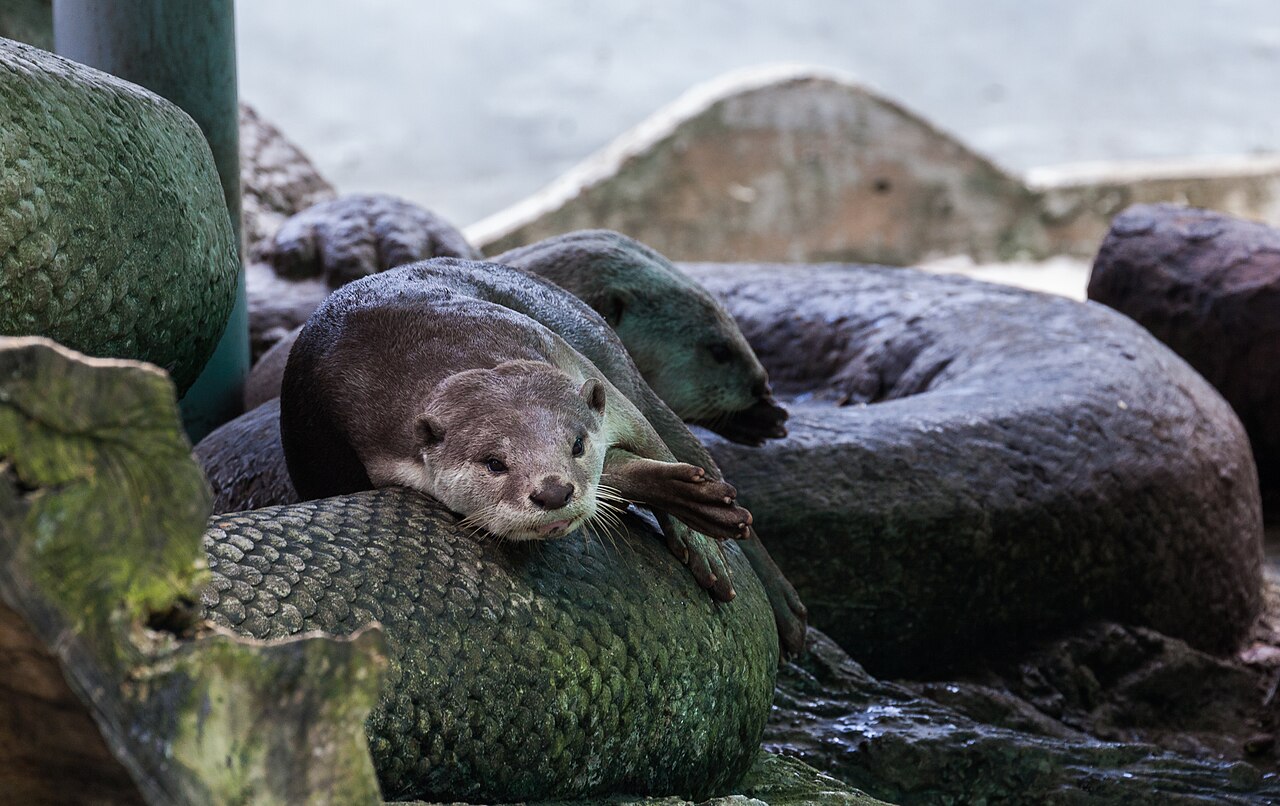
Many Bangladeshis know the nursery rhyme in which an otter dances on the riverbank, but few of today's young people have seen one. With wetlands destroyed and little public awareness, the animal is close to disappearing from the country, Desh Rupantor reports.
The smooth-coated otter (Lutrogale perspicillata) goes by many local names, among them udbiral, ud, dhere, udbilai and "fish mongoose". It was once the fishermen's helper in almost every region. It looks like a mongoose, lives in groups, prefers raw fish and swims with ease even in strong river currents.
According to the report, an otter can dive 60 feet in search of food and hold its breath for up to eight minutes. It was once common in the haors, rivers, canals, beels, floodplains and coastal districts of Sylhet, Khulna, Narail and the east; seeing one now is a matter of luck.
One otter lives at the Bangladesh Wildlife Service Foundation in Rupaspur village, Sreemangal, Moulvibazar. The foundation's director, Sanjit Deb, said it was caught, sick, in fishermen's nets in Hail Haor around 2016-17; it was rescued and treated and has stayed there since, as without a mate it could not be released.
Deb said people kill otters freely in the mistaken belief that they eat all the fish in ponds and water bodies, and some kill them for their skins, thought to be valuable. The destruction and change of their habitat is another major reason for their decline.
Professor Choyon Bikash Bhadra, head of botany at Muminunnisa Government Women's College in Mymensingh, said the destruction of aquatic habitats has pushed the otter towards extinction; it is rarely seen in large village ponds, dighis, beels and haors any more, though otters still survive in the Sundarbans. He urged everyone to help protect the animal.
Reported by Ismail Mahmud, Moulvibazar, Desh Rupantor.
Photo: smooth-coated otter (Ho Chi Minh City Zoo), Diego Delso / Wikimedia Commons (CC BY-SA 3.0)
Source: Desh Rupantor


Comments
(0)