
Organic fish farming — without chemical fertiliser, pesticide or synthetic inputs — is spreading around the world because it is sustainable, safe and increasingly what buyers want.
The rules
- The pond: flood-free and sunny; cleared of weeds, unwanted plants and wild fish; 1.5–2.5 m deep; water at pH 6.5–8.5.
- Fertility: cow dung, poultry litter and compost to grow algae, phytoplankton and zooplankton; water hyacinth, napier and other plants for shelter and food.
- Species: native carp — rui at the surface, catla in the middle, mrigal at the bottom — with tilapia and puti, stocked in layers.
- Feed: the pond's own natural food, supplemented if needed with soaked rice, wheat bran and vegetable-based organic feed.
- Maintenance: regular checks of water quality and depth; organic aeration where oxygen falls.
- Health: neem leaf, garlic and turmeric as natural preventives; daily observation of behaviour and growth.
- Harvest and sale: on time, and marketed as organic to the buyers who pay for it.
The benefits
Chemical-free, nutritious fish; soil and water kept clean; lower input cost; a higher market price; and a pond that keeps its natural balance.
Why it matters
It makes fish farming sustainable for the long term, protects the wetlands that farming depends on, and gives the consumer a fish worth trusting.
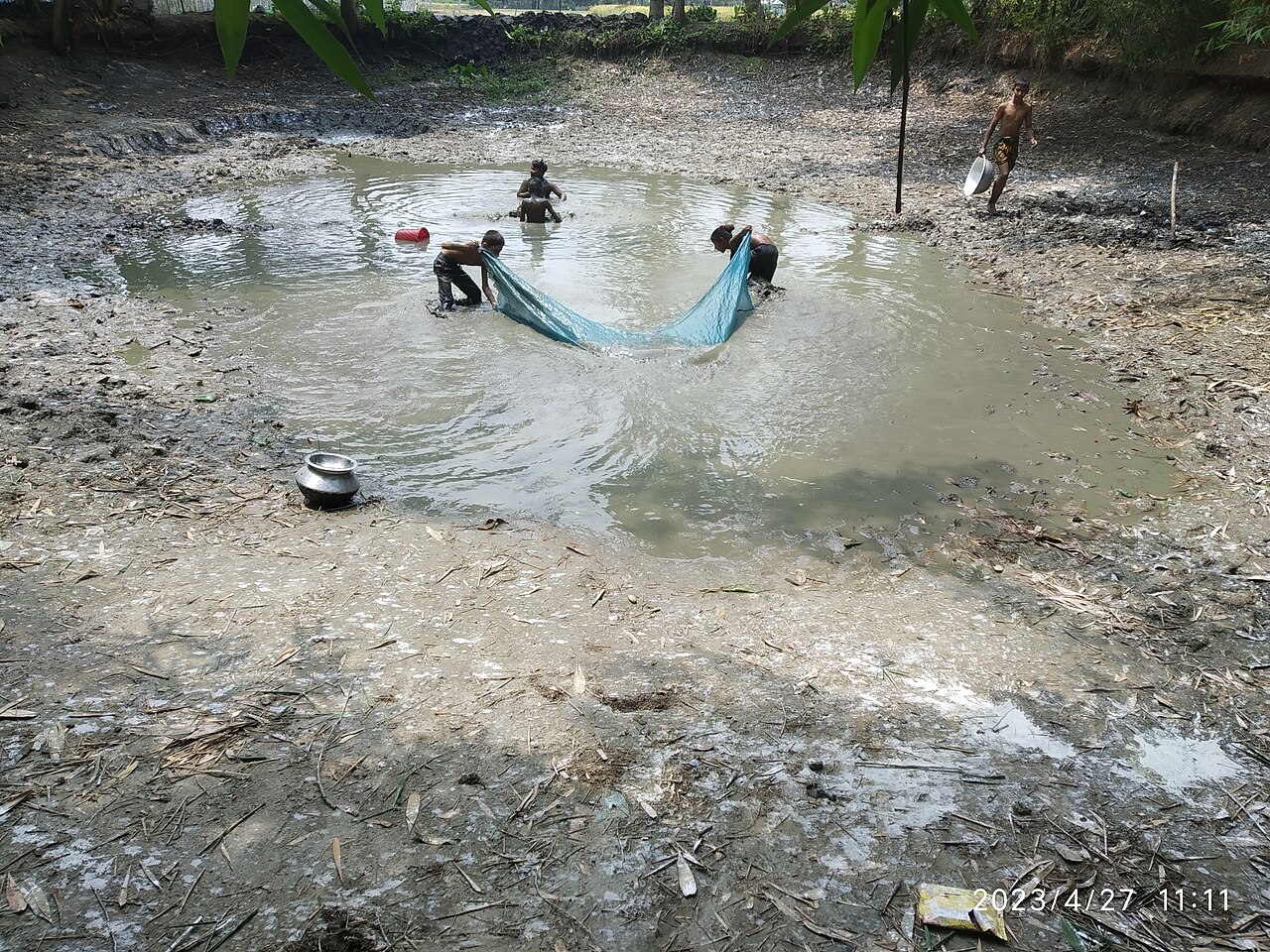
Photo: Fishing in a village pond — Md Nahid Hasan bin Jafor / Wikimedia Commons (CC BY-SA 4.0)

Comments
(0)