
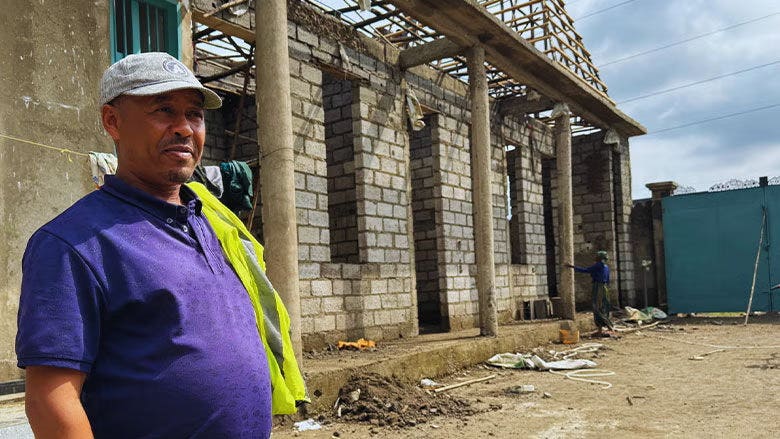
Across rural Ethiopia livestock is a source of food, but it is also a route to paid work. When smallholders gain better technology, organised markets and a way to act collectively, dairying can move from subsistence to a viable rural enterprise.
For Ayelech Tarekegn Mekebo, a mother of three from Kedida Gamela woreda in the Kembata Tembaro zone, that change began with one cow. In 2006 her family lived on subsistence farming; she owned a single local cow producing enough milk for the household with a little to sell nearby. Life was predictable and fragile.
The turning point came when she was introduced to improved dairy practice through the World Bank-supported Livestock and Fisheries Sector Development Project. She began adopting the techniques she was taught — artificial insemination and crossbreeding among them — and her herd changed with her.
In 2021 she joined twelve neighbours to form a Common Interest Group, the step from working alone to working together. With project support the group received construction materials, improved forage seed and water troughs.
By 2022 ten such groups had merged into the Enat Milk Collection and Marketing Cooperative, turning scattered producers into an organised supplier. The cooperative built a milk collection centre and equipped it with refrigeration — the piece of infrastructure that decides whether a morning's milk is worth anything by afternoon.
Today Ayelech supplies about 20 litres of milk a day to the cooperative at 80 Birr a litre, and is paid every ten days, earning between 10,800 and 14,400 Birr a cycle. Once a year she also receives a dividend, something she had never expected to see.
The cooperative later joined the Tsedal Multipurpose PLC Union, which gave its members access to processing and a stronger position further along the chain. The jobs created by that progression — collectors, transporters, processors — are the reason the Bank counts dairy as employment policy as much as agriculture.
Source: World Bank

Comments
(0)