
OlsAro, a Swedish startup that breeds wheat able to keep yielding on salty soil, has raised a €5 million ($5.5 million) seed round to build its SeedAX platform ahead of a commercial launch in 2027, AgFunderNews reported. Bangladesh is one of its lead markets.
The round was co-led by Industrifonden and Nordic Foodtech VC, with Future Food Fund, PINC, AgFunder and GU Ventures taking part, and lifts the company's total funding to €7.5 million ($8.3 million). AgFunderNews noted that its parent company, AgFunder, is an investor in OlsAro. The money will go into commercial work, new programmes on drought tolerance and nitrogen-use efficiency, and a move into other cereals such as rice.
Chief executive Elén Faxö said OlsAro's salt-resilient wheat had yielded up to 41% more than a moderately salt-tolerant variety under saline conditions in Bangladesh. "Bangladesh remains one of our lead markets, and we're working with Lal Teer Seed towards a commercial launch in 2027," she said, adding that around one million hectares in Bangladesh are affected by salinity while demand for locally grown wheat keeps rising. Advanced trials are also under way in Kenya and Pakistan, with salt and heat trials in Egypt, Italy, Canada and Australia; in India, DCM Shriram has tested its lines in Uttar Pradesh and Bihar.
The varieties are designed to outperform conventional wheat at soil salinity of 4 to 8 deciSiemens per metre and up to 10 dS/m, the moderately to strongly saline range where ordinary wheat loses much of its yield. OlsAro works two ways: a non-GM "population-based" route, in which seeds are treated with EMS to create wide genetic diversity and the best lines are screened out, and gene editing where the rules allow it. Artificial intelligence trained on its own genomic, field and transcriptomic data narrows down the genetic variants linked to a trait.
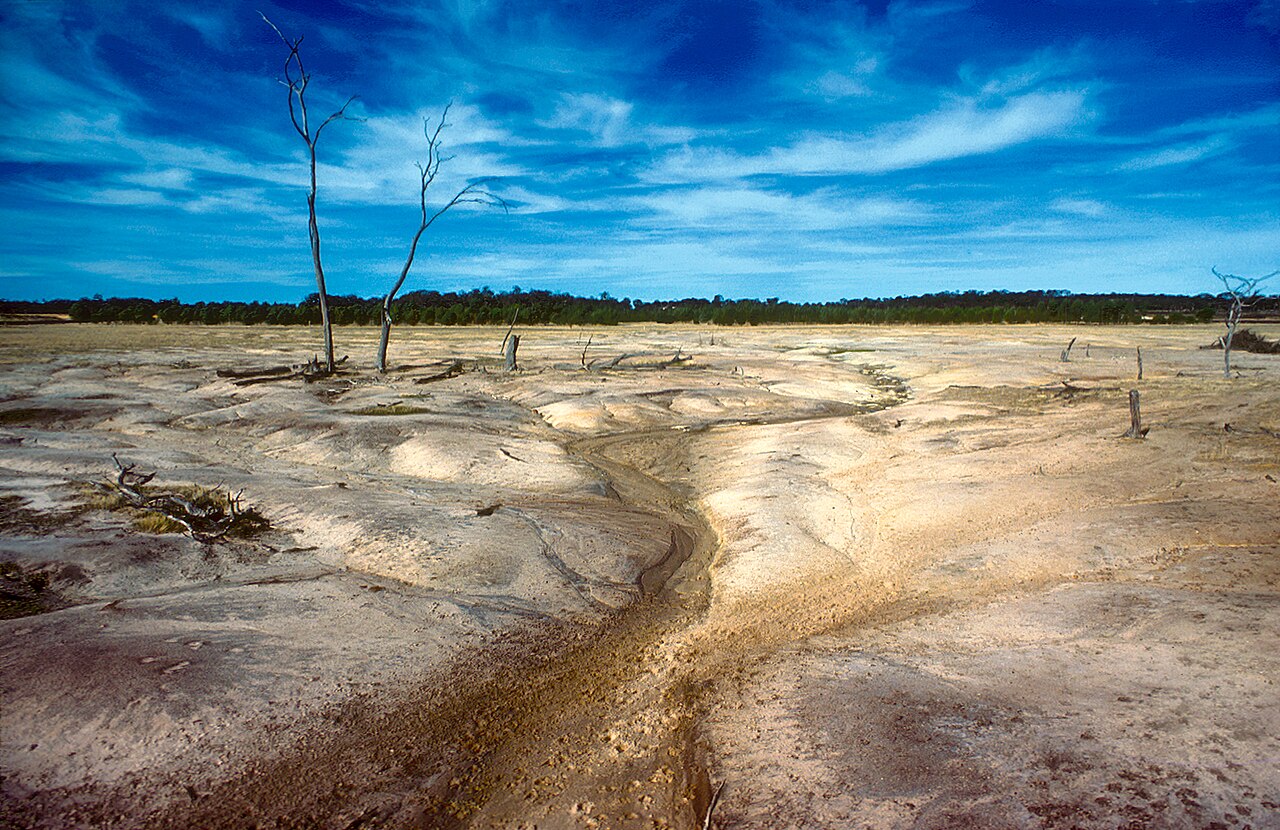
Salinity affects around a tenth of the world's cropland, and flooding, cyclones and irrigation with brackish water are spreading it, Faxö said. For Bangladesh's coastal districts, where saline land often lies fallow in the dry season, a wheat bred for those soils would be a new option for farmers. The story was reported by Elaine Watson.
Photo: Willem van Aken, CSIRO / Wikimedia Commons (CC BY 3.0)
Source: AgFunderNews




Comments
(0)