
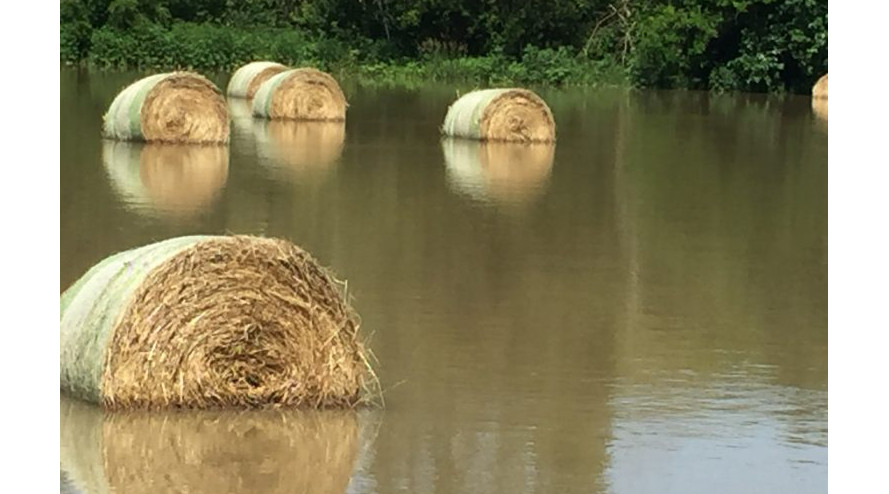
Ohio farmers who had a good forage-making year until August are now being told to go back and check what the floods did to it. Parts of the state received more than 10 inches of rain last month, with over 17 inches reported in places, and the resulting flooding damaged bridges, roads, homes, barns and fields, writes Dean Kreager, agriculture and natural resources educator for Ohio State University Extension in Licking County.
Water crested at heights rarely seen and probably saturated stored forage in many places. Bales near ditches or in low ground may have sat partly submerged for hours unnoticed while farmers dealt with more urgent emergencies, and even hay under a roof, silage and wrapped bales became soaked in some locations.
The first worry is mould. A flooded bale can grow mould right through, and that mould may or may not produce toxins; the recommendation is simply not to feed it, since even without toxins mould causes respiratory problems. Mud, manure, chemicals or fuel carried by floodwater can add further contamination. Toxin testing is available and, Kreager writes, the modest cost can be a good investment.
Wet bales also heat, just as hay baled too green does. Because floodwater soaks deep into a bale, the temperature can rise to the point of fire. Bales that reach around 150 degrees Fahrenheit (about 65 Celsius) should be moved out of buildings at once, and anything that was flooded in a barn should not be left stacked inside.
Wrapped forage is not immune. Water can get in through damaged plastic and upset fermentation, and silage in bunkers or bags can spoil or heat if significant water entered the storage. Farmers are advised to look for mud, mould, damaged coverings and foul odours, take bale temperatures, and keep monitoring for weeks, so there is time to find or make replacement feed.
Feeding questionable forage can cost performance, upset digestion and hurt reproduction even when it does not kill. Contaminated bales still hold nutrients: they can be unrolled on poor patches of pasture where stock cannot reach them, or composted away from watercourses, with strings, net wrap and plastic removed first. Any damage should be documented for disaster programmes, insurance claims or tax write-offs.
Source: Morning Ag Clips
Comments
(0)