
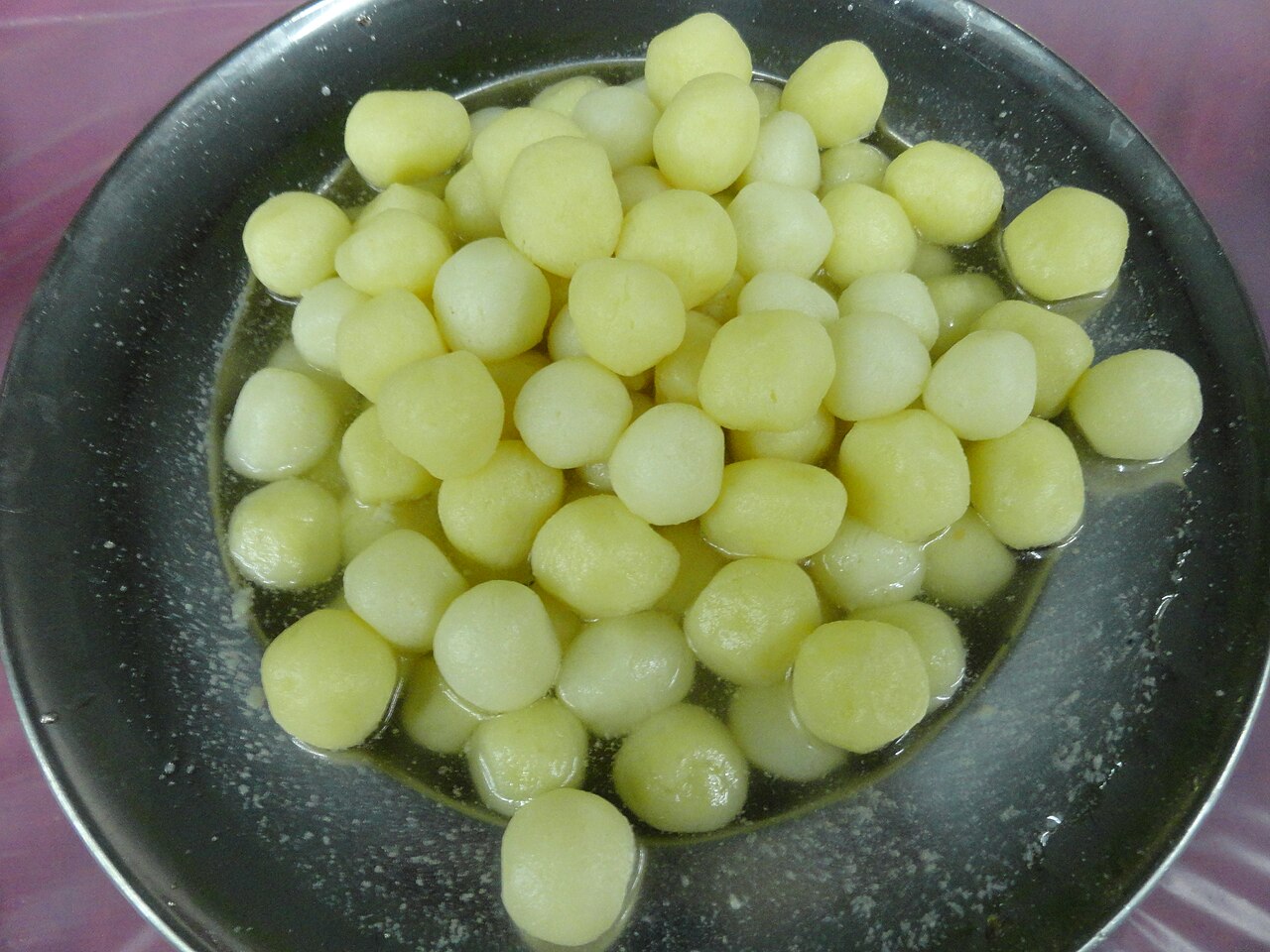
A family whose forebears traded ghee in the British era now runs Bikrampur Mishtanna Bhandar, which makes about 185 kinds of sweets and has some 45 branches across Bangladesh. Prothom Alo's Tarek Hasan Sarkar heard the four-generation story from the family at Balashur in Munshiganj.
Dipak Kumar Ghosh, one of the directors, said the move into sweets came from wanting to grow a business built on milk and ghee. The family's first shop in Old Dhaka was called Deshapriya Mishtanna Bhandar, known for its breakfast and milk tea, though ghee was its best seller. Its signature was pranhara, a sweet nearly a century old made in a special way with sagar bananas; with the skilled makers gone, it is now hard to make it as before. Bikrampur Mishtanna Bhandar itself opened at Kalabagan in 1981 under the late Rameshchandra Ghosh.
Another family member, Pramit Kumar Ghosh, said 24 relatives still run the business together. Rasgulla, lalmohan, kalojam, chomchom and kheer chomchom sell all year, alongside rasmalai, sarmalai, malai chop, Indrani bhog, Jafrani bhog and Kashmiri chomchom. Some sweets are seasonal: demand for kheer kadam rises in winter, and kamalabhog, made by grinding orange peel into chhana, is made only in the orange season.
Taste depends on the quality of the milk, the texture of the chhana, how the kheer is made, the sugar and the syrup. Most of the milk, chhana, kheer and khoa comes from Munshiganj to the factories at Kalabagan and English Road, with cardamom, cinnamon, nutmeg, mace and cloves as spices. Pramit Kumar said they use no preservatives, though food colour goes into three or four sweets, such as dragon sweets, orange laddu and kamalabhog.
About 300 people work for the business, more than 100 of them sweet makers. Keeping raw materials and skills consistent at scale is now the main challenge, and so are fakes: the family has identified about 300 cases of sweets sold under its name and plans legal action soon, Pramit Kumar said.
Milk and chhana are the sweet trade's main raw materials, so demand from makers like this is tied directly to the market for village dairy farmers. The lost recipe for pranhara is a reminder of why makers' know-how needs to be written down and taught to new hands.
Photo: Bhaskaranaidu / Wikimedia Commons (CC BY-SA 3.0)
Source: Prothom Alo

Comments
(0)