
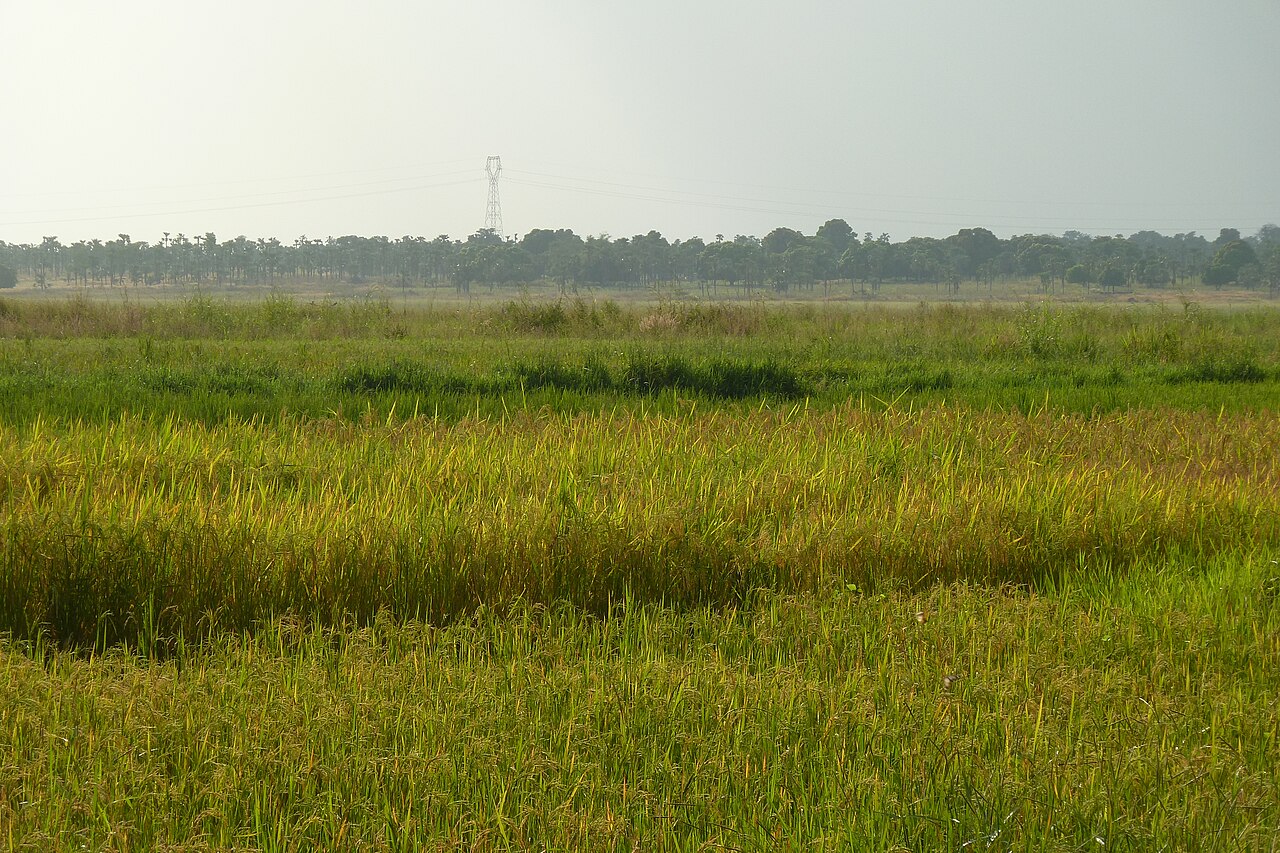
Burkina Faso in West Africa has developed eight new rice varieties using techniques from nuclear science. They can yield 9 to 11 tonnes of rice a hectare and mature in only 95 to 106 days. The conventional varieties on the country's national list yield 4 to 6 tonnes a hectare and take longer to ripen.
The problem behind the work: rice consumption in Burkina Faso has doubled over the past decade, yet about half of the country's rice is imported, so raising domestic output is a national priority.
The scientists used mutation breeding, in which radiation speeds up the natural process of genetic variation and plants with the desired traits are then selected to develop new varieties. The joint Atoms4Food initiative of the International Atomic Energy Agency (IAEA) and the Food and Agriculture Organization (FAO), and the IAEA's technical cooperation programme, supported training, expert advice and field testing. The varieties were released in 2025.
Consumer tastes were part of the selection, not only yield. Two of the varieties have long grains, two are higher in resistant starch and one produces sticky rice.
Imael Ori Nestor Bassole of Joseph Ki-Zerbo University said the achievement goes beyond eight varieties: the country's scientific capacity has grown, so it can keep developing crops that suit changing growing conditions and the needs of farmers and consumers. Dongxin Feng, director of the Joint FAO/IAEA Centre of Nuclear Techniques in Food and Agriculture, said Burkina Faso shows how nuclear science can help meet food-security challenges and strengthen national research.
After official approval, work is under way to scale up seed production and reach more farmers, and demonstration plots are testing how the varieties perform in local conditions.
Reporting: Bangla Tribune international desk
Photo: Africa Rice Center / Wikimedia Commons (CC BY-SA 3.0)
Source: Bangla Tribune

Comments
(0)