
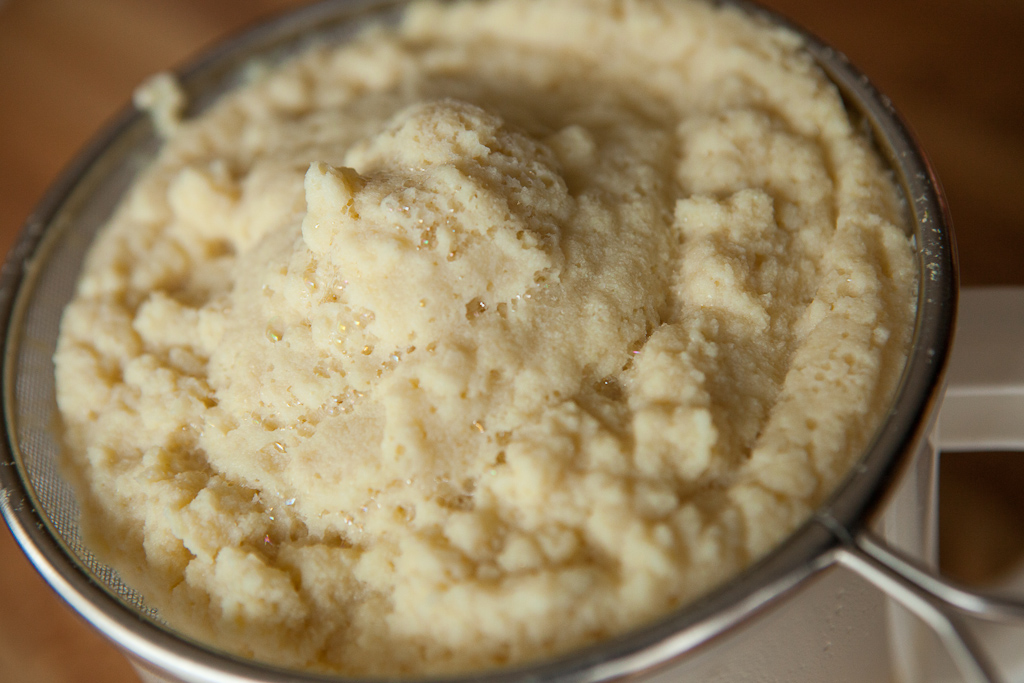
Scientists at Nanyang Technological University (NTU) in Singapore have used oyster mushroom mycelium to turn okara, the pulp left over from making soy milk and tofu, into an ingredient richer in protein and savoury umami flavour, Green Queen reported. The lab-scale study was published in Food Chemistry: X.
Okara is produced in large quantities but spoils quickly because it is wet, and its coarse fibre and slightly sour taste limit its use in food, so it is often thrown away or sold as cheap animal feed. Working with Japanese food maker Ichimasa Kamaboko, the NTU team grew the mushroom's mycelium on okara by solid-state fermentation. Fresh okara supported dense growth, covering the material within 11 days.
As the fungus grew, its enzymes broke the pulp's fibres down into simpler nutrients. Protein content rose to 27.7-30.2% of dry weight and free amino acids rose 2.2 to 6.6 times. Glutamic and aspartic acids, the main umami molecules, increased up to 4.1 times, and flavour-boosting nucleotides by 3.2 to 6.3 times. An electronic "tongue" confirmed less sourness and more umami, although some samples became more bitter and dry.
"This proof-of-concept approach offers a promising way to turn okara into more valuable food ingredients instead of discarding it," said Professor William Chen, director of NTU's food science and technology programme, while noting that energy use, scale-up, production costs, food safety and consumer acceptance still need to be studied. The team's next steps include testing safety, storage stability and taste with people, and assessing whether production can be scaled up profitably.
Tofu and soy milk are made across Asia, including by small producers in Bangladesh, so a use for the leftover pulp could interest food processors here once the method is proven beyond the laboratory.
Photo: Pax Ahimsa Gethen / Wikimedia Commons (CC BY-SA 3.0)
Source: Green Queen


Comments
(0)