
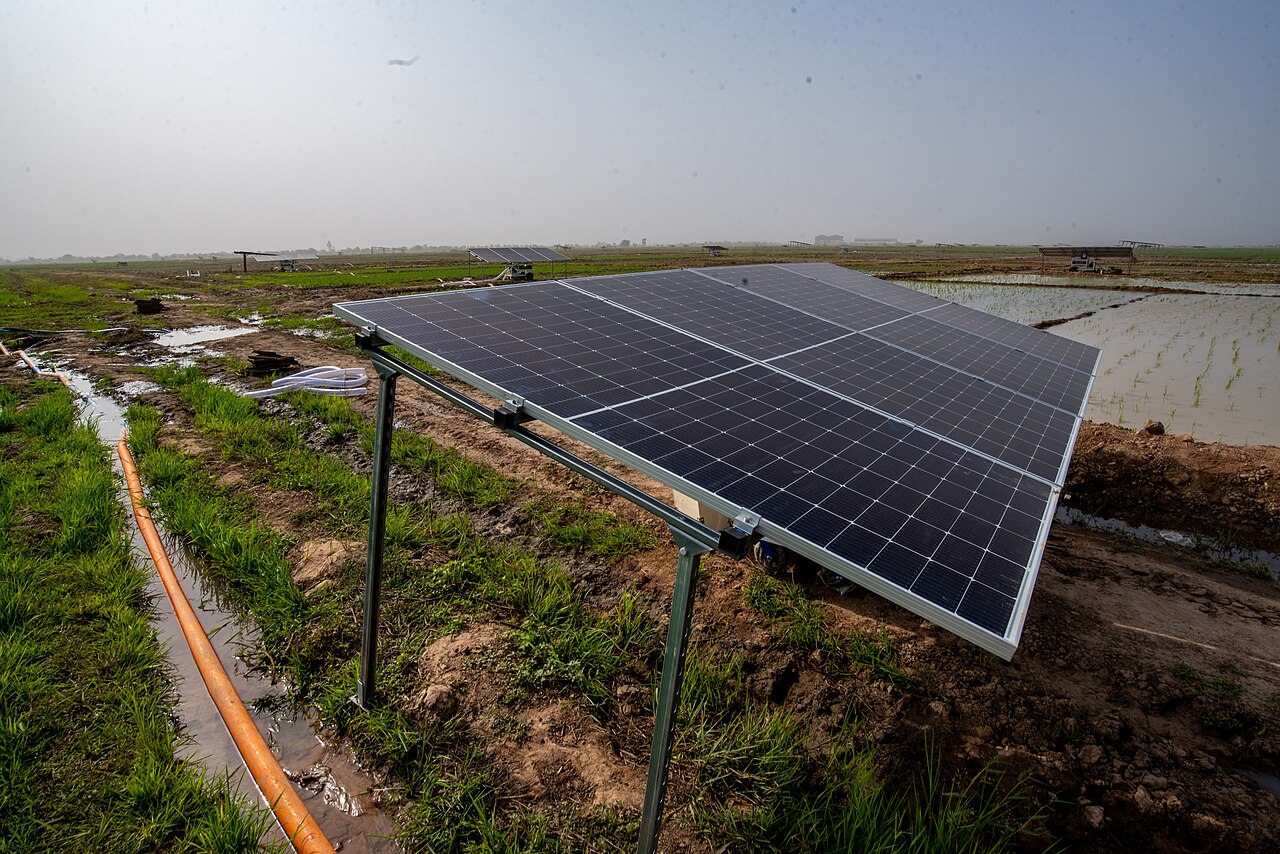
Farmers in northern Nigeria want solar-powered irrigation, but weak links between them, pump suppliers, financial institutions and government agencies are slowing its spread, researchers at the International Food Policy Research Institute (IFPRI) report in a note carried by CGIAR.
The authors call the problem a "missing middle" of limited coordination. To tackle it, a demand-supply linkage event in Jigawa State brought those groups together to share information, build partnerships and identify ways to expand solar irrigation.
Finance remained the sticking point. Discussions showed strong farmer interest in the pumps, the researchers say, but also the need for affordable loans and for repayment schedules that follow agricultural production cycles.
The stakes are large. Nigeria's agrifood system contributes roughly 40 percent of GDP and about two-thirds of employment, according to the note, yet production is overwhelmingly rainfed, leaving some 41 million agricultural households exposed to an erratic climate. Only about 3 percent of the country's roughly 3.1 million hectares of irrigable land is under any form of irrigation.
The north, home to more than 60 percent of Nigeria's farming households, has three assets that suit the technology: abundant sunlight, extensive shallow groundwater and strong unmet demand for affordable off-grid pumps. With diesel and petrol prices volatile, the authors describe solar irrigation as a climate-smart way to produce year-round and to withstand drought.
Reported by Hyacinth Edeh, Bedru Balana, Maryam Abdullahi and Oliver Kiptoo Kirui of IFPRI.
Photo: SMMIMAGES / Wikimedia Commons (CC BY-SA 4.0)
Source: CGIAR

Comments
(0)