
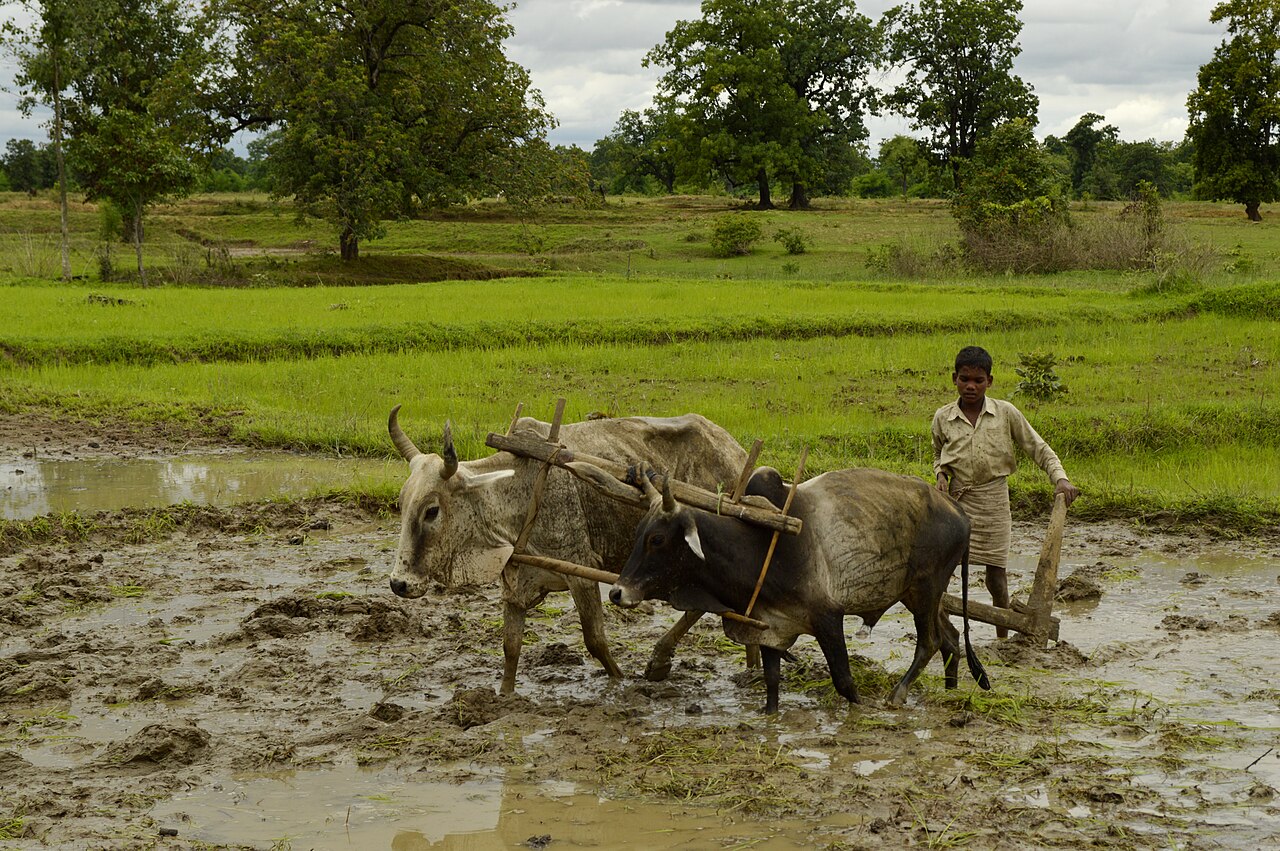
India's goal of becoming a developed nation by 2047 will require agriculture to grow by 4 percent a year in real terms even on conservative estimates, write Bhuvana Narayanarao and Ravi Nandi in Down To Earth. They argue the country's extension system, still built on 20th-century top-down technology transfer, cannot deliver that. The views are the writers' own.
The authors recall that the Green Revolution worked because new varieties arrived alongside intensive extension services, subsidies for irrigation wells, cheap electricity for pumping and assured Minimum Support Prices. Since then, promising innovations have often failed to take hold in fields. They call this a lack of systems thinking, and say extension treats technologies as fixed objects to pass from laboratory to farm.
They also challenge the assumption that farmers adopt whatever promises higher yields. Practical barriers, learning costs and risk all get in the way, they write, and ease of production or taste can matter as much as yield.
Their answer is an "agricultural opportunity system", with frontline agents acting as opportunity brokers. It rests on four pillars. First, a systems perspective that starts from farmers' aspirations and local constraints, and extends to export compliance, traceability and quality certification. Second, "living advisories" that use weather stations, satellite imagery and local pest models to replace static seasonal guides.
Third, scaling only what is ready, with rigorous assessment before statewide promotion, to escape what they call the pilot trap. Fourth, a coordinated ecosystem with several kinds of provider, in place of fragmented policymaking.
On artificial intelligence they are cautious. A fully AI-based extension system does not seem a good idea at this point because of accountability concerns, they write. AI can supply data intelligence and rapid analytics; human workers supply context and trust. They want an AI-enabled, human-in-the-loop system.
Photo: Yann / Wikimedia Commons (CC BY-SA 4.0)
Source: Down To Earth

Comments
(0)