
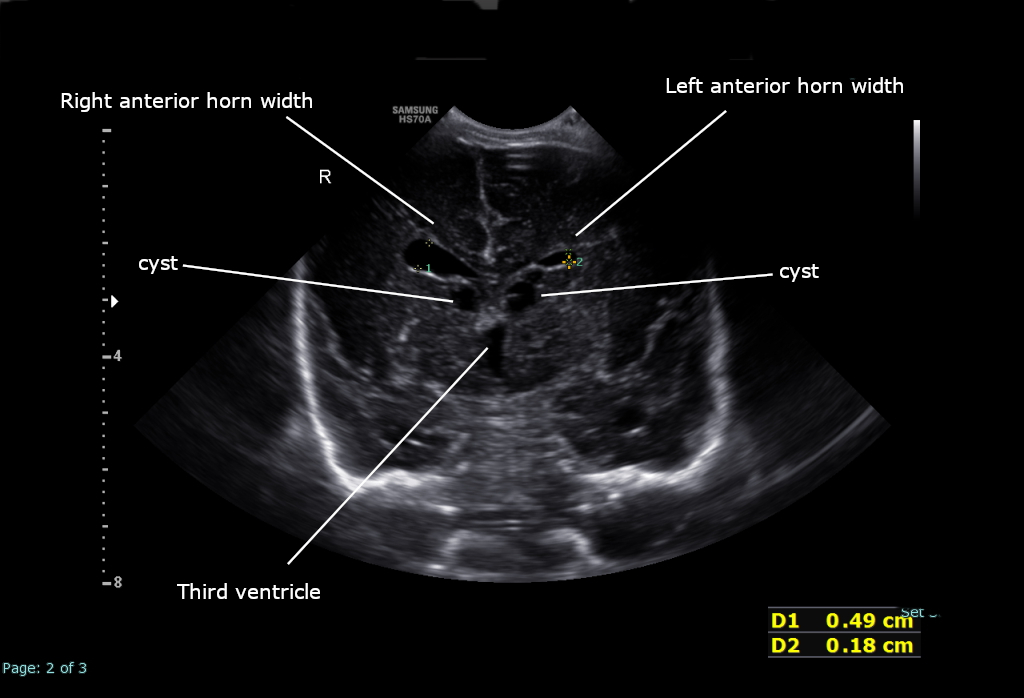
When excess fluid starts to collect in a baby's brain before birth, the condition is called congenital hydrocephalus. If the flow of cerebrospinal fluid (CSF), which surrounds the brain and spinal cord, is blocked, or the fluid is not properly absorbed, it builds up in the brain's ventricles. The condition was explained by Professor Dr Haradhan Debnath of the neurosurgery department at Bangladesh Medical University in Dhaka.
According to him, the causes can include problems in the development of the baby's brain, genetic defects or an infection during pregnancy. One important cause is aqueductal stenosis, a narrowing of one of the slim channels through which CSF moves inside the brain.
Infections in the mother during pregnancy, such as toxoplasmosis, rubella, cytomegalovirus or syphilis, can also affect how the baby's brain develops.
After birth, he says, parents and doctors should watch for a bulging soft spot (fontanelle) on the baby's head, veins on the scalp becoming clearly visible, and eyes that stay fixed looking downwards, known as the 'setting sun sign'.
In many cases enlarged ventricles are picked up on ultrasound during pregnancy. After birth, a physical examination and measurement of the head's circumference are followed, as needed, by ultrasound, a CT scan or an MRI.
One of the standard treatments is shunt surgery. In some cases an endoscopic third ventriculostomy (ETV) can be done instead. Which procedure suits a particular child is decided by a neurosurgeon, so a family that sees the warning signs should get a specialist's opinion without delay.
Photo: Cerevisae / Wikimedia Commons (CC BY-SA 4.0)
Source: Prothom Alo




Comments
(0)