
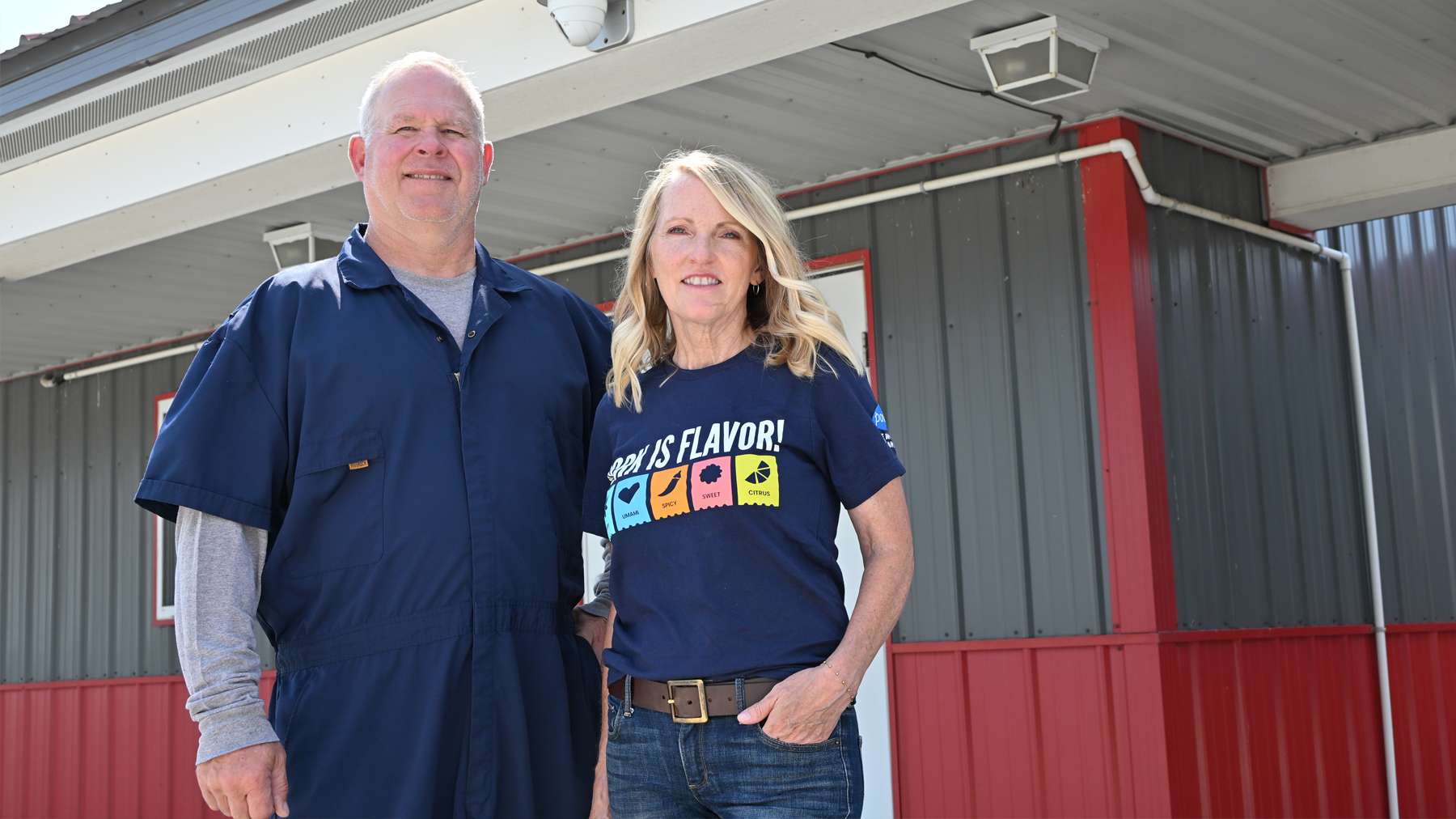
A conversation with their banker about ways to expand turned Walt and Shelli Traudt of Clay Center, Nebraska, from row-crop farmers into first-generation hog producers, and more than a decade on, the manure has become the biggest reason the pigs stay, Farm Progress reports.
Walt Traudt took over the farm in 2001; when Shelli began working full time on it in 2012 the couple went looking for something to fill the months outside planting and harvest. Pigs, he admits, turned out to be a year-round job on top of a six-month one — "we're working 18 months in 12 months" — but the wean-to-finish operation has diversified the family's income and spread its risk.
The Traudts started by finishing about 8,000 pigs a year, enough manure for around 450 acres. Since switching to finishing feeder pigs they handle 11,000 to 12,000 a year and cover 550 acres. "The manure from the hogs has cut our commercial fertilizer bill probably by 60% to 70%," Walt said.
One application does two crops. Corn planted after the manure takes up the nitrogen; the soybeans that follow use the phosphorus, so nothing extra goes on in the rotation and the soil stays in balance. The family tests both soil and manure, draws application maps from the soil samples and spreads with a variable-rate eight-row machine that delivers an even flow to each row.
The gains show most on the dryland corners outside the irrigation pivots. The organic matter in the manure has raised water-holding capacity there, and Walt says corn and soybean yields on those corners keep rising, with benefits under the pivot as well.
The couple learned pigs by asking questions of their integrator and comparing animals in a barn where thousands of good examples were on hand. Walt went on to serve as president of the Nebraska Pork Producers Association, an experience he says showed him where the industry's product ends up — including an award the association received from a homeless coalition in Lincoln, six blocks from where he grew up.
Source: Farm Progress
Comments
(0)