
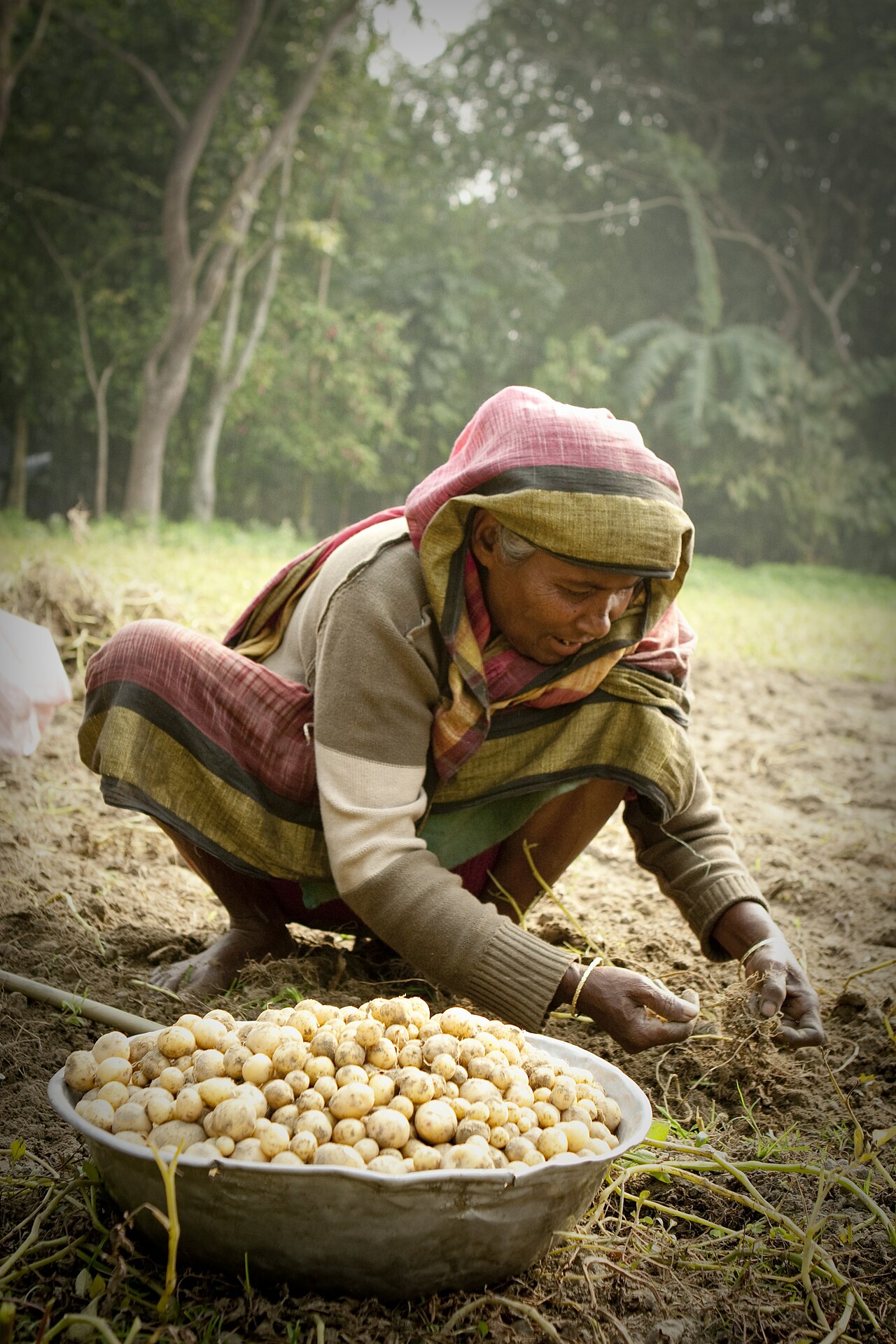
Why do Kurigram's potato farmers keep losing money while cold stores and seed companies, both helped by the state, keep making profits? That is the question the writer Nahid Hasan puts in a column in Prothom Alo. The views are the writer's own.
The column opens at the Saturday market in Rajarhat, where four farm entrepreneurs, Roni, Zakir, Hamidul and Roushan, all told him they had lost money on potatoes. Unless the government exports potatoes, they said, farmers will be ruined this year.
He cites a trader at Mostofa cold store at Ketar Mor: with six cold stores in Kurigram, farmers planted more potatoes in the belief that nothing would rot. Including storage, a kilo cost 23 to 24 taka, of which rent alone was 9.75 taka. Without storage, production cost 13 to 14 taka a kilo, yet farmers are selling at 11.5 taka.
The column also does the seed sums. A good crop gives two sacks of 65 kilos per decimal, or 4,290 kilos a bigha. Roni, who also sells seed, said seed he bought last year at 25 taka a kilo now costs 40 to 42 taka. With 360 kilos of seed needed per bigha, that is 5,400 taka extra, about 1.5 taka on every kilo harvested. Without that rise, the writer argues, sale price and cost would roughly have balanced.
Hamidul's question takes the column to its point: winter vegetables have no cold storage, so their prices fall, but potatoes can be stored, so why do their prices fall too? Meanwhile, thanks to the cold stores, consumers buy potatoes at about 20 taka a kilo all year.
The writer lists the support cold stores receive as agro-industries: low-interest loans and refinancing, cheaper electricity, duty relief on imported machinery and cash incentives on exports, while the Department of Agricultural Marketing sets maximum storage rents. He suggests the government could use cold stores like food warehouses and buy potatoes from farmers at a minimum price. Private seed companies, he notes, also receive varieties bred by public research institutes on easy terms, cheap credit and VAT and duty concessions.
That support is public money, he concludes; when farmers sink into losses while the companies grow fat, the contradiction needs an answer.
Photo: Hridoye Mati O Manush / Wikimedia Commons (CC BY 2.0)
Source: Prothom Alo

Comments
(0)