
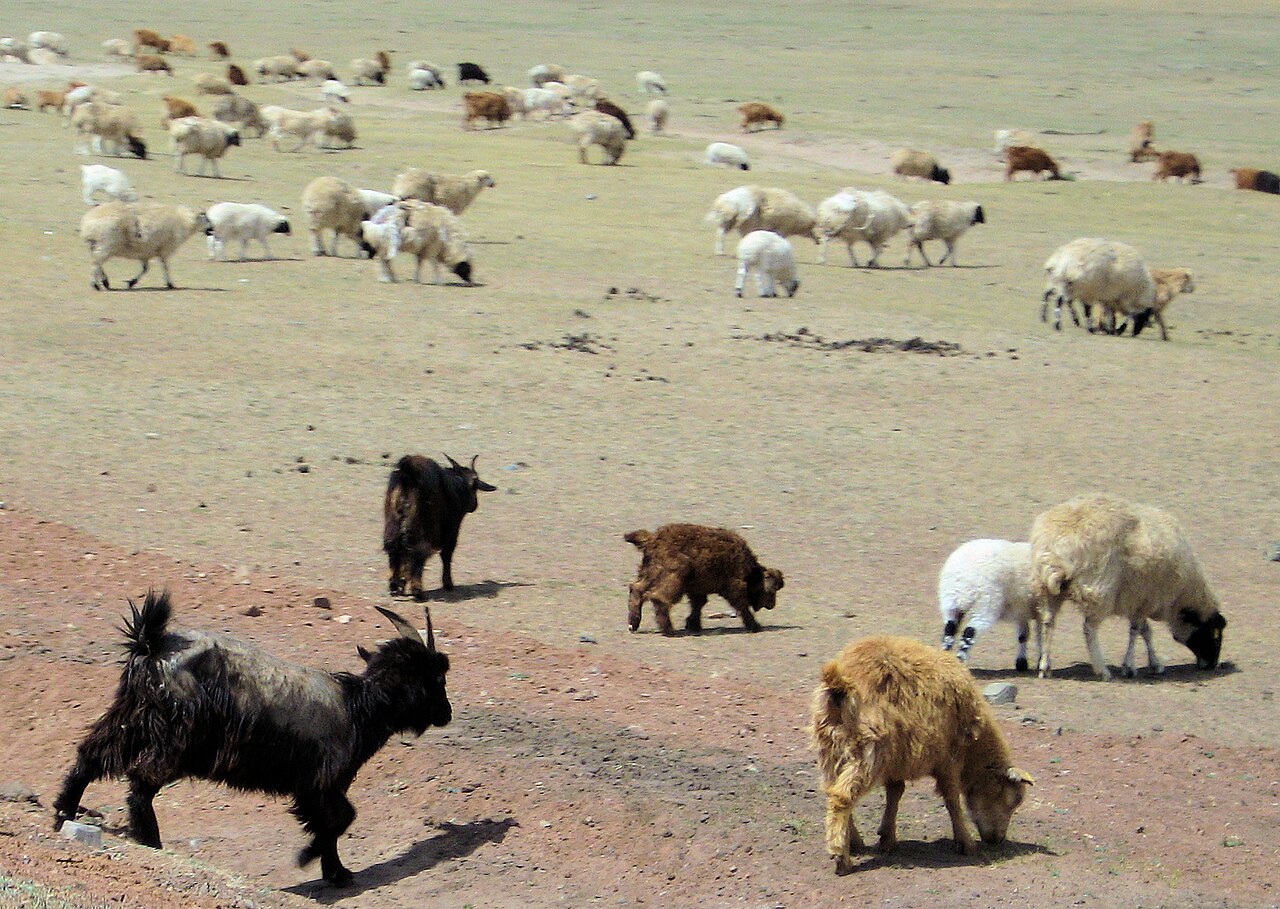
A three-year project launched on 6 October in Ulaanbaatar aims to help 4,000 herding families in Mongolia's Bayankhongor and Dundgobi provinces protect their animals and incomes as extreme weather becomes more frequent, IFAD said.
Sustainable Pasture Management and Adaptation with Resilient Technologies for Herders in Mongolia (SMART-Herders) is funded by a $2 million Adaptation Fund grant and managed by IFAD with the Office of the President of Mongolia and the UN Industrial Development Organization (UNIDO). Mongolia is warming far faster than the global average, with drier summers, harsher winters and most grazing land drying out. Herders are losing animals to dzud, when extreme cold, heavy snow and thick ice stop livestock from grazing.
In the two hardest-hit provinces the project will build two solar-powered water stations and 40 small earth banks to catch rainwater, and open four flood-safe centres where herders can store, process and sell wool, hides and dairy. It will run 144 field schools to train 4,000 herders, at least 40% of them women, in pasture and livestock management, and connect a national database to early warning systems so herders learn sooner of a bad winter or drought.
"Herders know this land and the climate better than anyone, but the weather they grew up with is changing fast," said Nii Quaye-Kumah, IFAD's country director for Mongolia. The project builds on an earlier IFAD-financed project that ended in 2023 and reached more than 137,000 people; an assessment found its herders grazed more sustainably and kept larger winter feed reserves, and photo monitoring showed pastures improved at nearly twice as many sites inside project areas as outside.
Photo: Francisco Anzola / Wikimedia Commons (CC BY 2.0)
Source: IFAD
Comments
(0)