
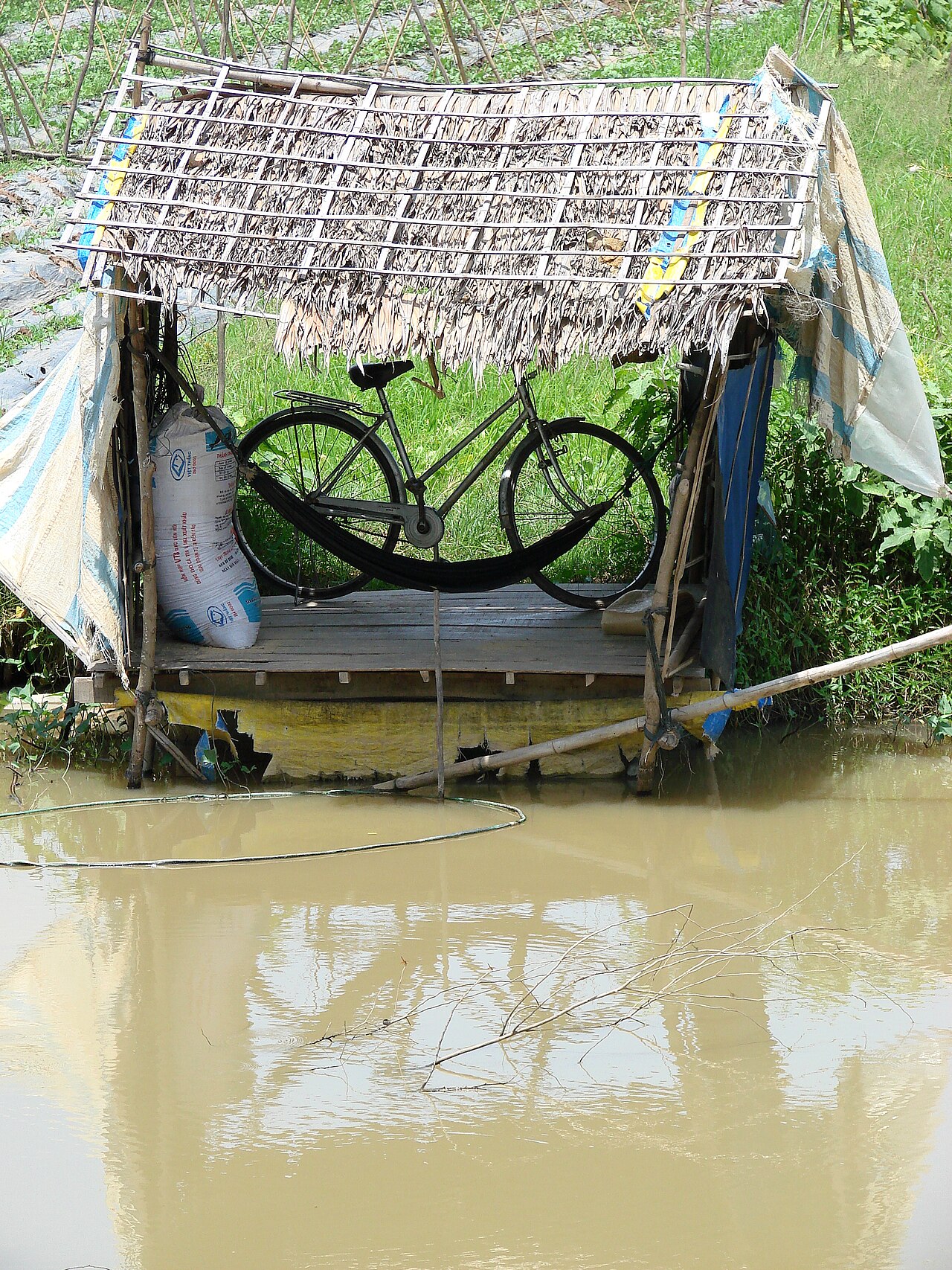
The International Rice Research Institute (IRRI), the Vietnam Rice Sector Association (VIETRISA) and provincial Departments of Agriculture and Environment ran six training-of-trainers workshops in the Mekong Delta between 9 September and 1 October 2026 to spread precision nutrient management (PNM) among rice growers. The sessions in Can Tho, Ca Mau, An Giang, Dong Thap, Tay Ninh and Vinh Long reached nearly 750 farmers, provincial and commune extension officers and cooperative board members from 284 communes.
Those communes cover about 860,000 hectares registered under Vietnam's One Million Hectare High-Quality, Low-Emission Rice Program, which aims to transform rice production in the delta by 2030. Fertiliser accounts for roughly 29 to 32 percent of rice production costs in the region, so using it more efficiently can raise profits and cut emissions.
PNM starts from the fact that rice takes nutrients from soil, irrigation water, sediment and organic material as well as from fertiliser. It follows the 4R framework of the right source, at the right rate, at the right time and in the right place, together with balanced fertilisation, water management and recycling of crop residues. Prof. Dr. Nguyen Van Bo, senior adviser at IRRI, told the An Giang workshop that the approach tailors advice to the variety, the soil, the growth stage and the farming practice rather than prescribing a uniform cut in fertiliser.
Much of the training was hands-on work with Rice Crop Manager, a digital decision-support tool that produces fertiliser recommendations for an individual field from its production conditions, variety and cultivation practices. Participants practised collecting field data, reading the tool's advice and turning it into practical guidance. Nguyen Van Hung, project leader of CGIAR's Scaling for Impact (S4I) programme in Vietnam, said the tool's link to a Zalo-based virtual assistant and to fertiliser application calendars makes the advice easier for farmers to use. Trainees were also shown ViRiCert, which documents and checks compliance with the programme's cultivation protocols; such records can support verification for the Vietnam Green Low-Emission Rice label.
The workshops also produced local plans. In An Giang more than 150 participants drew up commune-level PNM scaling plans; the province targets 351,362 hectares across 86 communes and wards under the programme by 2030. About 110 participants from 49 communes and wards did the same in Dong Thap. Nguyen Thanh Giang, director of the Binh Thanh Agricultural Cooperative in An Giang, said field-specific recommendations could help members cut input costs while keeping yield and quality.
The organisers stressed equal access for women and men to training and tools, a point made at Dong Thap by Nozomi Kawarazuka, gender specialist at the International Potato Center (CIP). The next challenge, they said, is turning the new capacity into lasting adoption by farmers and measurable gains in fertiliser efficiency. The series was supported by S4I, the USDA-funded Fertilize Right project and the Taiwan ICDF-CABIN project; the account was written by IRRI Vietnam.
Photo: Adam Jones / Wikimedia Commons (CC BY-SA 3.0)
Source: CGIAR

Comments
(0)