
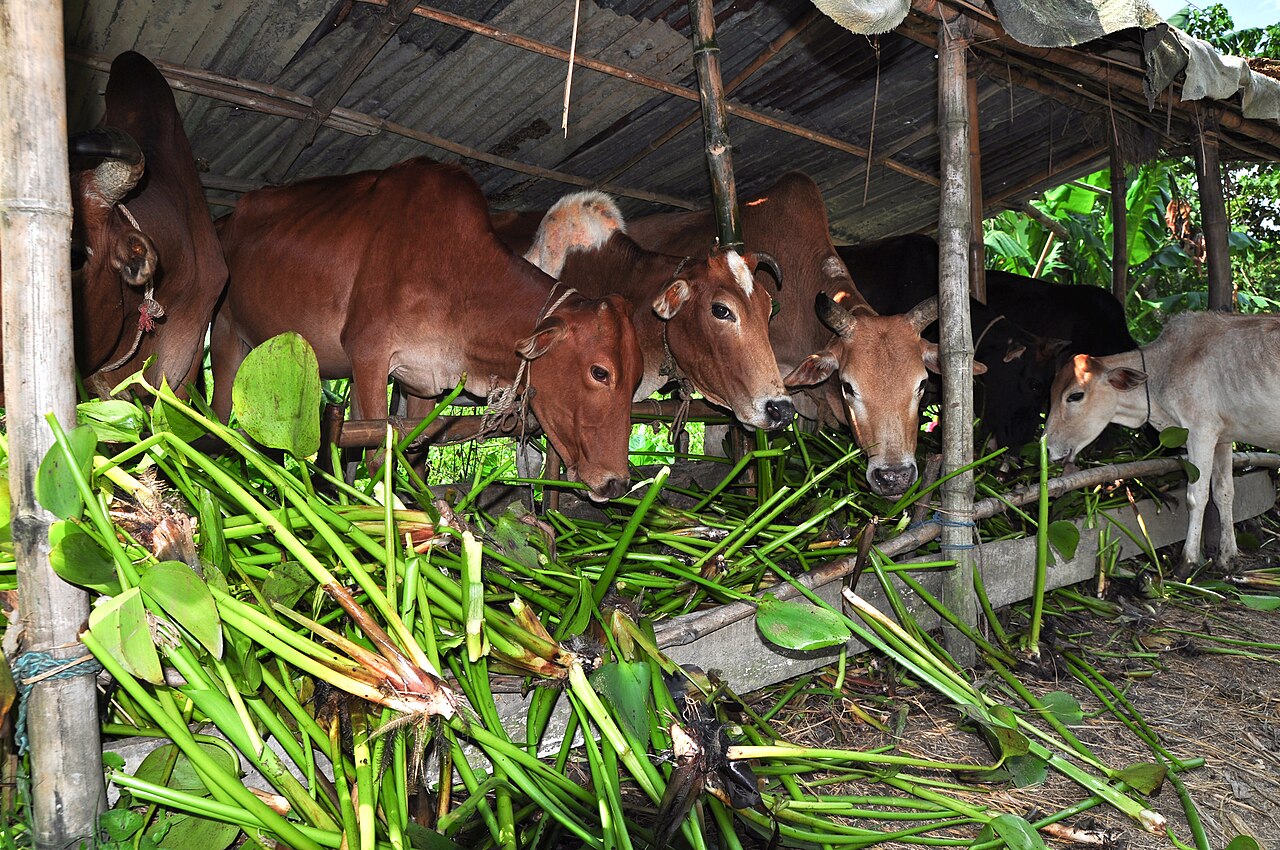
About 6,000 of the roughly 10,000 hectares of Gazna Beel in Sujanagar, Pabna, a wetland known locally as a granary, are now covered in water hyacinth, Krishi Shomoy reported. The growth of broadcast aman rice on 2,500 hectares of the beel has stalled, and farmers fear the weed will also get in the way of the onion crop in the coming dry season.
With plenty of water in the beel this monsoon, farmers had expected a good harvest at first. Broadcast aman normally grows taller as the water rises, but the hyacinth spread at the same time and held the plants back.
Farmers say that every year, before the monsoon, the authorities spray poison to kill the hyacinth; it rots in some places but returns as soon as the rains come. Rafiqul Islam, a farmer in Khoiran, said rice and onion crops have suffered year after year and the agriculture department should find a permanent fix. Gafur, an aman grower in Sadhupur village, said there is so much hyacinth that farmers cannot clear it themselves and he expects a lower yield.
Altaf Hossain, a farmer in Ulat village, suggested that instead of poisoning the weed for a season, a government scheme could hire labourers in the dry season to pull it out of the beel completely.
Asaduzzaman, the Sujanagar upazila agriculture officer, said the office has sprayed poison and that farmers, students and young people are clearing hyacinth voluntarily on the instruction of the local member of parliament. Jahangir Alam Pramanik, deputy director of the Department of Agricultural Extension in Pabna, said the department's efforts continue, but a lasting solution needs landowners and local people as well as the government.
Experts quoted in the report warned that spraying poison across the beel can lower the oxygen in the water and threaten native fish breeding and biodiversity; removing the weed mechanically or by hand is the environmentally sound option. Hyacinth pulled out in the dry season and left in heaps can rot into good organic manure, cutting fertiliser costs for the next onion and vegetable crops.
Photo: Balaram Mahalder / Wikimedia Commons (CC BY-SA 3.0)
Source: Krishi Shomoy

Comments
(0)