
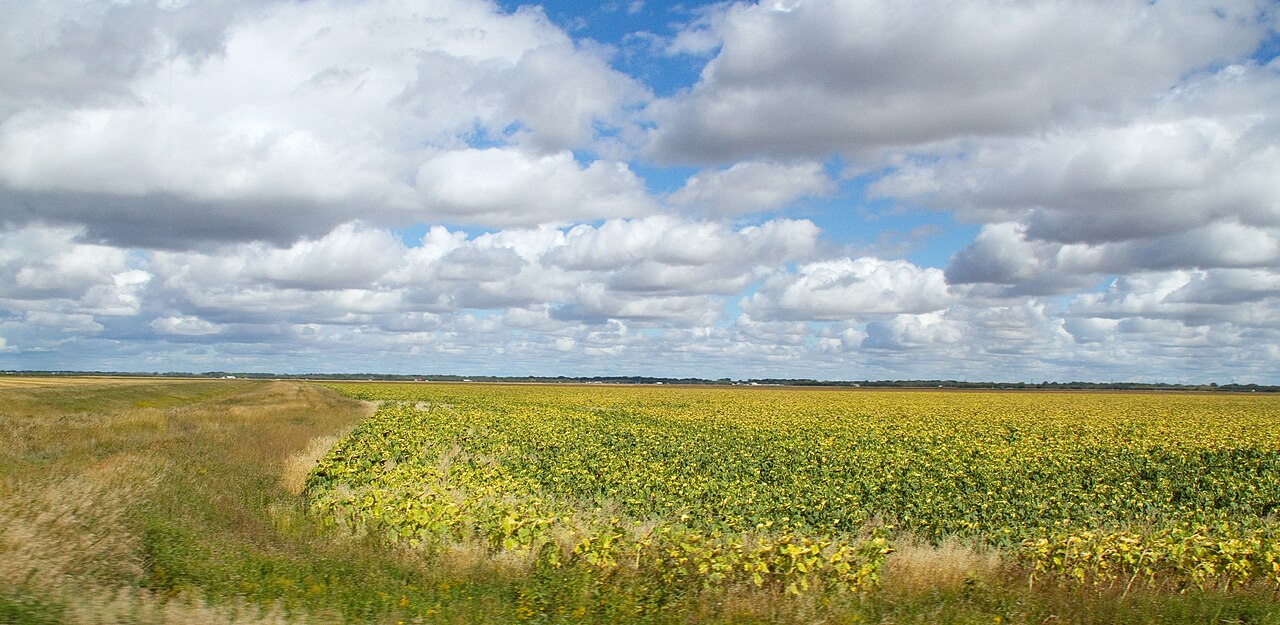
On a mixed farm near Arnes, Manitoba, a cover crop field full of sunflowers now does two jobs: it feeds the Duguid family's cattle and brings visitors onto the farm for u-pick days, the Manitoba Co-operator reported. Scott and Janine Duguid, their children and Scott's father, Mike, run Loch Wood Farms with about 120 head of cattle, and showed the field to tour buses from the Canadian Beef Industry Conference in August.
The family has shifted towards regenerative practices over the past 10 years, pushed mainly by the rising cost of land. "With the cost of land, we're not getting any more. So, I wanted to start using our land more effectively," Scott said. They moved calving from February and March to mid-April, a change he says is hard for many mixed producers but important for an efficient herd. With rotational grazing, the cattle are now on pasture for almost the whole year except during weaning.
Cover cropping, including underseeding wheat to hay, is central. "We started cover cropping so that you would get your winter feed, your grazing, and extended the fall grazing, plus providing your ground cover with something green growing," Scott said. Putting cut-flower sunflower varieties into the grazing blend is what opened the field to u-pick days and to conversations with visitors about farming.
On the grain side they have adopted zero-till, reduced inputs and put profit ahead of maximum yield, using crop protection products only when field conditions and economic thresholds justify it.
The farm also hosts research. The Duguids work with Manitoba Living Lab, which is testing whether drone seeding of cover crops can reduce tillage and avoid damaging the grain crop, and with the University of Manitoba's LEAP project, which studies cover crops, perennials and livestock integration on Prairie farms for sustainability, lower greenhouse gas emissions and climate resilience. The story was reported by Melissa Jeffers-Bezan.
Photo: Tony Hisgett / Wikimedia Commons (CC BY 2.0)
Source: Manitoba Co-operator




Comments
(0)