
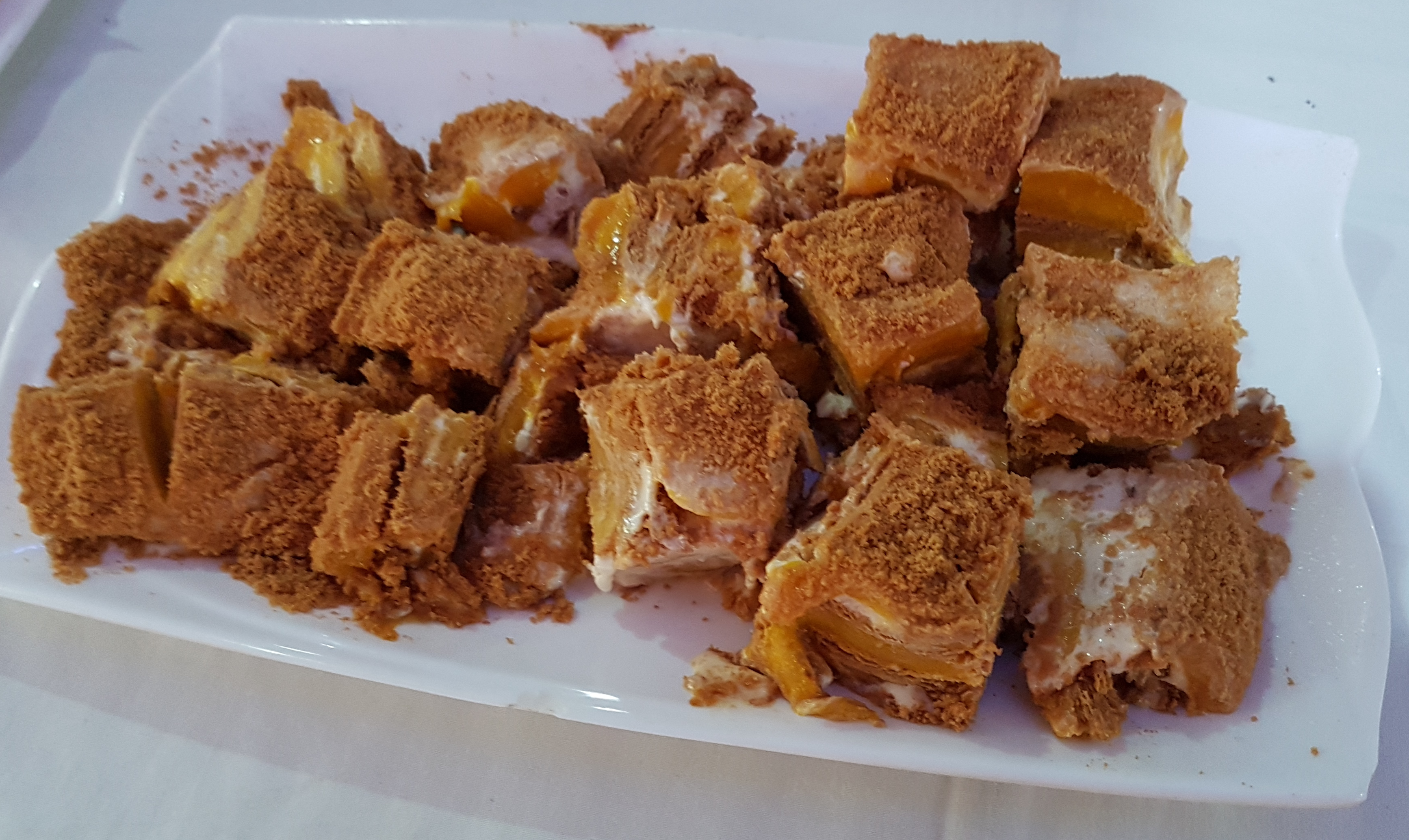
Jagonews24's lifestyle section published a recipe on 1 July 2025 for "mango delight", a chilled dessert that layers a crust of biscuit crumbs, ripe mango pulp and malai (cream) in a serving glass and finishes it with chopped nuts and mint leaves. The paper presented it as a simple, foreign-style sweet that a home cook could make with the ripe mangoes that fill Bangladeshi markets in summer. It needs no oven and no stove: the cook mixes the base, presses it into a glass, and lets the refrigerator do the rest in two rounds of twenty minutes each. The recipe came out in the heart of the 2025 mango season, when Langra, Amrapali and Fazli were already in the markets and the late varieties were only days away.
The recipe is given below exactly as Jagonews24 printed it, followed by background on the kind of dessert it is, on malai, on which mangoes were in season when it appeared, on the mango itself, and on Bangladesh's mango crop as government and research bodies described it up to that summer.
Ingredients
Jagonews24 listed six items. The quantities are the paper's own and are kept unchanged; the recipe does not state how many glasses it fills.
- Biscuit crumbs: 1 cup
- Melted butter: 2 tablespoons
- Icing sugar: 1 teaspoon
- Ripe mango pulp: 1 cup
- Malai (cream): 1 cup
- Chopped nuts and mint leaves, to decorate
Method
- Mix the biscuit crumbs, melted butter and icing sugar together well.
- Press the mixture firmly into the bottom of a serving glass or cup.
- Put the glass in the refrigerator for 20 minutes.
- After 20 minutes, take it out and add a layer of mango pulp and a layer of malai on top.
- Return it to the refrigerator for another 20 minutes.
- Take it out, scatter chopped nuts and mint leaves over the top, and serve the mango delight chilled.
The two rests in the refrigerator do different jobs. The first sets the crust: butter that was melted to bind the crumbs firms up again as it cools, so the base holds together under the soft layers that go on top. The second chills the mango and the cream so that the dessert is served cold, which is how the recipe says it should be eaten.
A layered, no-bake dessert
Mango delight belongs to a family of chilled desserts that are assembled rather than baked: a crumb or biscuit base, a fruit layer and a cream layer, set in the cold. The best-documented relative is the mango float of the Philippines, also called crema de mangga and mango royale. Reference works describe it as an icebox cake, a no-bake cake that is chilled rather than baked, built from layers of graham crackers, whipped cream, condensed milk and ripe carabao mangoes. It is chilled for a few hours before it is served and can also be frozen for a texture closer to ice cream. Cooks there make the same dessert with strawberries, pineapple, bananas or cherries in place of mango.
The Jagonews24 version is a smaller, quicker take on the same idea. It is made in individual glasses rather than a dish, it uses crumbs pressed into a base rather than whole crackers, it is sweetened with a single teaspoon of icing sugar in the base rather than condensed milk, and its cream is malai, the cream of South Asian kitchens. Its two twenty-minute rests are far shorter than the hours a full icebox cake needs, because a thin crumb base and two layers in a glass chill much faster than a deep dish.
Icing sugar, also sold as powdered or confectioners' sugar, is ordinary sugar ground to a fine powder. The recipe uses it in the base, where a fine sugar blends evenly into the crumbs and butter. The nuts and mint on top add crunch and a fresh note against the sweetness of the mango and the richness of the cream.
What malai is
Malai is a clotted cream from the Indian subcontinent, used above all in its sweets. It forms when non-homogenised whole milk is heated to about 80 degrees Celsius, held there for around an hour and then cooled: a thick, yellowish layer of fat and coagulated protein gathers on the surface and is skimmed off. Reference sources put its butterfat at about 55 per cent. Buffalo milk with 5 to 12 per cent fat is considered the best milk for it, though cow's milk with 3 to 5 per cent fat can also be used.
Malai is the base of several familiar sweets, among them ras malai, in which paneer balls are soaked in malai, as well as malai kulfi and malai pedha. In mango delight it plays the part that whipped cream plays in the Philippine mango float: a cool, rich layer that softens the sharpness of the fruit. Because the recipe only calls for "malai, 1 cup", a cook can use malai skimmed from boiled milk at home or a cream bought from a shop.
Which mangoes were in season
The recipe asks only for "ripe mango pulp" and names no variety, but the calendar of the 2025 season shows what a cook in Bangladesh would have found in the market when it appeared. Since several seasons, district administrations in the mango belt have fixed the dates from which each variety may be picked, so that only mature fruit reaches the market. On 7 May 2025 the Rajshahi district administration, at a meeting chaired by the deputy commissioner with agriculture officials, growers, traders and transporters, set the season's calendar. Dhaka Tribune reported that the aim was to ensure the harvesting of "safe, chemical-free, and mature mangoes".
Under that calendar, harvesting of all early-season mangoes could begin on 15 May. The dates for the named varieties, as Dhaka Tribune reported them, were:
- Gopalbhog: from 20 May
- Rani Pasand or Lakshmanbhog: from 25 May
- Himsagar or Khirsapat: from 30 May
- Langra: from 10 June
- Amrapali and Fazli: from 15 June
- BARI Aam-4: from 5 July
- Ashwina: from 10 July
- Gaurmati: from 15 July
- Katimon and BARI Aam-11: available year-round
The national news agency BSS gave the same calendar a week later, with Ilamati from 20 August as the last of the season. Farmers could still ask their upazila nirbahi officer for permission to pick earlier if a natural disaster struck. The start date for early mangoes had been 15 May in 2024, 4 May in 2023 and 13 May in 2022.
So when Jagonews24 published the recipe on 1 July, Langra, Amrapali and Fazli had been in the shops for two to three weeks, Himsagar was near the end of its run, and the late varieties BARI Aam-4 and Ashwina were due within days. Any of them, fully ripe, gives the soft, sweet pulp the recipe needs.
Bangladesh's mango varieties
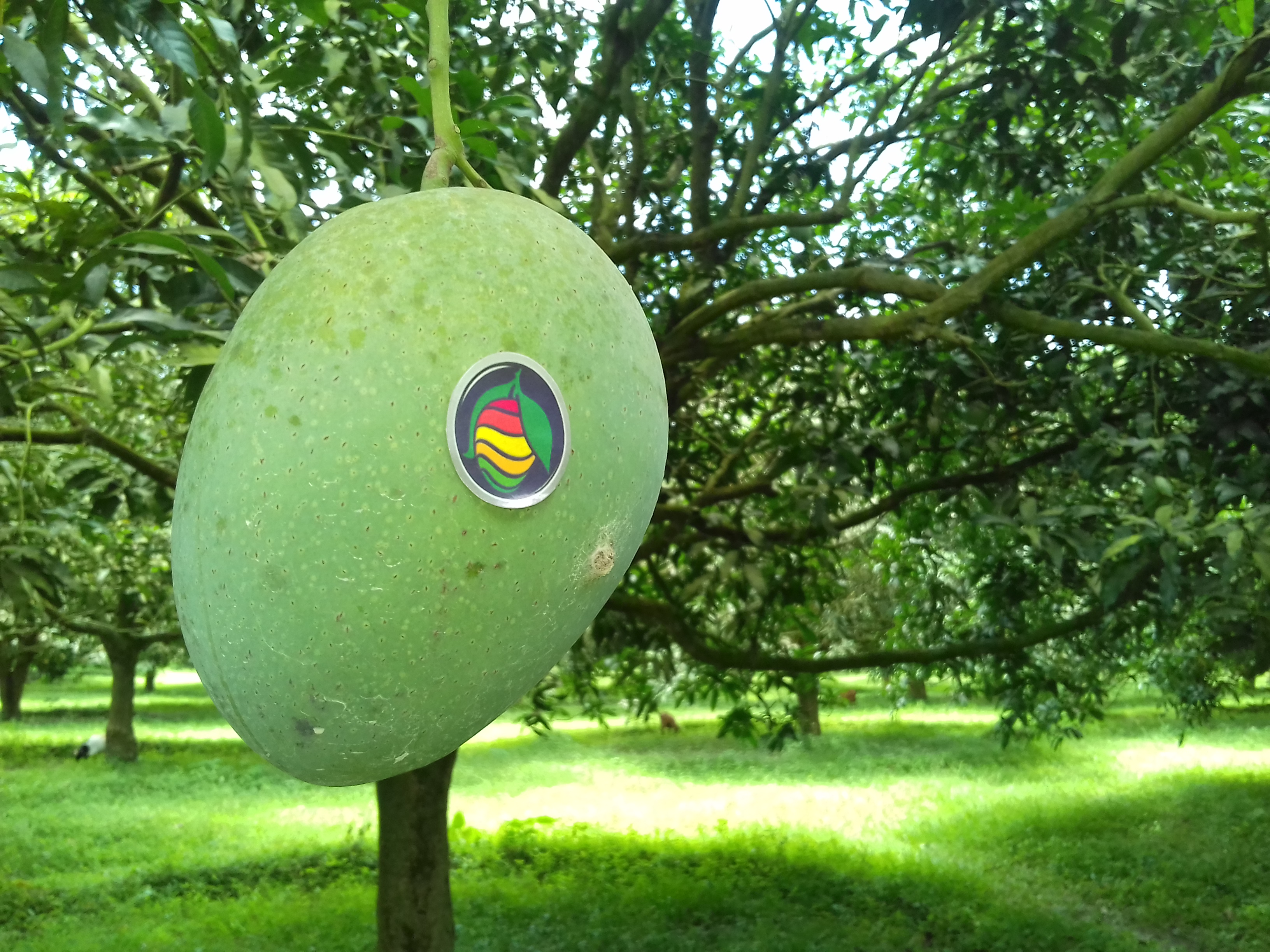
Banglapedia, the national encyclopedia, records nearly 100 mango cultivars in Bangladesh and names Fazli, Langra, Gopalbhog, Himsagar, Khirsapat, Ashwina, Kishanbhog, Kuapahadi, Lata Bombai, Bombai, Kohitoor, Lakshmanbhog, Mohanbhog and Misribhog among the elite varieties. Seedling trees of no recognised variety are known as deshi or guti mangoes; their taste is not assured. Superior varieties are grown mainly in Rajshahi, Chapainawabganj and Dinajpur, and the Bangladesh Agricultural Research Institute (BARI) runs mango research stations at Rajshahi, Chapainawabganj and Joydebpur.
A BSS report of April 2025 listed many more names that growers plant, from Amrapali, Mollika, Subornarekha, Misridana, Nilambori, Kalibhog and Kanchamitha to Haribhanga, Lokhna, Totapuri, Baromasi, Kent and Alphonso, besides the improved BARI varieties.
Two of BARI's releases changed the season. The Daily Star reported in August 2021 that BARI Aam-3, the variety widely known as Amrapali, is a hybrid developed in India from Dasheri and Neelum; BARI released it in 1996, it has been widely marketed since 2009-10 and it is grown in at least 30 districts. It reaches the market around 15 June and stays until mid-August. BARI Aam-4, a cross of the Florida variety M3896 with the local Ashwina, was released in 2003; it was then grown on 4,000 to 5,000 hectares and was in high demand because it ripens late, in the last week of July. By that report BARI had developed 17 mango varieties and Bangladesh Agricultural University 25, and growers in the Rajshahi region were planting BARI Aam-3 and BARI Aam-4 in orchards that once held Fazli and Ashwina. BARI Aam-11 is a variety that fruits all year round.
The mango and its place in Bangladesh
The mango, Mangifera indica, belongs to the family Anacardiaceae. Banglapedia describes the species as indigenous to the eastern part of the Indian subcontinent, including Bangladesh, Assam and Myanmar, and calls it the "king of fruits". The English word came in the 16th century from the Portuguese manga, which was taken from the Malayalam manga. Arab and Persian traders carried the fruit to East Africa in the 9th and 10th centuries, and the Portuguese spread it from Goa to Africa and on to Brazil in the 16th and 17th centuries.
The mango tree is the national tree of Bangladesh, while the fruit is the national fruit of India, Pakistan and the Philippines. Banglapedia notes that the best way to eat a mango is fresh; green fruits go into curries and dal, and ripe and green fruits alike are made into jam, jelly, squash, chutney and pickles (achar). Mango delight is one of the newer, imported ways of using the ripe fruit, alongside the mango lassi, made with ripe mango or pulp, buttermilk and sugar, and the Philippine mango float.
The 2025 crop in figures
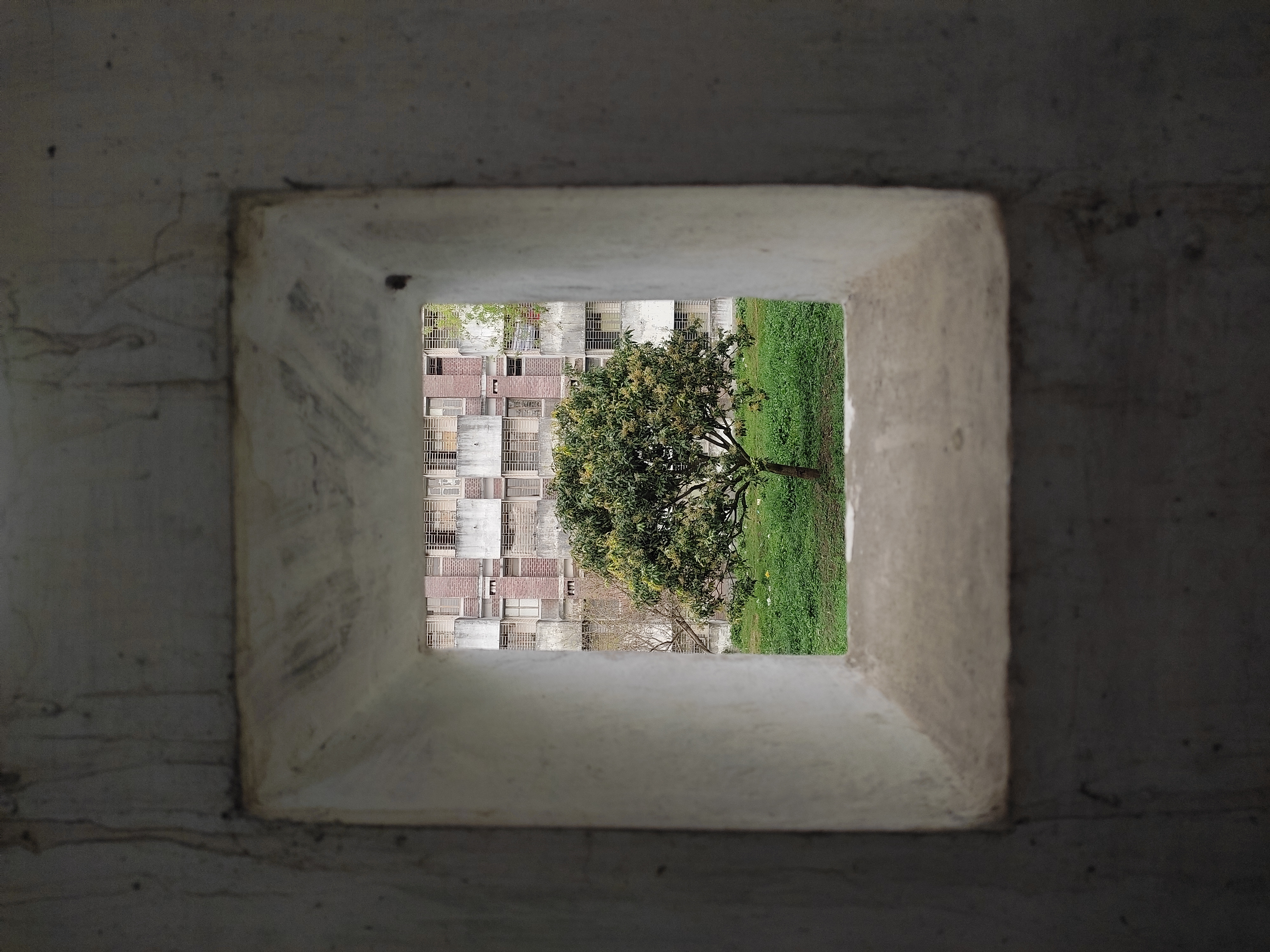
Department of Agricultural Extension (DAE) figures reported by BSS in April 2025 show the size of the crop that supplies the pulp for desserts like this one. Bangladesh produced 23,50,499 tonnes of mangoes from 2,02,968 hectares in FY2020-21, 27,07,459 tonnes in FY2022-23 and 25,08,973 tonnes from 2,05,034 hectares in FY2023-24. For the 2025 season the DAE set a record production target of 27 lakh tonnes on 2,05,034 hectares. Officials of the government's exportable mango production project said mangoes are grown mainly in 15 districts, among them Rajshahi, Naogaon, Satkhira and Chapainawabganj, and that the season's picking starts with Gopalbhog in Satkhira. On 21 May 2025 the agriculture secretary told a briefing in Dhaka that output had been about 27 lakh tonnes in 2022-23 and 24.5 lakh tonnes in 2023-24.
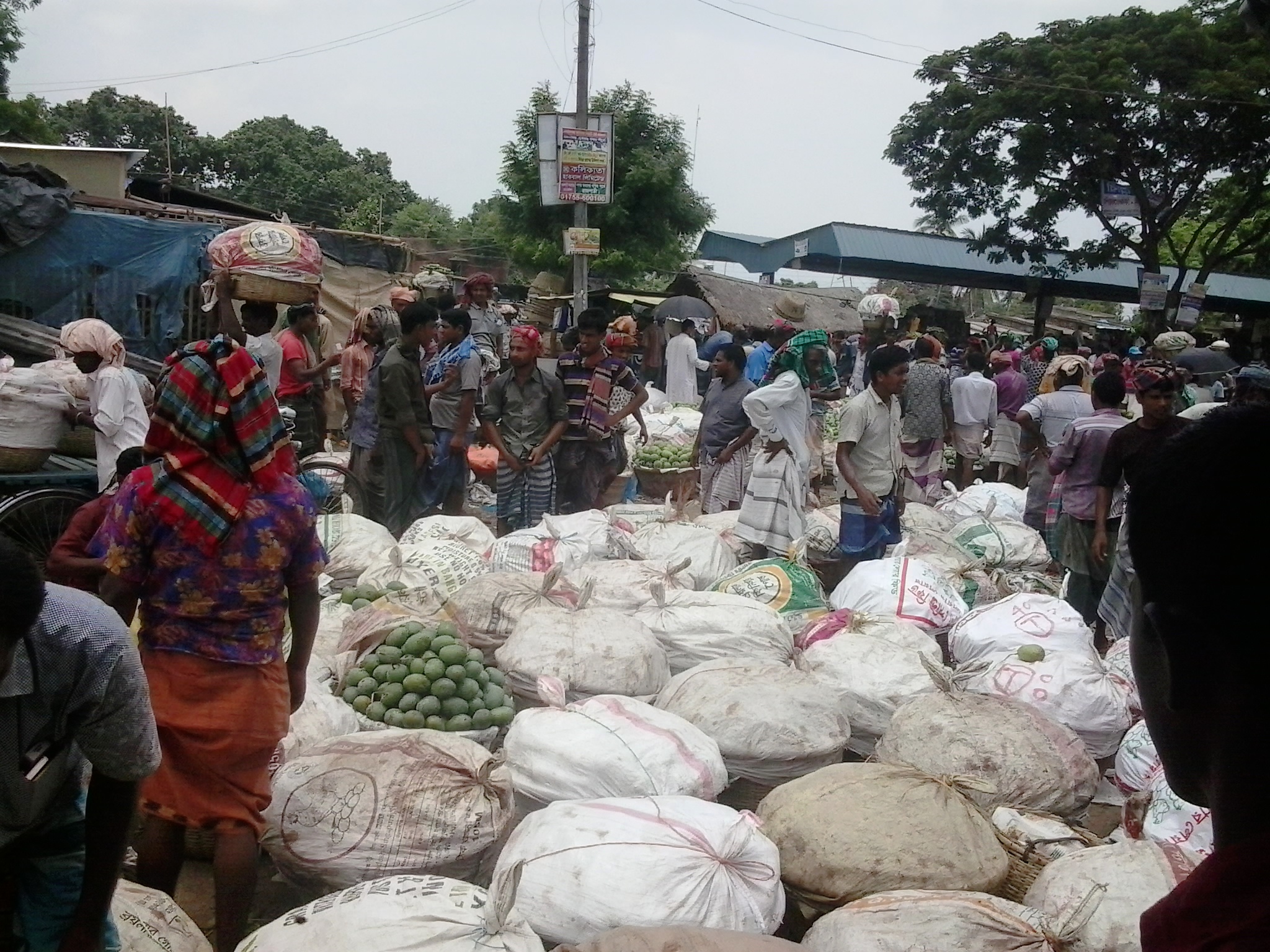
Rajshahi district alone had 19,603 hectares under mango in 2025, with an expected average yield of 13.26 tonnes per hectare and a projected harvest of 2,60,006 tonnes worth an estimated Tk 1,695.85 crore, according to the figures given at the district's mango-calendar meeting. BSS reported in May 2025 that Rajshahi's Baneswar market, the largest mango market in the district, is known as the "mango capital" of Bangladesh, and that Bagha upazila produces about a third of the district's mangoes. The Rajshahi Chamber of Commerce and Industry expected the region's crop to be worth about Tk 10,000 crore. At the start of the season large native mangoes sold for about Tk 1,400 a maund and smaller ones for Tk 800 to 1,000, somewhat lower than a year earlier.
The weight of the north-west is long-standing: The Daily Star reported in January 2019, citing the Bangladesh Bureau of Statistics, that the north-western divisions, mainly Rajshahi, account for 67 per cent of the country's mango production, followed by Khulna in the south-west.
Branded varieties and exports
Two Bangladeshi mangoes carry geographical indication (GI) status, the legal mark that ties a product's name to its place of origin. Chapainawabganj's Khirsapat, also called Himsagar, was the third Bangladeshi product to receive it, after hilsa and jamdani: BARI applied on behalf of the district's growers in February 2017 and the certificate was handed over on 27 January 2019 by the Department of Patents, Designs and Trademarks. Fazli was registered as a GI of Rajshahi and Chapainawabganj, and its certificate was issued on 25 April 2023. BARI researchers told The Daily Star in 2019 that Khirsapat is the second most widely grown variety after Ashwina.
Only a small share of the crop is sold abroad. According to DAE figures carried by BSS, exports were 309 tonnes in FY2016-17, 1,757 tonnes in FY2021-22, 3,100 tonnes in FY2022-23 and 1,321 tonnes in FY2023-24, and the 2025 export target was about 5,000 tonnes, to some 38 countries including the United Kingdom, Italy, France and Canada. China approved imports of fresh Bangladeshi mangoes in July 2024, and on 28 May 2025 the first consignment, three tonnes, arrived in Changsha in Hunan province, Xinhua reported; the importer expected to bring in more than 100 tonnes in the first year. Xinhua also noted that growers in Chapainawabganj have taken up fruit bagging as an alternative to chemical pesticides.
Nutrition and sugar
The United States Department of Agriculture's food composition data (FoodData Central) give raw mango per 100 grams as 83.46 grams of water, 60 kilocalories, 14.98 grams of carbohydrate, of which 13.66 grams are sugars, 1.6 grams of dietary fibre, 0.82 grams of protein and 0.38 grams of fat. The same 100 grams carry 36.4 milligrams of vitamin C, 168 milligrams of potassium, 43 micrograms of folate and 640 micrograms of beta-carotene, which the body uses to make vitamin A.
The other layers of mango delight change that picture: butter and malai are rich in fat, and the biscuits and icing sugar add sugar. The World Health Organization recommended in March 2015 that adults and children keep their intake of free sugars below 10 per cent of total energy, and said a reduction to below 5 per cent, about 25 grams or six teaspoons a day, would bring further benefits. WHO's definition of free sugars covers sugars added by the cook or the manufacturer, such as the icing sugar in this recipe, and the sugars in honey, syrups and fruit juices; it does not cover the sugars naturally present in fresh fruit and milk. A dessert like this is a treat for the season, not an everyday food, and anyone who has diabetes or has been told to watch their diet should ask a doctor about sweets such as this.
Safe fruit and safe cream
The point of the mango calendar is food safety as much as quality: it is meant to stop immature mangoes from being picked and sold before their time. For a cook, that means choosing mangoes that have ripened properly. Because mango delight is never cooked, its safety rests on its raw materials and on keeping it cold. The World Health Organization's "Five keys to safer food" (2006) sum up the rules that apply here: keep clean, separate raw and cooked, cook thoroughly, keep food at safe temperatures, and use safe water and raw materials. For this recipe the last two matter most: clean, sound fruit and fresh malai, and a dessert that goes back into the refrigerator rather than standing in the summer heat.
Photo: Obsidian Soul / Wikimedia Commons (CC0)
Sources: Jagonews24, Dhaka Tribune, BSS (Bangladesh Sangbad Sangstha), The Business Standard, The Daily Star, Xinhua, Banglapedia, USDA FoodData Central, World Health Organization, Wikipedia (mango float, malai, mango)


Comments
(0)