
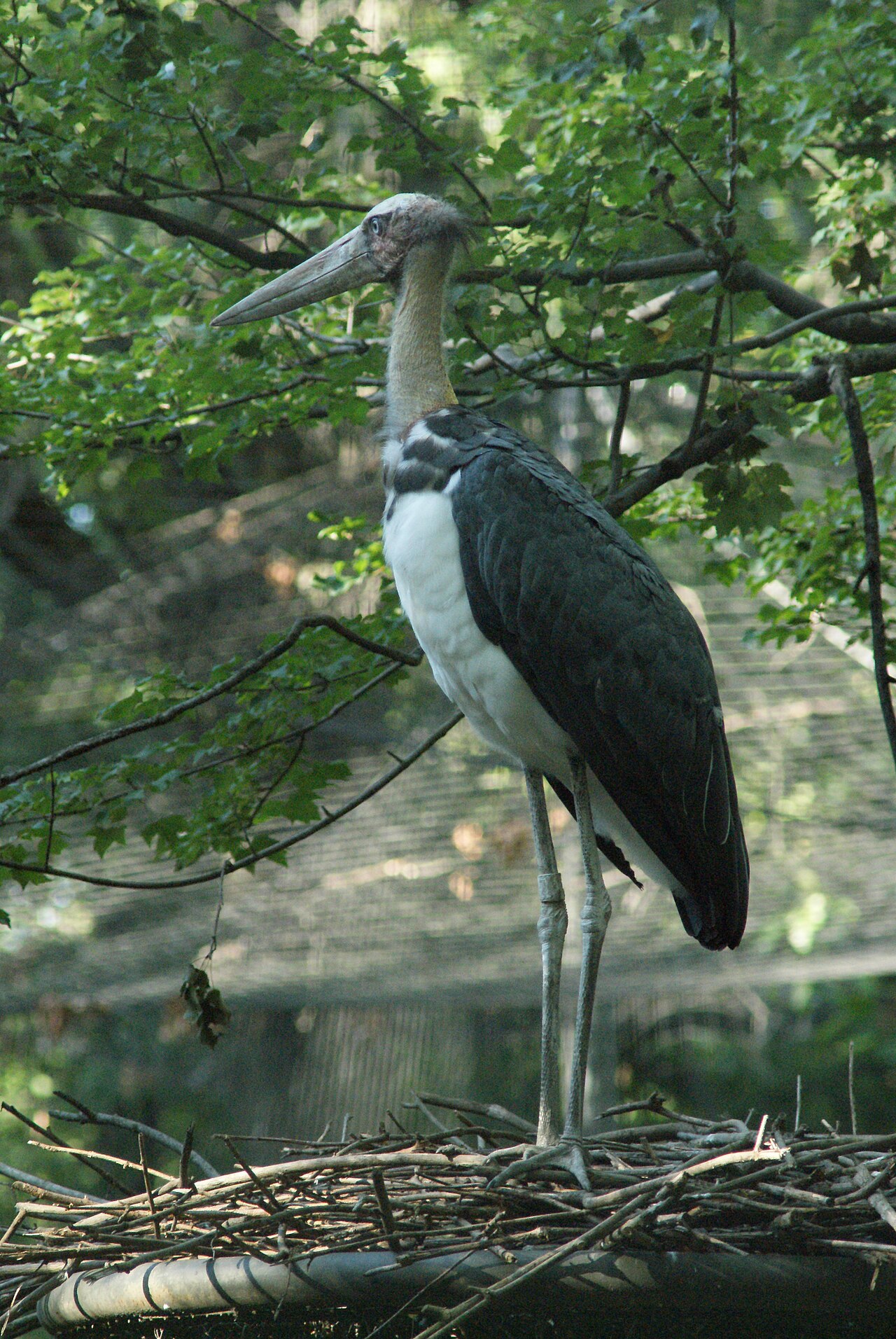
Thirty to forty years ago the lesser adjutant, known in Bengali as madantak, could be seen more or less everywhere in Bangladesh. It is now rare, with only occasional sightings in the Sundarbans and parts of Chapainawabganj and Thakurgaon, writes Tuhin Wadud, a professor of Bengali at Begum Rokeya University and a bird photographer, in Prothom Alo.
He first photographed the bird in the winter of 2021 near Charail Beel in Gomostapur, Chapainawabganj, a wetland on the Indian border where the storks stay for most of the year. That day, though, they were perched on trees in no man's land, and he could only shoot from far away.
In 2022, Thakurgaon bird photographer Rezaul Hafiz Rahi told him of a colony. After a journey of at least another 40 kilometres along rough village roads from the district town, they found 20 to 25 storks on a tree near the Indian border. Villagers said there were more, which mainly fly towards India to feed. Returning a few months later, in September or October, the writer also saw several circling over the Nagar river. He saw a few in the Sundarbans in 2024.
The lesser adjutant, Leptoptilos javanicus, is built like a large heron and measures 110 to 120 centimetres. Its long, wood-coloured bill looks almost carved, its head is nearly bare of feathers, giving it a bald look, its throat is yellow, its breast white, its upper feathers a bluish black, and its legs long.
The bird is disappearing from the country, the writer warns, and wherever it still survives its habitat must be kept fit for it to live.
This report is based on Tuhin Wadud's article in Prothom Alo.
Photo: Elena Gaillard / Wikimedia Commons (CC BY 2.0)
Source: Prothom Alo

Comments
(0)