
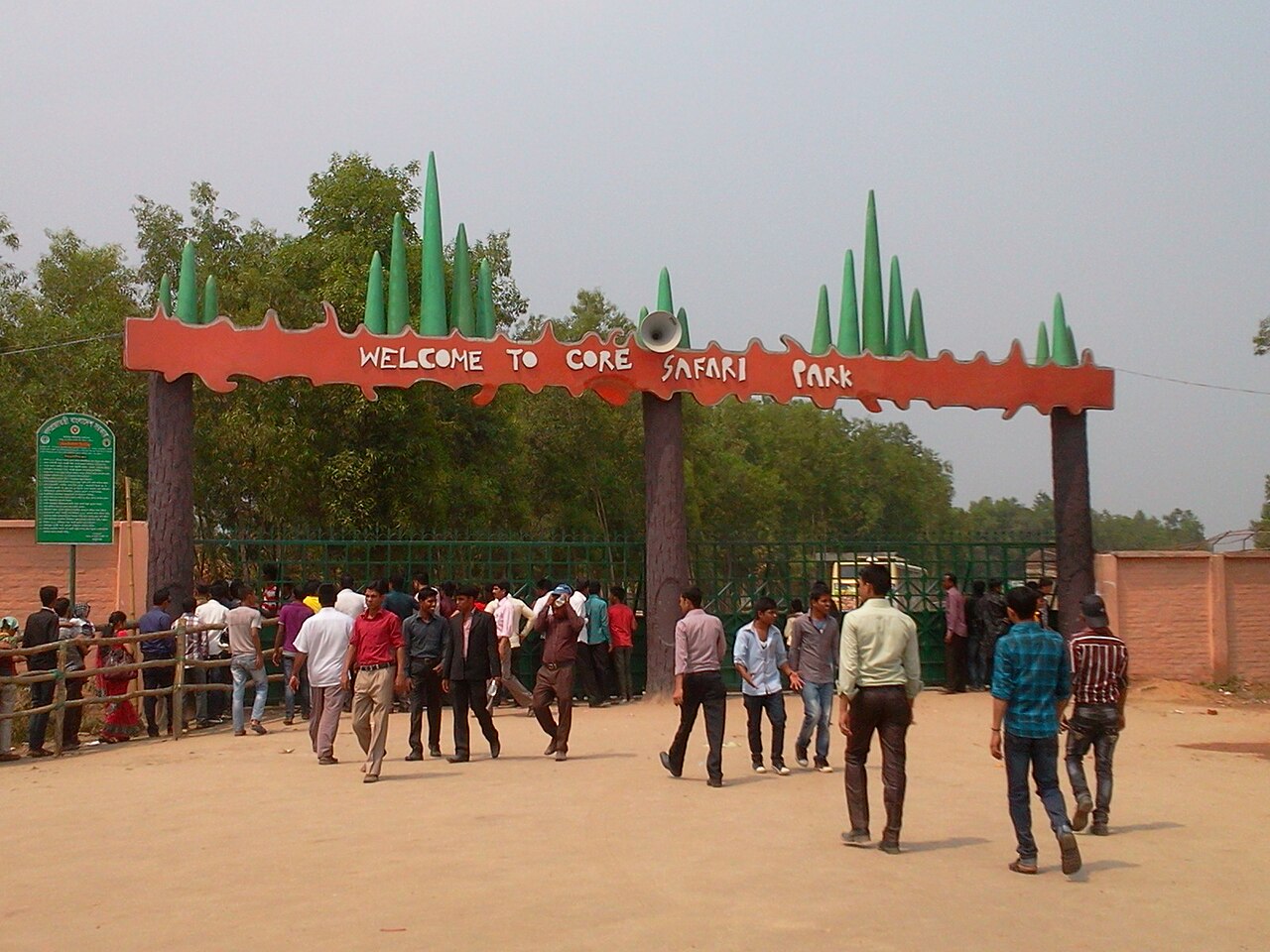
Bangladesh's Forest Department wants to implant microchips in animals at Gazipur Safari Park after a string of thefts and smuggling cases, and to build DNA profiles of rare and sensitive species so that animals taken out of the park can be identified. The Wildlife Crime Control Unit will do the work at its forensic laboratory.
A microchip is an electronic chip the size of a grain of rice carrying a unique number that a scanner can read to identify the animal. DNA profiling stores an animal's genetic fingerprint so that it, or a related animal, can be identified scientifically later. Officials say this would settle doubts over whether a rescued animal belongs to the park.
The thefts have come one after another. On 22 November 2024 two green-winged macaws were stolen from the park's Safari Kingdom; one was recovered, but the case was never solved. On 16 January 2025 a nilgai went missing. In March 2025 three ring-tailed lemurs from Madagascar, the park's rarest animals, were smuggled out; the CID later found they had been taken across the border into India.
Sanaullah Patwary, conservator of forests for the wildlife and nature conservation circle, said the initiative covers sensitive and rare animals. Mohammad Mizanur Rahman, head of the Wildlife Crime Control Unit, said the species needing chips and profiles would be listed first; some chips are in hand, and reagents the laboratory lacks are due within a month.
Work on the park began in 2010 on 3,690 acres of reserved forest in Sreepur, and it opened in 2013 with 1,500 animals of 73 species. It now has 84 staff. Assistant conservator Tarek Rahman, in charge of the park, said securing more than 3,500 acres is a major challenge and that the chips and profiles would also yield data on the animals' health. The country's other safari park is at Dulahazara in Cox's Bazar.
Wildlife expert Reza Khan, who worked for years at Dubai Safari Park, called the plan good practice followed at safari parks worldwide, but said the enclosures are unhygienic, the park lacks staff who understand the animals, and its management methods are outdated and need to change.
This report is based on reporting by Prothom Alo's Mostafa Yousuf.
Photo: Muminur Rahman / Wikimedia Commons (CC BY-SA 3.0)
Source: Prothom Alo




Comments
(0)