
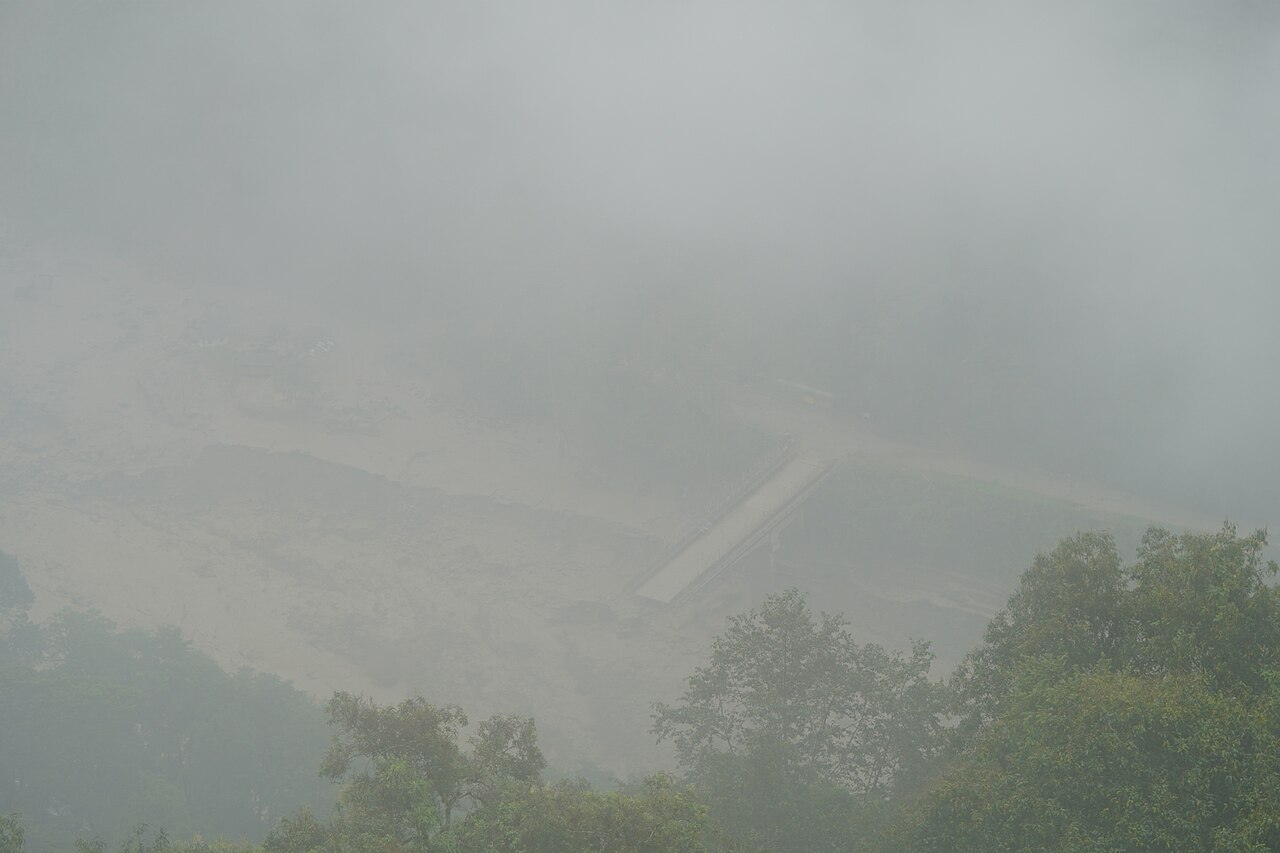
Three years after a glacial lake outburst flood (GLOF) tore down the Teesta river basin in Sikkim, two writers argue in Down To Earth that India is watching its Himalayan lakes more closely but is still not ready for the next one. The column is by Yashobanta Parida and Joyita Roy Chowdhury; the views are the authors' own.
The flood of 4 October 2023 began when a mass of land slipped into South Lhonak lake. According to the National Disaster Management Authority's Post Disaster Needs Assessment, it killed 55 people, left 74 missing and displaced 7,025, and affected about 80,000 people in 100 villages. Bridges, buildings, roads, farmland and the Teesta III hydropower dam at Chungthang were damaged, and losses across social, agricultural, tourism and infrastructure sectors came to Rs 1,480.066 crore.
The writers cite a December 2025 study in Nature Communications that counted 609 GLOFs worldwide between 1900 and 2020, with more than 13,000 deaths, and found the yearly average rising from 5.2 events in 1981-90 to 15.2 in 2011-20. The study links the rise to warming that enlarges glacial lakes, to local terrain and to building such as hydropower plants, roads and dams.
The Hindu Kush Himalaya, which spans Afghanistan, Bangladesh, Bhutan, China, India, Myanmar, Nepal and Pakistan, is described as a hotspot, with heavy dependence on agriculture and too few early warning systems leaving 270 million people at risk. A September 2025 preprint, not yet peer reviewed, counts about 9,600 glacial lakes in the region and some 333 outburst floods between 1833 and 2024, 60 of them in India, which recorded 6,119 deaths, the most of any country.
Monitoring has expanded. The Central Water Commission watched 477 large lakes and water bodies in 2011; by June 2025 it was monitoring 2,485 glacial lakes and 358 water bodies, whose combined area grew by 2.1 per cent over that period. After Sikkim, the Union government in 2025 approved Rs 150 crore for Arunachal Pradesh, Himachal Pradesh, Sikkim and Uttarakhand under the National Glacial Lake Outburst Flood Risk Mitigation Project, for resilient infrastructure, early warning, controlled drainage of high-risk lakes and weather stations. Two automatic weather stations have been installed in Sikkim so far.
Because that work will take time, the authors call for interim steps now: wider real-time monitoring and warning coverage, downstream evacuation plans, awareness in high-risk villages, limits on hotels and settlements in hazard zones, more research including the use of artificial intelligence, and a national GLOF disaster database for the Himalayan states.
Photo: Vijayakumar Blathur / Wikimedia Commons (CC BY-SA 4.0)
Source: Down To Earth


Comments
(0)