
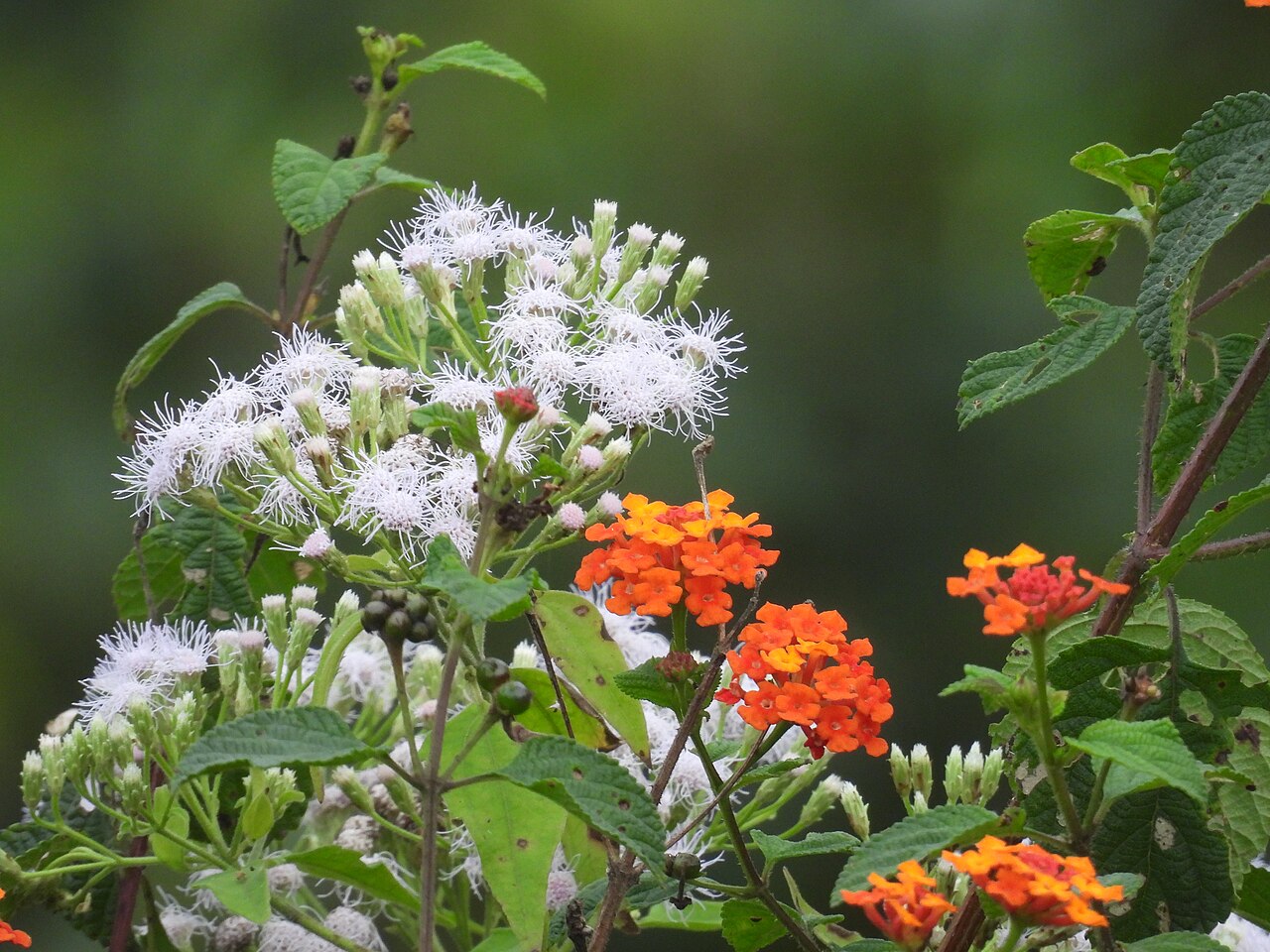
An invasive shrub, Lantana camara, has spread so widely through Nagarahole National Park and Bandipur Tiger Reserve in Karnataka that it has created what one conservationist calls a green desert, pushing wild herbivores out of the forest and into farms and coffee plantations. The argument is made in a Down To Earth column by Ranjeet Kumar Sahani, a senior project manager at the Foundation for Ecological Security (FES); the views are his own.
Sahani manages SABAL (Strengthening Sustainable Agriculture and Biodiversity Across Landscapes), an IUCN-funded project in the Kushalnagar and Ponnampet taluks of Kodagu district that aims at biodiversity conservation and land degradation neutrality in the Western Ghats.
He describes meeting a man of the Jenu Kuruba community, whose name means honey Kuruba, carrying a honeycomb out of the Anechowkuri forest to sell for Rs 100. The Jenu Kuruba harvest wild honey, lichen, soapnuts, wild black pepper and other forest products for sale to large area multi-purpose societies (LAMPS), and read the alarm calls of langurs and deer to avoid elephants.
Conservation policy has moved such communities out of core and buffer zones, he writes, and their fringe villages often lack electricity and paved roads. Inside the parks, lantana suppresses other plants, and yearly fires clear competitors while the fire-resilient shrub spreads faster. With native forage gone, elephants keep entering coffee estates; radio-collar data from the Nature Conservation Foundation show plantations in Hassan, with their year-round canopy, have become permanent refuges for several herds, while others move toward estates in Kodagu, Hassan and Chikkamagaluru in dry periods.
Sahani proposes sustainable landscape management plans: combining Jenu Kuruba early-warning cues with radio-collar alerts and community surveillance, recognising coffee estates in elephant corridors as high conservation value forests, reviving LAMPS, removing lantana by hand and replanting native species such as wild black pepper and soapnut, and a forest guard and tribal network sharing real-time wildlife movements.
Photo: Rohitjahnavi / Wikimedia Commons (CC BY 4.0)
Source: Down To Earth

Comments
(0)