
Engineers at the University of Colorado Boulder have developed a low-cost electronic sensor that can monitor soil pH continuously in the field for months, a step towards farms that track their own soil conditions in real time, Michigan Farm News reports.
Soil pH, often called the "master variable", governs nutrient availability and plant growth, but it changes constantly and is hard to follow. "In many cases, by the time farmers discover that something is wrong with their soil or plants, the window for effective treatment may have already passed," said Professor Gregory Whiting, who leads the Boulder Experimental Electronics and Manufacturing Laboratory in the Paul M. Rady Department of Mechanical Engineering.
Traditional pH probes are fragile glass bulbs whose readings drift and need frequent manual recalibration. The team instead used an electronic sensor based on alizarin, a pH-sensitive dye, which can be printed cheaply, redesigned it on a printed circuit board that is easier to manufacture, and paired it with an inexpensive readout system that can be deployed in the field.
To test it, the researchers buried sensors in soils with more or less organic matter, sandy and muddy soils, compacted and loose. Across soil types the sensor gave reliable, continuous readings for months, and a multi-month outdoor test showed stable performance without constant recalibration. The study, led by PhD student Juan Cisneros Barba, was published in Scientific Reports.
"These things cost close to nothing to make, function with minimal human effort and can be used in various soil types, allowing the technology to actually be useful in farms," Whiting said, calling it the strongest evidence yet that battery-powered printed electronics can move from the lab into agriculture.
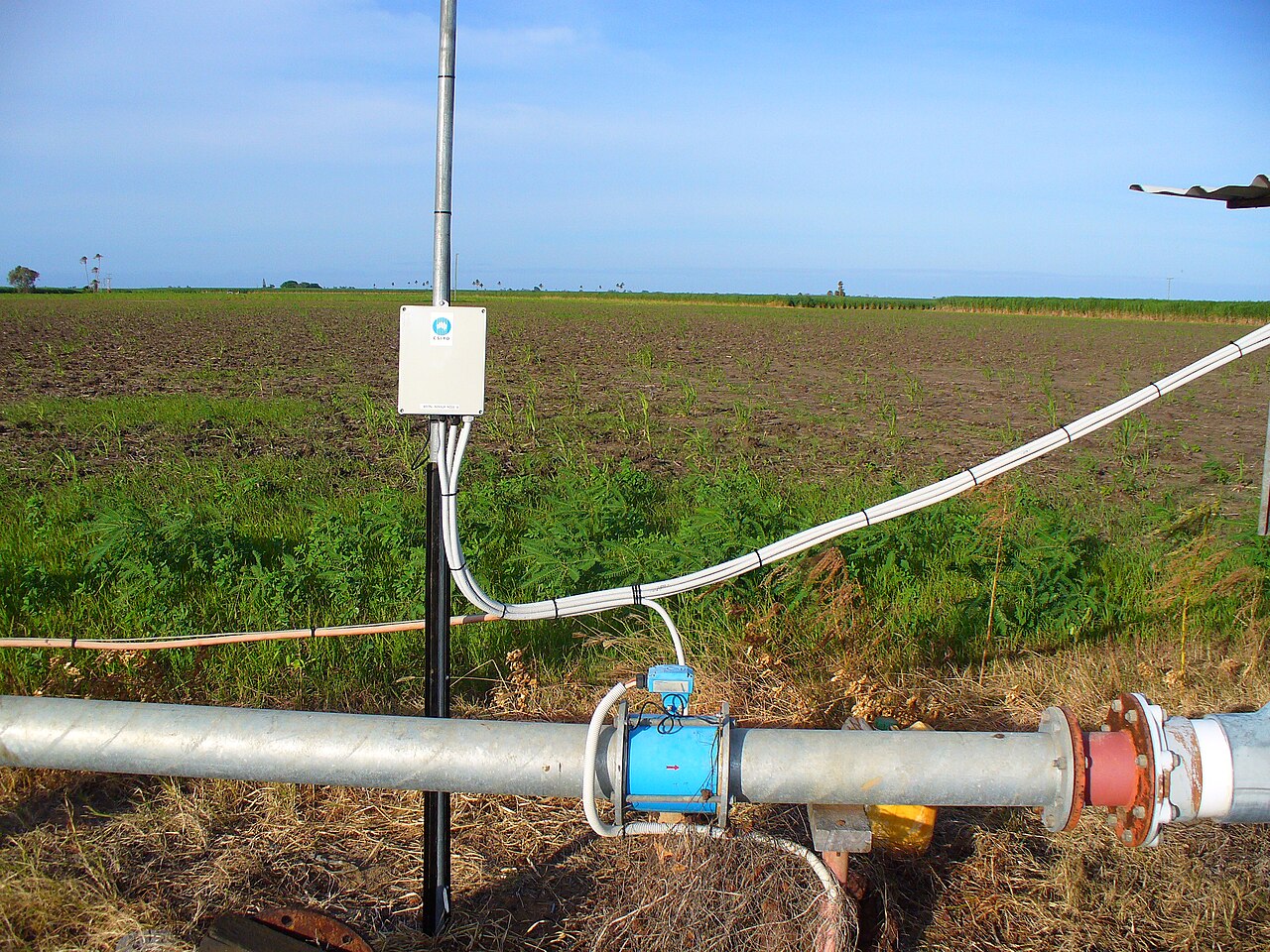
Photo: Stephan Brosnan, CSIRO / Wikimedia Commons (CC BY 3.0)
Source: Michigan Farm News

Comments
(0)