
A farmer buys vaccines, works through the herd and ticks the job off, yet months later disease strikes. The first reaction is often to blame the vaccine. According to Dr Noluvuyo Magadla, director of animal health at the Western Cape Department of Agriculture in South Africa, the product is seldom the problem. "Vaccines do not protect animals; proper vaccination protocols do," she told Farmers Weekly.
She describes a protocol as a planned, repeatable system that gets the right vaccine to the right animal at the right time and under the right conditions. Failures, she says, usually come from management: a vaccine left in the sun while animals are gathered, a cooler box that does not stay cold enough, animals vaccinated straight after a stressful journey, or a booster forgotten in a busy season.
Cold-chain failure is the biggest cause. Most vaccines must stay between 2°C and 8°C from the supplier to the animal, and heat or freezing can damage them for good. She recommends carrying vaccines in a heavy-duty cooler box with frozen ice packs, out of direct sunlight. Animals that are sick, stressed, underfed, dehydrated or carrying heavy parasite loads respond weakly, so newly arrived stock should usually be allowed to settle first.
Details matter. Automatic syringes should be calibrated and sterilised, and needles changed often: "A maximum of 10 to 12 animals per needle is recommended, and sooner if the needle becomes bent, blunt or contaminated." In cattle, injections go on the side of the neck in front of the shoulder to protect valuable cuts. Poultry vaccines often go in drinking water, sprays or eye drops, so water quality and even coverage of the flock become critical. Many vaccines need a second dose, and young animals' maternal antibodies can interfere with early shots, so timing should follow veterinary advice.
Records are part of the job: "If it is not recorded, it effectively did not happen." Each event should note the date, vaccine, batch number, expiry date, dose, animal and operator. Magadla says a well-run communal campaign can outperform a poorly managed commercial one, and that vaccination is no silver bullet: diseases such as foot-and-mouth need biosecurity, movement controls, nutrition, parasite control and surveillance alongside it. Digital records and temperature monitors, she adds, are already helping farmers keep track.
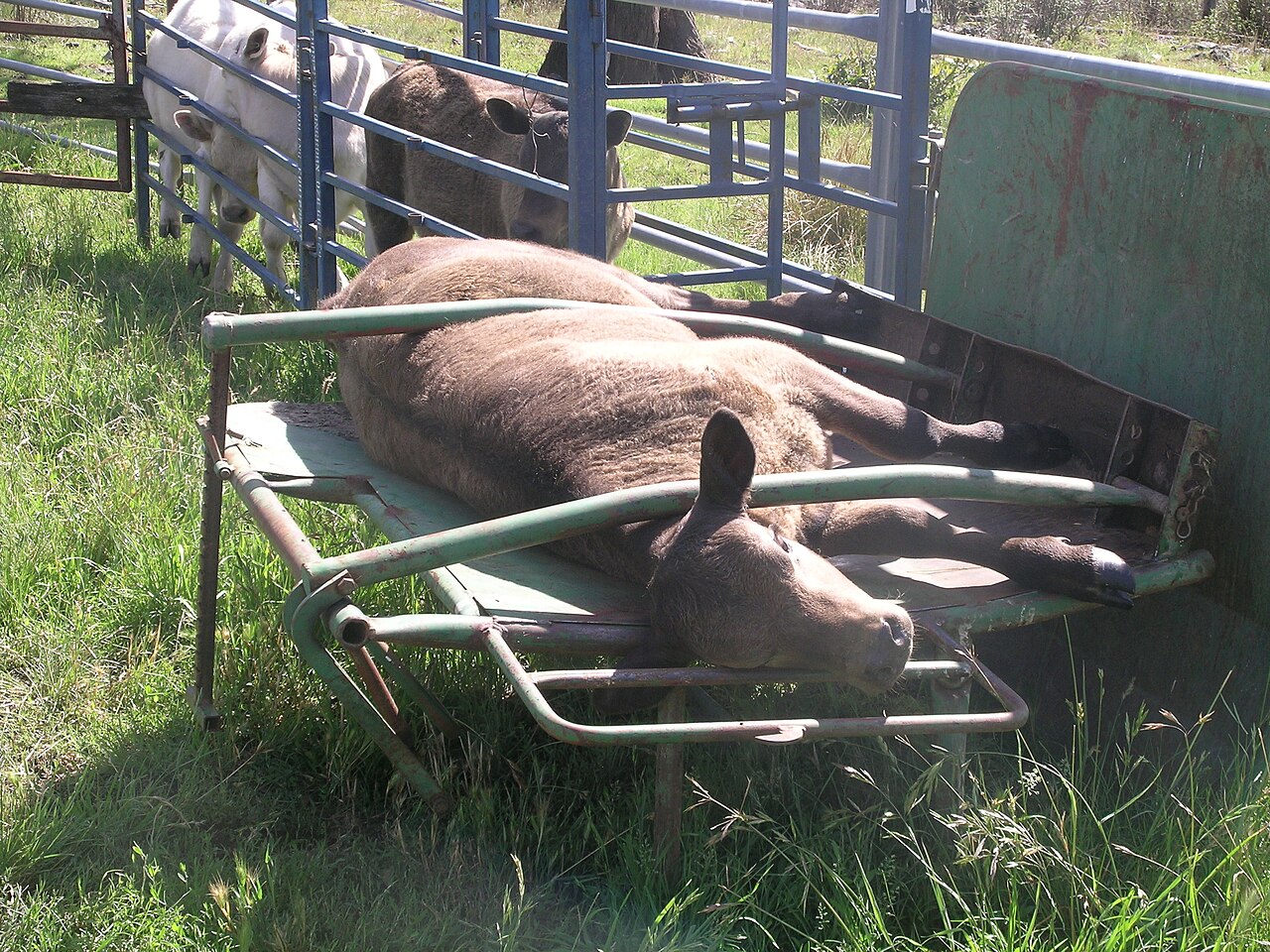
Photo: Cgoodwin (a calf in a cradle awaiting vaccination and an earmark) / Wikimedia Commons (CC BY-SA 3.0)
Source: Farmers Weekly South Africa

Comments
(0)