
Siphosethu Sydney Nxibelo, from the Lugxogxo area of Mthatha in South Africa's Eastern Cape, started his poultry business in 2017 with 50 chickens, basic equipment and feed in a backyard. Today his company, Sydney Consult, runs incubators that hatch between 2,000 and 8,000 day-old chicks per cycle and raises 500 broilers per cycle on five hectares of owned and leased communal land.
Nxibelo trained in building sciences at Nelson Mandela University and first became curious about farming through friends studying agriculture. He paid for the start from his salary as a school governing body teacher and from a small trade selling socks from Gauteng. He considered livestock but found the risk of theft and the slow returns too high. "Poultry was the answer because of the variety of products I could offer, such as eggs, chicks, and chickens for slaughter," he said. "It also required lower startup infrastructure." The early difficulties were inexperience and pricing his products.
He registered Sydney Consult in 2018 and went full-time after the Covid-19 pandemic in 2020. Registration opened doors to support from the National Youth Development Agency, the Eastern Cape Development Corporation and the Small Enterprise Development and Finance Agency, and he took part in an 18-month enterprise development programme.
Besides broilers and day-old chicks, the business sells 200 to 500 chicks aged three to five weeks to local farmers, and firewood for steady cash flow. Four hectares carry peppers, baby marrow, spinach, beetroot and potatoes, along with three hectares of red maize through the Nonyikashe Cooperative. It employs four permanent and four to seven part-time workers and supplies nearby schools, local producers and commercial buyers. Nxibelo also offers consulting, online classes and farm visits for emerging farmers.
Farming on communal land has its own problems: there is no piped water, so water is hauled or bought, and fencing and proper chicken houses are the main gaps. His aim is to make his chickens and chicks available across the OR Tambo district and, eventually, free-range chickens across the province. His advice to newcomers: "Practical training should be your first investment before starting, along with being realistic about the products you want to produce."
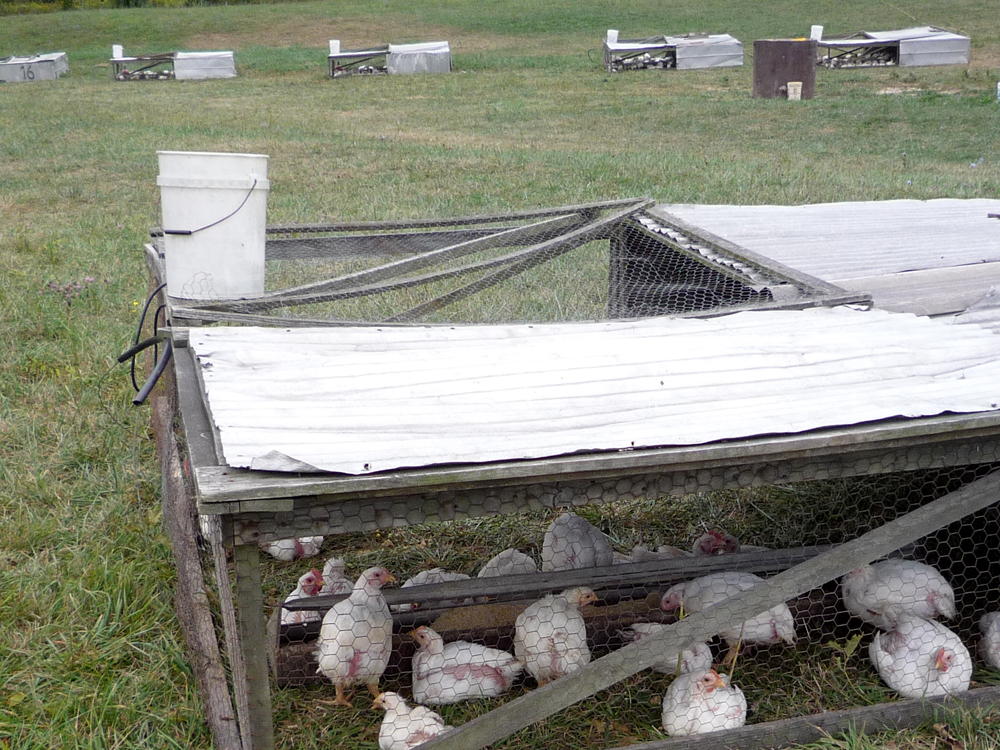
Photo: Jessica Reeder (broiler chickens in a movable pen) / Wikimedia Commons (CC BY-SA 2.0)
Source: Food for Mzansi

Comments
(0)