
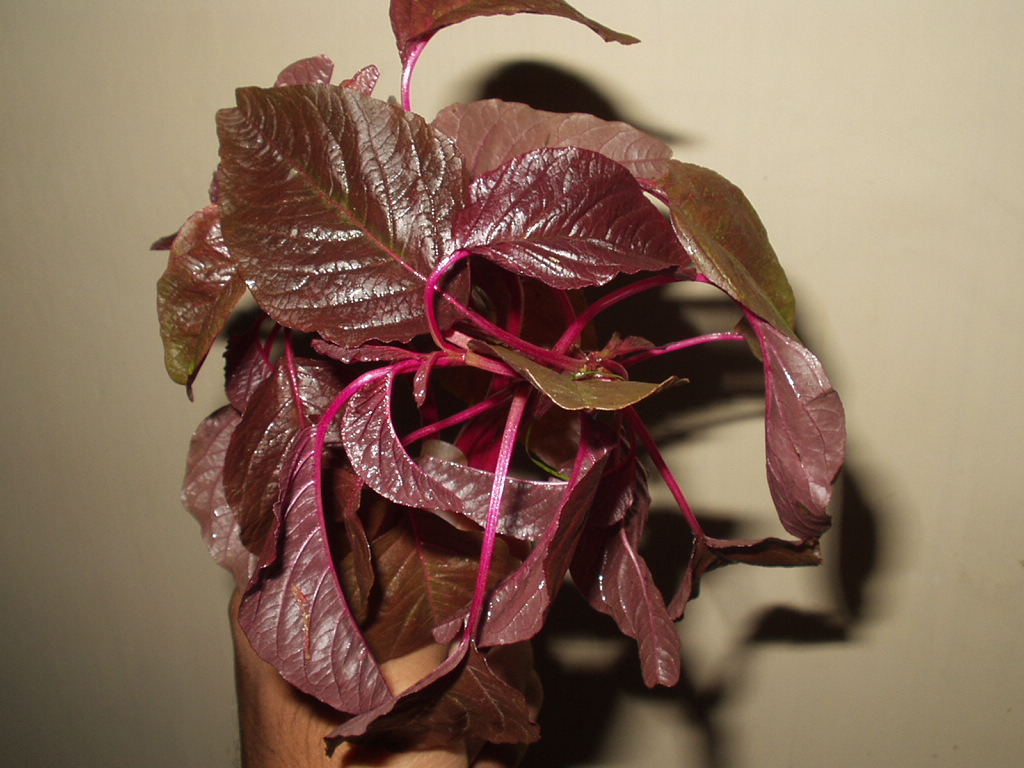
On 17 January 2026 the lifestyle desk of the Bengali news site Jagonews24 published a home-style recipe for chicken cooked with lal shak, the red amaranth that is one of the most familiar leafy vegetables in Bangladeshi kitchens. The recipe's introduction said that pairing greens with meat is nothing new in Bengali cooking, but that a chicken dish made with red amaranth is still a little unusual for many households, and it offered the dish as a change from the everyday jhol (a thin curry) and bhuna (a curry fried down with its spices).
The writers described red amaranth as full of iron and vitamins and chicken as rich in protein, and said the two together make a dish that is healthy and a pleasure to eat with rice, made with simple ingredients in the home style. This report gives the recipe as Jagonews24 published it, and adds what the national encyclopedia Banglapedia, the U.S. Department of Agriculture (USDA), the U.S. National Institutes of Health (NIH), the World Health Organization (WHO), the Food and Agriculture Organization of the United Nations (FAO), Bangladesh's Department of Livestock Services (DLS) and peer-reviewed research say about what goes into the pot.
The ingredients as published
The original lists the following for 500 grams of chicken. Where it says "to taste" or "as needed", the amount is left to the cook.
- Chicken: 500 grams
- Red amaranth (lal shak): 1 bunch
- Chopped onion: half a cup
- Chopped garlic: 1 tablespoon
- Ginger paste: 1 teaspoon
- Garlic paste: 1 teaspoon
- Green chillies: to taste
- Turmeric powder: half a teaspoon
- Chilli powder: 1 teaspoon
- Coriander powder: 1 teaspoon
- Garam masala powder: half a teaspoon
- Salt: to taste
- Oil: as needed
The list combines fresh aromatics (onion, garlic in two forms, ginger and green chilli) with three ground spices (turmeric, chilli and coriander) and finishes with garam masala. Banglapedia describes the popular garam masala as a combination of clove, black pepper, cinnamon and cardamom, used mostly in special meat curries and rice preparations. The red amaranth is measured by the bunch (anti), the way it is sold in Bangladeshi markets, so the weight of greens varies from bunch to bunch.
How the dish is cooked
Jagonews24's method has two stages: the chicken is first cooked in a fried spice base, and the greens are then added and cooked down with it until the gravy reduces. The steps, in the original's order, are these:
- Clean and cut the red amaranth and let the water drain off. At the same time, cut the chicken into pieces of the size you like and clean them.
- Heat oil in a kadai (a deep pan) and fry the chopped onion until it is light brown.
- Add all the spices and keep frying them (koshano) until the oil separates from the masala.
- Add the chicken, stir it well, cover the pan and cook on a medium flame for 10 minutes.
- When the meat is nearly cooked, add the red amaranth. The greens will soon release their own water. Keep the pan covered and stir from time to time, adding a little water if needed.
- When the meat and greens have come together and the gravy has reduced somewhat, add the garam masala powder and green chillies, cook for 2 to 3 minutes and turn off the heat.
- Serve hot with rice or roti.
Two points in the method stand out. The greens go in late, only after the chicken is nearly done, and they cook mostly in the water they release; the original suggests extra water only if the pan needs it. And although the third step adds "all the spices", the recipe names garam masala and green chillies again for the last two or three minutes, so those two act as the finishing seasoning. The safety points that U.S. and WHO food-safety authorities make about raw chicken, including on washing it, are set out further below.
What red amaranth is
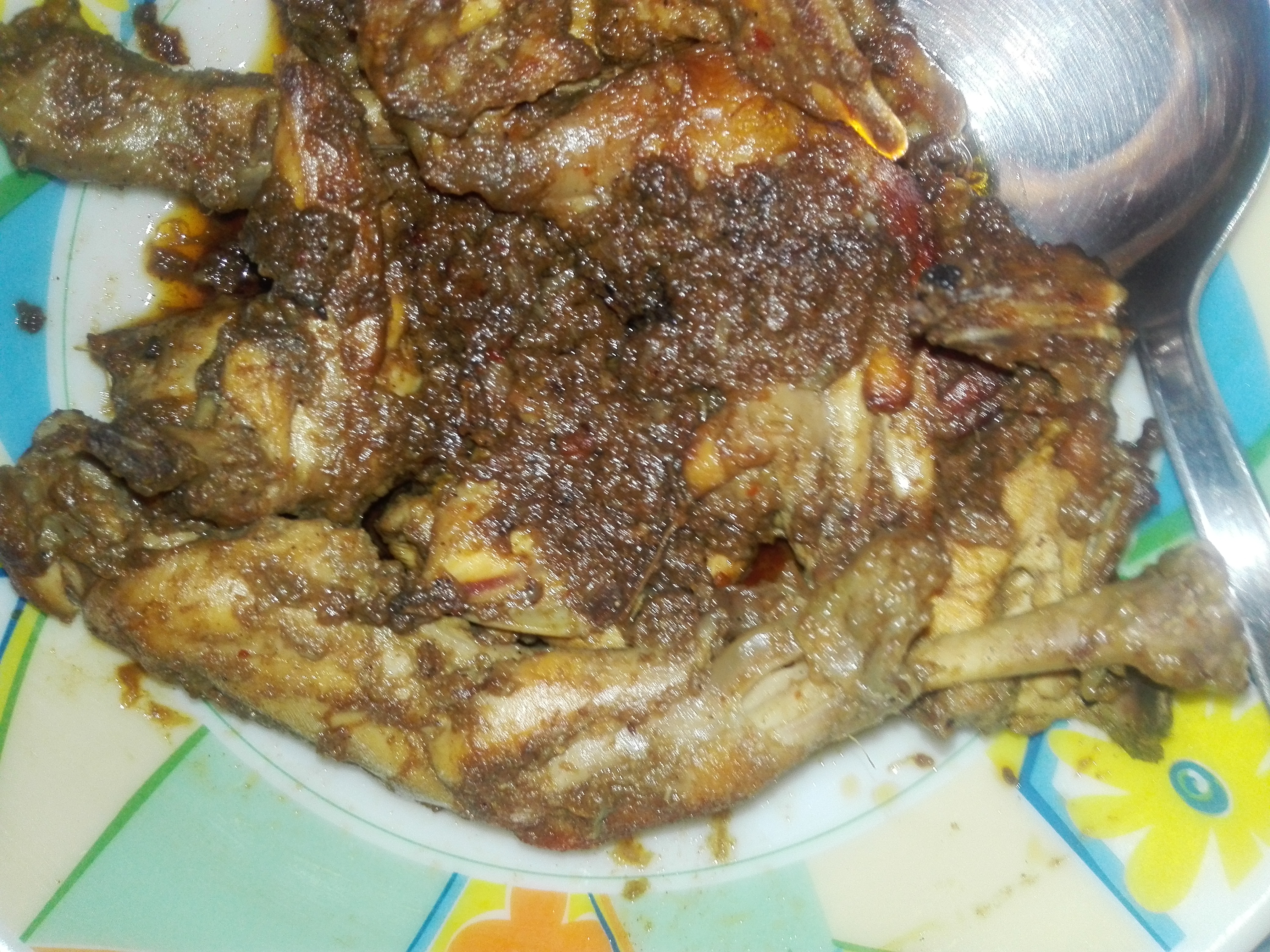
Banglapedia describes amaranth (datashak) as herbaceous plants of the genus Amaranthus, family Amaranthaceae, native to the Indian or Indo-Chinese region. Their tender leaves and stems, rich in vitamins A and C, calcium and iron, are eaten as a vegetable. Two types are grown in Bangladesh: a leafy type, which can be cultivated throughout the year but yields most in the winter months, and a stem type, which is mainly a summer vegetable. The recipe appeared in January, in the season when, by Banglapedia's account, the leafy type is at its most plentiful.
Plants are grown from local varieties. Banglapedia names Altapeti and BARI Lal shak-1, from the Bangladesh Agricultural Research Institute (BARI), as two important leafy varieties, and says that depending on the variety the yield reaches about 15 tonnes per hectare. It notes that the tender leaves are usually fried, while the stems are generally cooked with fish or other vegetables. Its table of the country's major vegetables lists red amaranth (lalshak) as Amaranthus gangeticus, alongside stem amaranth (danta), spiny amaranth (katanotey) and leaf amaranth (noteyshak), and its vegetable entry names red amaranth among the few vegetables that are grown in both seasons.
Researchers now usually call the red-leaved vegetable amaranth Amaranthus tricolor. A study published in Scientific Reports in November 2024 by researchers of Bangabandhu Sheikh Mujibur Rahman Agricultural University (BSMRAU) in Gazipur and partner institutions used BARI Lalshak-1 (Amaranthus tricolor) as the reference against which it measured six indigenous vegetables, and reported that ninety vegetables are grown in Bangladesh, nineteen of them considered major indigenous vegetables.
The red colour has been studied too. In a 2020 paper in Scientific Reports, Umakanta Sarker of BSMRAU and Shinya Oba of Gifu University in Japan wrote that amaranth leafy vegetables are a source of the red pigments called betacyanins, including amaranthine, iso-amaranthine, betanin and iso-betanin, and that red amaranth contains more pigments such as betacyanin and carotenoids than green amaranth. They described Amaranthus tricolor as an inexpensive natural source of pro-vitamin A because of its beta-carotene and related carotenoids, and noted that the carotenoid profile of the same species varies with climate and region.
Banglapedia puts the crop in a wider setting. Nearly 100 kinds of vegetables, local and exotic, are grown in Bangladesh, yet the encyclopedia records that the vegetables available amount to only about one fifth of the recommended 200 grams per person per day. Much of the supply comes from homestead gardens, where farm families grow local varieties for their own table and sell the surplus, and where, Banglapedia notes, women play the dominant role.
What the two main ingredients contain
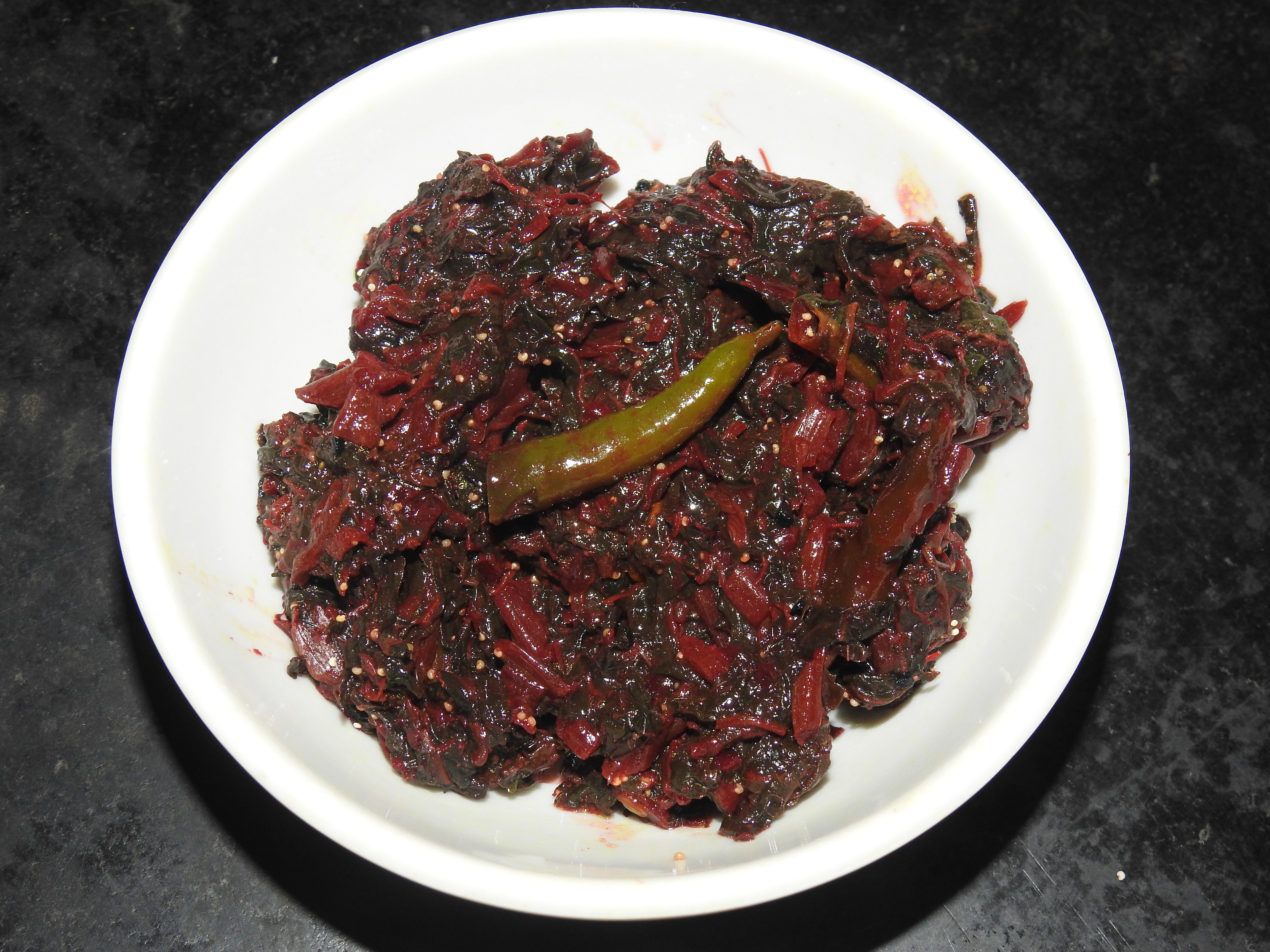
The original's claims that red amaranth is rich in iron and vitamins and chicken in protein can be checked against FoodData Central, the USDA's food composition database. Its entry "Amaranth leaves, raw" gives, per 100 grams: 23 kilocalories, 91.7 grams of water, 2.46 grams of protein, 4.02 grams of carbohydrate and 0.33 grams of fat; 215 milligrams of calcium, 2.32 milligrams of iron, 55 milligrams of magnesium, 611 milligrams of potassium and 0.9 milligrams of zinc; 43.3 milligrams of vitamin C, 146 micrograms of vitamin A (as retinol activity equivalents), 85 micrograms of folate and 1,140 micrograms of vitamin K.
Cooking changes these values only a little in the USDA's figures. The entry for amaranth leaves boiled, drained and cooked with salt lists, per 100 grams, 2.26 milligrams of iron, 209 milligrams of calcium, 41.1 milligrams of vitamin C and 139 micrograms of vitamin A, with sodium at 257 milligrams against 20 milligrams in the raw leaves, the difference coming from the added salt.
For the chicken, the USDA entry "Chicken, broilers or fryers, meat only, raw" gives, per 100 grams, 119 kilocalories, 21.4 grams of protein and 3.08 grams of fat, with 0.89 milligrams of iron, 1.54 milligrams of zinc, 173 milligrams of phosphorus, 8.24 milligrams of niacin, 0.43 milligrams of vitamin B6, 0.37 micrograms of vitamin B12 and 15.7 micrograms of selenium. The cut matters: raw leg meat is listed at 19.2 grams of protein and 4.22 grams of fat, and raw wing meat at 22.0 grams of protein and 3.54 grams of fat.
These are laboratory values for foods sampled in the United States. As Sarker and Oba point out for amaranth, the make-up of the same species varies with growing conditions, so the figures are a guide to the order of magnitude rather than an exact account of a bunch bought in a Bangladeshi market.
Why greens and meat in one pot matter for iron
The pairing the recipe celebrates has a basis in nutrition science. The NIH Office of Dietary Supplements (ODS), in its consumer fact sheet on iron (updated 17 August 2023), explains that the body needs iron to make haemoglobin, the protein in red blood cells that carries oxygen from the lungs, and myoglobin, which supplies oxygen to muscles. Iron in food comes in two forms: nonheme iron, found in plant foods, and heme iron; meat, seafood and poultry contain both.
The fact sheet states that the body absorbs iron from plant sources better when it is eaten with meat, poultry or seafood, and with foods that contain vitamin C. Red amaranth brings both kinds of help to its own iron in this dish: the chicken in the pot, and the vitamin C the USDA lists in the leaves themselves. The ODS adds that vegetarians who eat no meat, poultry or seafood need almost twice the usual amount of iron, because the body does not absorb nonheme iron as well as heme iron.
The recommended daily amounts the ODS gives are 8 milligrams for men aged 19 to 50 and for all adults aged 51 and over, 18 milligrams for women aged 19 to 50, 15 milligrams for girls aged 14 to 18 and 27 milligrams during pregnancy. When the body's iron stores run low, iron deficiency anaemia sets in; the ODS lists its symptoms as stomach upset, weakness, tiredness, lack of energy and problems with concentration and memory, and says pregnant women should talk with their health care provider and take an iron supplement if it is recommended. A dish is not a treatment: anyone who thinks they may be anaemic should see a doctor.
A caution for people taking blood thinners
The large amount of vitamin K in amaranth leaves deserves a note. The ODS consumer fact sheet on vitamin K (updated 22 March 2021) says the vitamin is important for blood clotting and healthy bones, names green leafy vegetables such as spinach, kale, broccoli and lettuce among its main food sources, and gives the adequate daily intake as 120 micrograms for men and 90 micrograms for women aged 19 and over. The USDA lists 1,140 micrograms in 100 grams of raw amaranth leaves.
The ODS warns that vitamin K can have a serious interaction with the blood thinner warfarin. People who take warfarin should make sure that the amount of vitamin K they get from food and supplements is about the same every day, because a sudden change can cause dangerous bleeding if they consume less, or blood clots if they consume more. Anyone on such medicine who wants to add large helpings of leafy greens, or drop them, should talk to their doctor first.
Handling the chicken safely
The WHO's fact sheet on food safety (4 October 2024) estimates that some 600 million people, almost one in ten worldwide, fall ill after eating contaminated food and that 420,000 die every year, with children under five carrying 40 per cent of the burden and 125,000 deaths. It names Salmonella, Campylobacter and enterohaemorrhagic Escherichia coli among the most common foodborne pathogens, lists poultry among the foods most often involved in salmonellosis outbreaks, and says Campylobacter infections are mainly caused by raw milk, raw or undercooked poultry and drinking water.
The USDA's Food Safety and Inspection Service (FSIS), in its guide "Chicken from Farm to Table" (last updated 30 September 2024), lists Salmonella, Staphylococcus aureus, Campylobacter jejuni, Listeria monocytogenes and E. coli as the bacteria associated with chicken. Bacteria multiply rapidly between 40 and 140 degrees Fahrenheit; freezing does not kill them, but thorough cooking does. Its four steps are: clean (wash hands and surfaces often), separate (keep raw meat and poultry away from other foods), cook (all poultry to 165 degrees Fahrenheit) and chill (refrigerate promptly).
The original recipe asks the cook to cut and "clean" the chicken pieces. On this point the FSIS advice is clear: washing raw poultry before cooking is not recommended, because bacteria in the raw juices can be spread to other foods, utensils and surfaces, and rinsing or soaking chicken does not destroy bacteria; only cooking does. The agency's own example of cross-contamination is cutting raw chicken on a board and then chopping tomatoes on the same board without washing it first. In this recipe, that means cutting the red amaranth on a clean board, or before the chicken, and washing hands, knife and board after handling the raw meat.
The same guide says raw chicken should be kept in a refrigerator at 40 degrees Fahrenheit or below and used within one or two days, or frozen. It should be thawed in the refrigerator, in cold water or in a microwave, never on the counter. The colour of cooked chicken is not a sign of its safety; only a food thermometer shows that the meat has reached 165 degrees Fahrenheit throughout. Leftover cooked chicken dishes keep for three to four days in the refrigerator.
The spices and the chicken in Bangladesh's farm economy
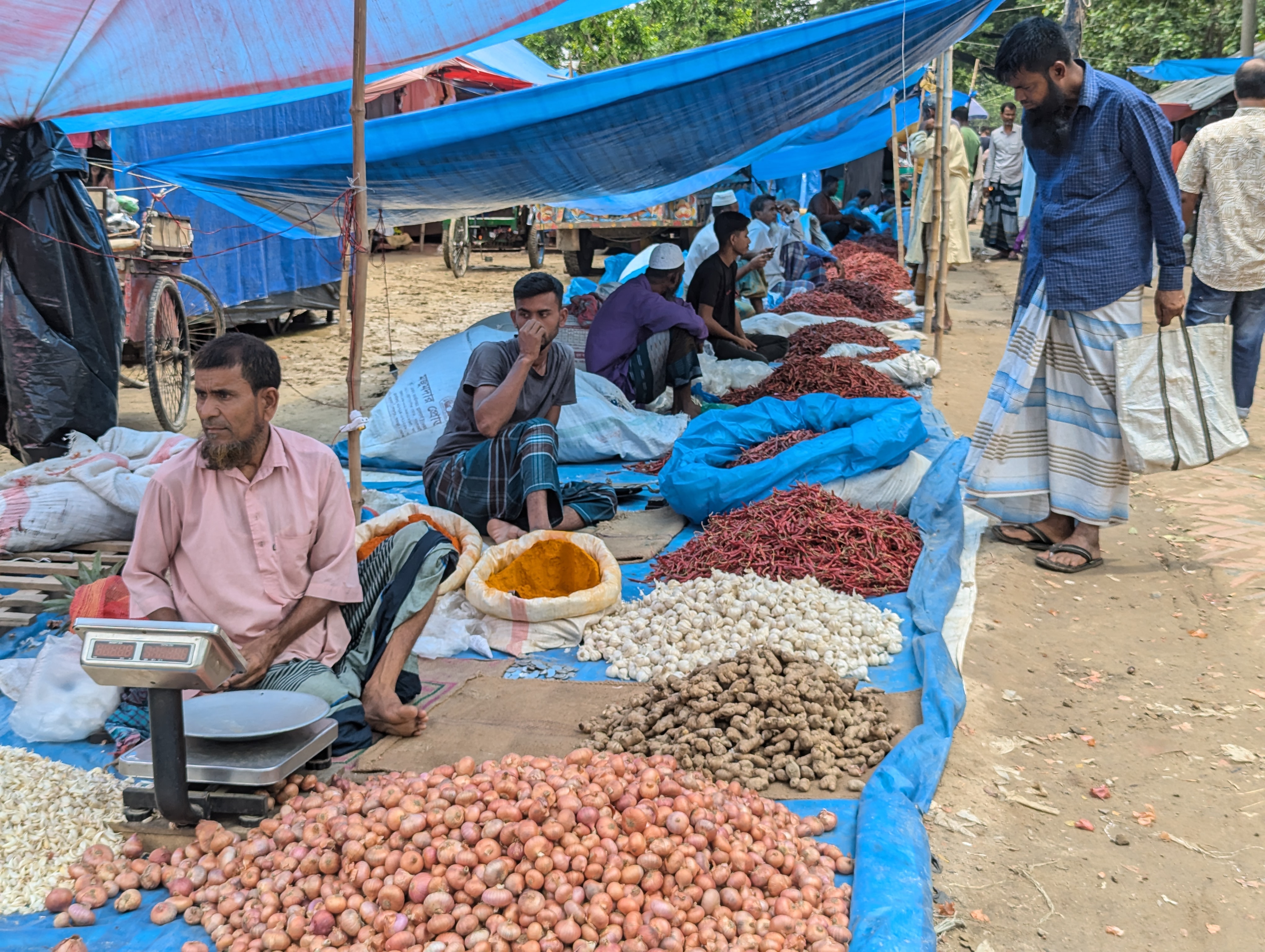
Almost everything in the pot is grown or raised in Bangladesh. Banglapedia lists ginger, garlic, turmeric, onion, red pepper and coriander among the spices commonly cultivated in the country, while many others are still imported from India, Malaysia and Indonesia. Onion is grown in every district, Faridpur being the largest producer, and is transplanted in December or the first week of January. Garlic is planted in November and December, with Faridpur, Jessore, Rajshahi, Rangpur, Dinajpur, Pabna, Dhaka and Comilla among its main areas.
Ginger is grown as a rain-fed annual crop on uplands and hill slopes, with Dinajpur, Rangpur, Tangail, Chittagong and Rangamati as important districts, and many farmers raise it in their homesteads. Chilli is cultivated in both summer and winter, and Banglapedia notes that both green and dry chillies are used to season curries and that dry chilli is an ingredient of curry powder. Coriander is extensively grown as a winter crop, sown in October and November; its dried seeds, which become the recipe's coriander powder, are an important ingredient of curry powder.
The chicken has a long history of its own. Banglapedia traces the domestic chicken to the red jungle fowl of Southeast Asia, domesticated probably more than 4,000 years ago, and notes that because local chickens produce less meat and fewer eggs, farms large and small have turned to improved breeds. The scale of the sector is set out in the DLS summary "Livestock Economy at a Glance (2023-2024)": Bangladesh had 3,277.77 lakh chickens and 682.61 lakh ducks in 2023-24, a total poultry population of 3,960.38 lakh.
The same DLS summary puts the country's meat production in 2023-24 at 92.25 lakh metric tonnes, against a demand of 76.21 lakh metric tonnes calculated at 120 grams per person per day, and gives availability as 143.77 grams per person per day. It puts livestock's provisional share of gross domestic product at 1.80 per cent at constant prices, and of agricultural GDP at 16.33 per cent.
Where the dish sits in Bangladesh's dietary guidelines
Bangladesh published food-based dietary guidelines in 2000 and revised them in 2013, according to the FAO. The 2000 guidelines were developed by the Bangladesh National Nutrition Council; the 2013 revision was carried out by the Bangladesh Institute of Research and Rehabilitation in Diabetes, Endocrine and Metabolic Disorders (BIRDEM), with technical support from the FAO, the Ministry of Food and the Ministry of Health and Family Welfare.
The guidelines use a five-level food pyramid. Rice, bread and other cereals form the base and may be eaten liberally, as may vegetables and fruits on the second level. Fish, meat, eggs and pulses, and above them milk and dairy products, are to be eaten in moderation, and fats, oils and sugar sparingly. Among the messages the FAO lists are to eat a well-balanced diet with a variety of foods at each meal, to consume moderate amounts of oils and fats, to limit salt and use only iodised salt, to consume safe and clean foods, and to practise right cooking and healthy eating.
Set against that pyramid, chicken with red amaranth served with rice draws on three levels at once: the cereal at the base, a leafy vegetable from the second level and a moderate portion of meat. The original leaves the oil "as needed" and the salt "to taste"; the national guidelines' advice on those two items is moderate oil and limited, iodised salt.
Photo: Mamun2a / Wikimedia Commons (CC BY-SA 2.5)
Sources: Jagonews24 (17 January 2026), Banglapedia (Amaranth, Vegetable, Spice, Onion, Garlic, Ginger, Chilli, Coriander, Poultry), USDA FoodData Central, NIH Office of Dietary Supplements (iron, 17 August 2023; vitamin K, 22 March 2021), USDA Food Safety and Inspection Service (30 September 2024), World Health Organization (4 October 2024), FAO, Department of Livestock Services (Livestock Economy at a Glance 2023-2024), Scientific Reports (Sarker and Oba, 2020; Mila and others, November 2024)


Comments
(0)