
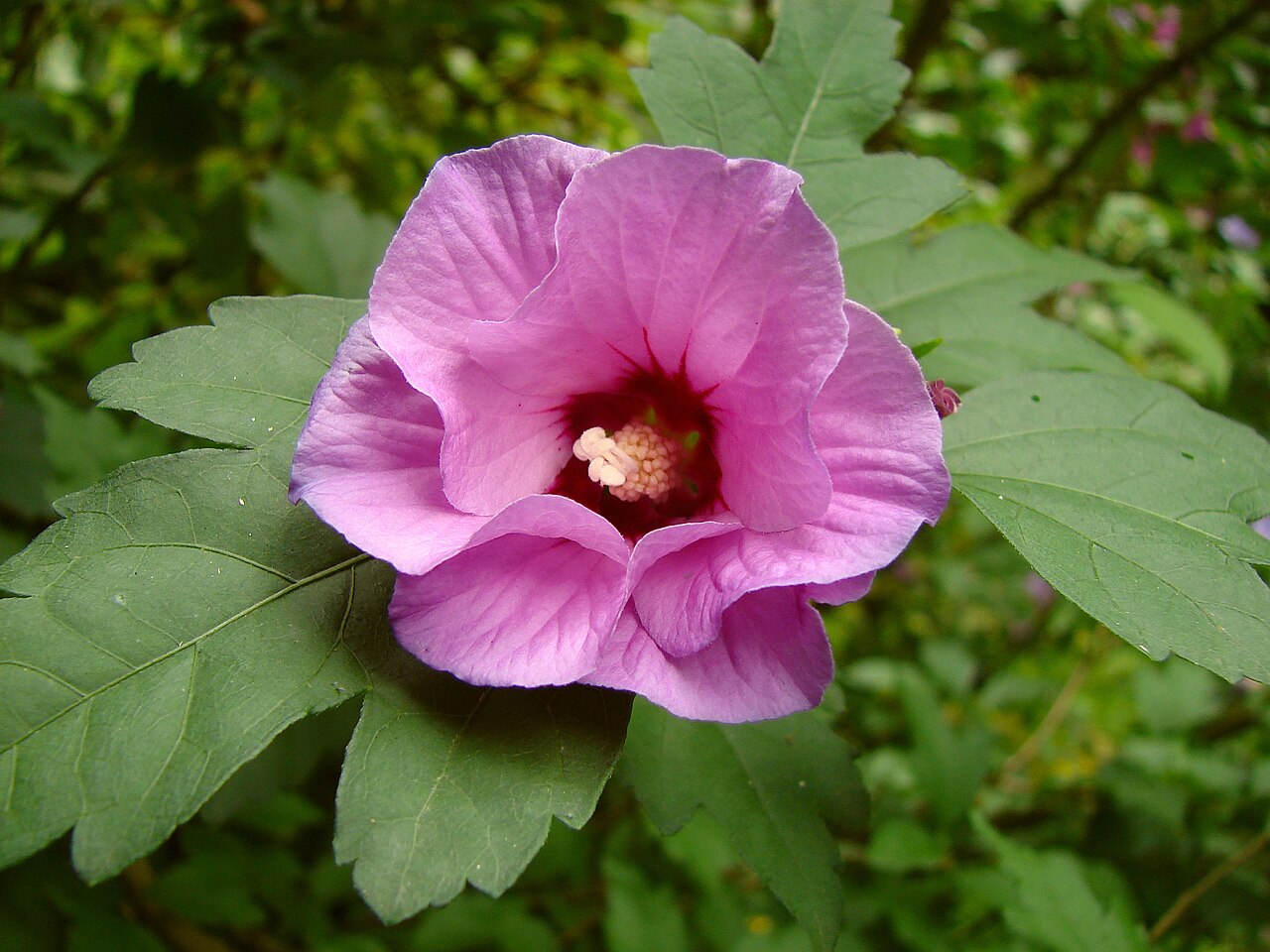
The ornamental shrub Rose of Sharon has turned up at Bangladesh Nursery at Kacharighat on the Brahmaputra in Mymensingh. The writer of a Samakal report says he came across it on the morning of 6 July on his way back from Zainul Abedin Park.
It is no true rose. Its scientific name is Hibiscus syriacus and it belongs to Malvaceae, the hibiscus family, whose flower shape it shares. European taxonomists thought it came from Syria, and the name stuck. Its native range is East Asia, particularly China, Taiwan and Korea.
In Korea it is the national flower, known as mugunghwa, a symbol of perseverance and undying vitality.
Rose of Sharon is a deciduous woody shrub that reaches 2.5 to 4 metres. In cold regions it drops its leaves in winter and puts out new ones in spring. In the right conditions it lives a long time and slowly forms a handsome bush.
Its main attraction is a long flowering season, from midsummer into autumn in succession, though this varies with region and weather. The flowers are large and funnel-shaped with five petals, and the plant is grown for gardens across the world's temperate regions.
Photo: Chrumps / Wikimedia Commons (CC BY-SA 3.0)
Source: Samakal

Comments
(0)