
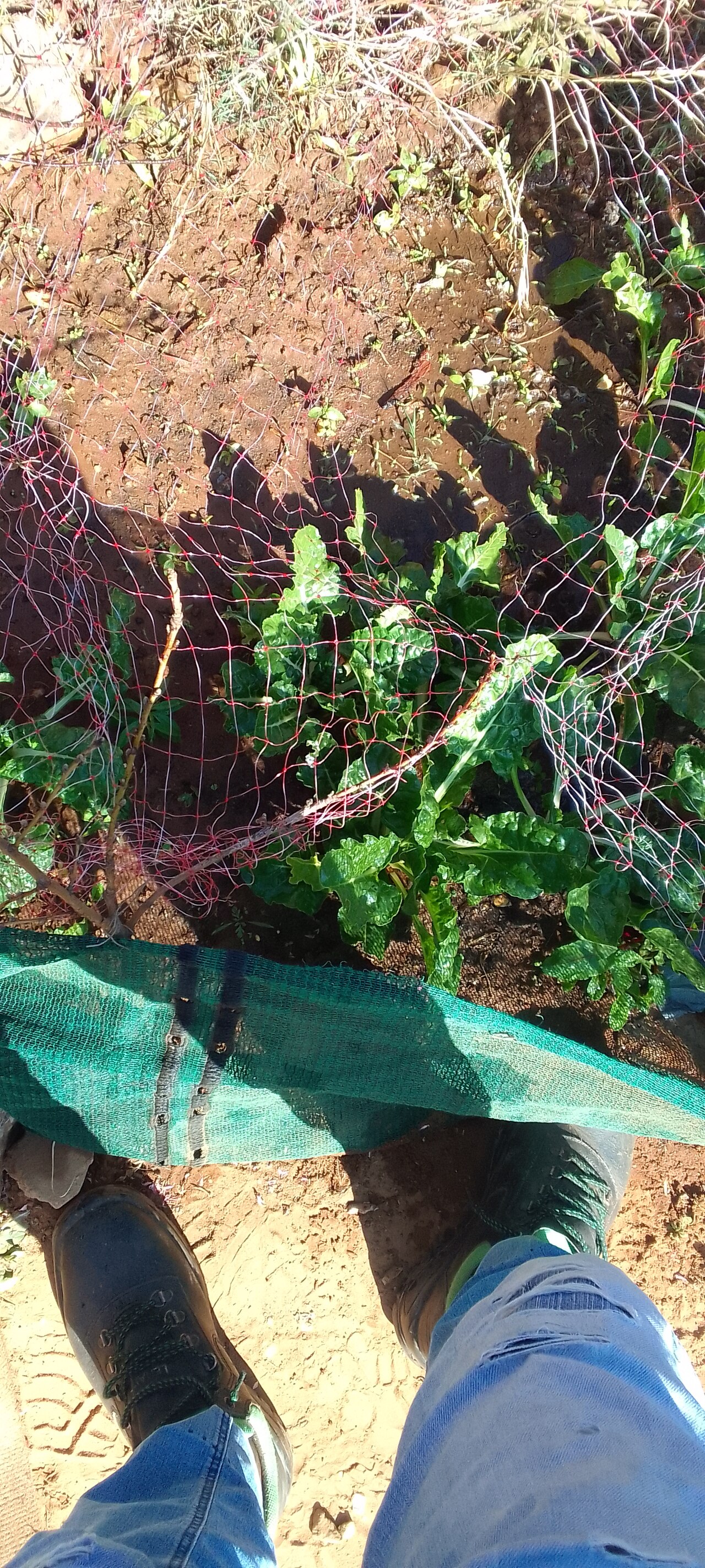
Reneilwe and Lerato Selialia started their vegetable business, Kopana Holdings, with potatoes in Randfontein, Gauteng, in 2025, and have since added spinach, onions and sweet potatoes. In a Farmer Mentor feature for Food for Mzansi, Reneilwe Selialia shared what the first seasons taught them.
They tested the soil before planting. It was broadly suitable, but potassium was high, so they adjusted the nutrient balance before the crop went in. Long dry spells forced them to invest more in irrigation, and equipment breakdowns taught their own lessons; they now plan structures that would give more controlled growing conditions.
Selling turned out to be as hard as growing. After the first potato harvest they supplied two markets and were left with a large surplus; some spoiled and some was kept as seed. Networking changed that: a contact who had sold at a market helped them register at the Vaal market, and they now approach markets in Johannesburg, the Vaal and Rustenburg as well as supermarkets. "As soon as you harvest, you should already have planted the next harvest," Selialia said of the rotational planning needed to keep supply steady, since crops take two to three months to mature.
Bringing in an accountant showed them that the first potato crop had been grown at a loss, once seed, travel and toll fees were counted. They now use their cost figures to set minimum selling prices and budgets for trips to market.
Her advice to young farmers is to start, but humbly, and to learn from people with practical experience rather than only from online research. "Human interaction is very important. Learn from people," she said. The couple want to build a business that can pass to future generations. The story was reported by Patricia Tembo.
Photo: BONGINKOSI / Wikimedia Commons (CC BY-SA 4.0)
Source: Food for Mzansi

Comments
(0)