
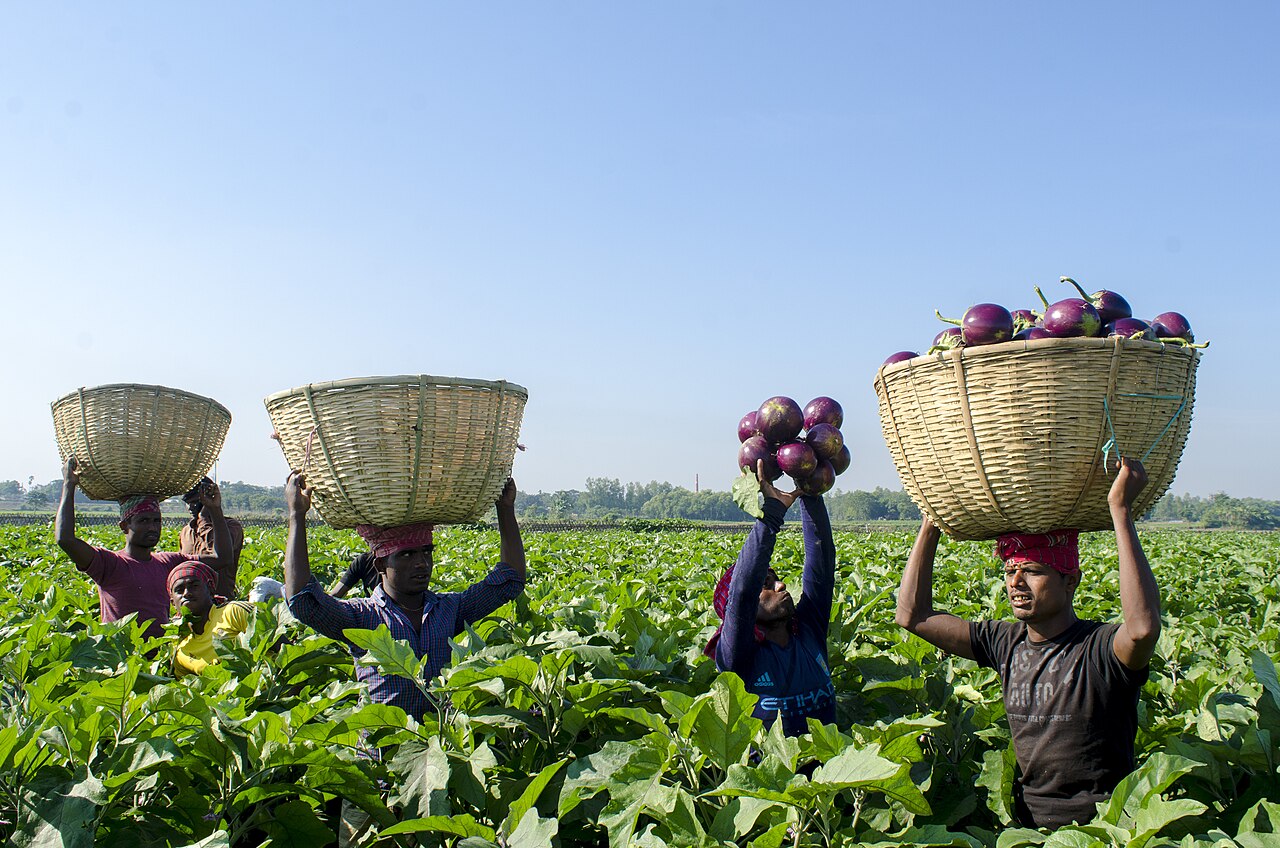
On the silt-rich chars of the Dhaleshwari in Dhamrai, on the edge of Dhaka, fields around Char Sungar and Char Bardail in Roail union stay green with vegetables all year. Dinajpur TV reports that the union has more than 2,100 hectares of arable land, two-thirds of it triple-cropped and mostly given over to commercial vegetables. Of more than 5,000 families in its 15 villages, all but about 275 farm directly.
The biggest change has come from mulch sheets. Special polythene laid over the beds holds in moisture, keeps down weeds and harmful insects and has cut chemical fertiliser use. Farmers say mulching gives 20 to 30 percent more tomatoes and brinjals than the traditional method.
For climbing crops, A-frame trellises of bamboo poles, wire and nylon string, leaning on both sides like a capital A, have caught on. Hanging vegetables get more light and air, grow evenly and without blemishes, and suffer less disease. On these trellises farmers harvest 100 to 300 kilograms of cucumbers, depending on the variety, in 45 to 70 days; bottle gourd is picked 50 to 70 days after flowering, in all three seasons, rabi, kharif and zaid.
Besides power tillers, farmers mark straight sowing lines with a traditional rake known locally as "dante angul", which makes irrigation, even fertiliser use and weeding easier and saves time and money. Brinjal seedlings go from the seedbed to the field after 30 to 40 days, at four to six leaves, spaced 60 to 90 centimetres apart for large varieties and 50 to 75 for small ones, usually planted in the late afternoon once the sun eases. Tomato seedlings are set as deep in the field as they stood in the seedbed.
Papaya varieties in the fields include Shahi, Sweet Lady, Amber Lady, Top Lady, Red Lady, Blue Stem, Ranchi, Jashohori and Kashimpuri. Pointed gourd can be picked 10 to 12 days after flowering, with at least 350 fruit a plant on average; chillies yield best in the rabi season, and okra is picked when it is 8 to 10 centimetres long. Water lilies, water spinach, helencha and other wild greens gathered from the river's beels also sell well.
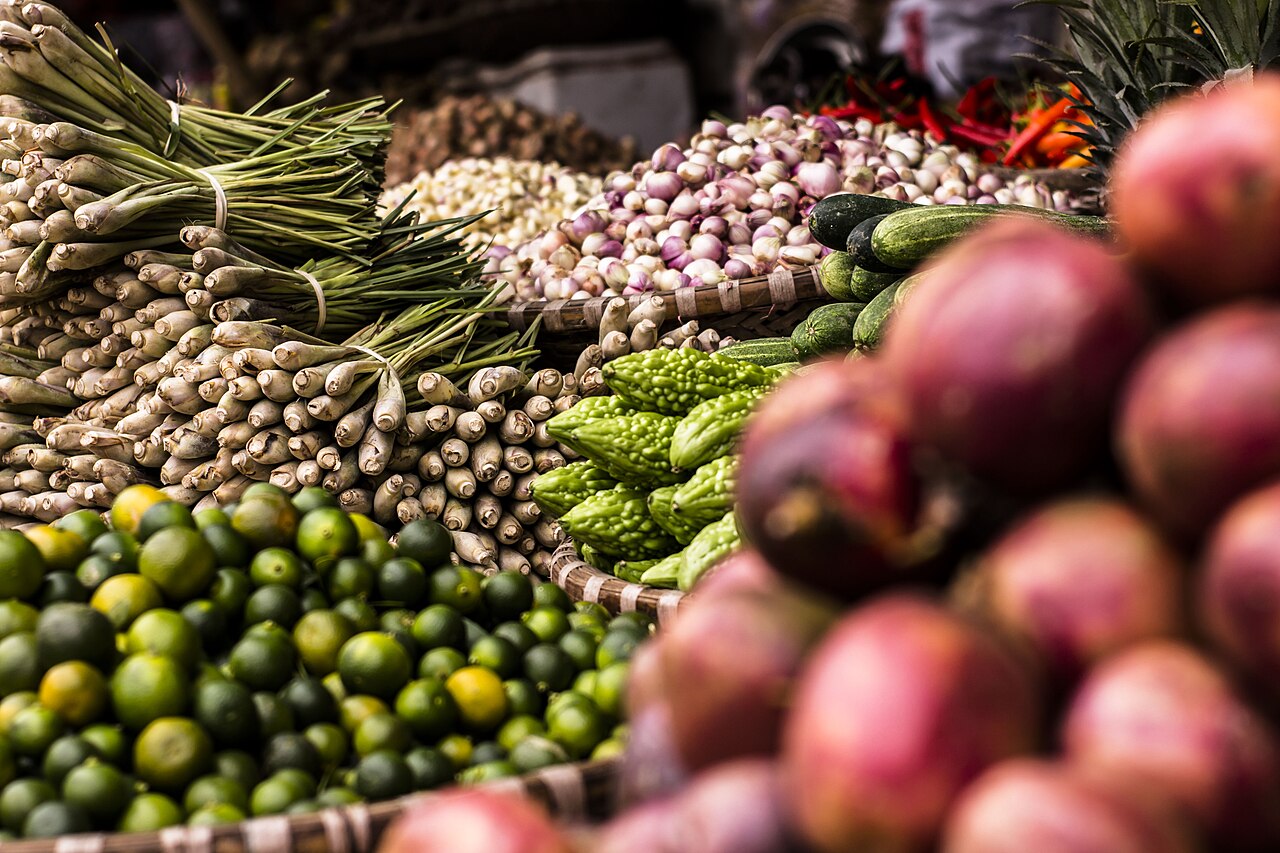
Every morning the produce goes to the wholesale market at Namabazar in Savar, where several lakh taka of goods change hands and fast vehicles carry the vegetables to the main markets of Dhaka, Gazipur and Narayanganj. From Bhadra to Kartik, roughly mid-August to mid-November, the market is also full of pomelos.
Photo: Ayman Nakib Badhan / Wikimedia Commons (CC BY-SA 4.0)
Source: Dinajpur TV
Comments
(0)