
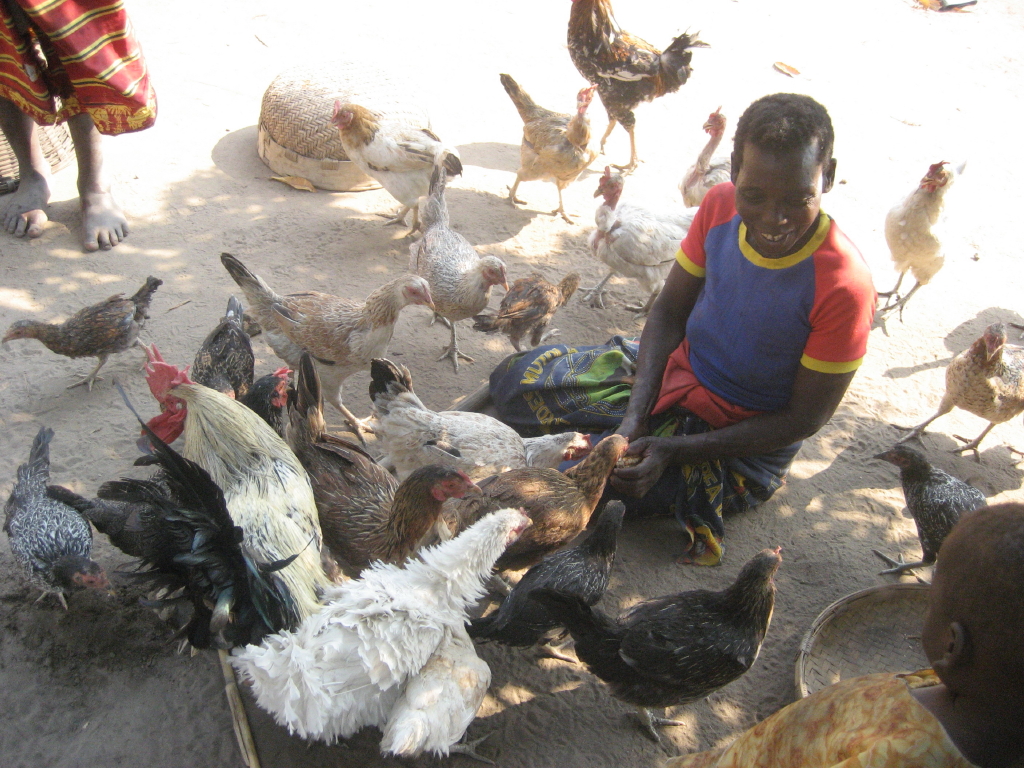
On Kenya's streets a boiled egg sliced and topped with vegetables is called "nigongee", "break it for me". Cheap and sold almost everywhere, it is a snack for commuters and, for some, the only meal of the day. The International Livestock Research Institute (ILRI) uses it to show how much depends on the hens behind it.
One large egg carries about six grams of high-quality protein with all nine essential amino acids, plus vitamin B12, vitamin D, selenium and iodine, and its yolk is rich in choline for brain development. In energy cost per unit, eggs are cheaper than meat, poultry or fish. That matters in Kenya, where 18% of children under five are stunted. Egg-a-day programmes in Kenya and Ethiopia raised children's dietary diversity by 20%, and an ILRI trial in Ethiopia that added a boiled egg to the breakfast of schoolchildren aged 6 to 12 improved cognitive performance, school results and iron status.
Most of those hens are kept by women. Across sub-Saharan Africa 85% of rural households keep poultry and women own about 70% of the hens; in rural Kenya women are the main owners (63%), followed by children (18%). Disease is the biggest threat: Newcastle disease can wipe out a village flock in days, and when rural Kenyan households vaccinated against it their children ate 24% more protein-rich food and grew better.
Breeding raises output. In Ethiopia, ILRI-supported breeding of the native Tilili chicken increased egg production by 111% within 24 weeks and 16-week body weight by 68%. In Kenya, with the Kenya Agricultural and Livestock Research Organization (KALRO) under the CGIAR SAPLING initiative, 216 smallholder households in Bomet and Kakamega counties, 159 of them led by women, took up improved KALRO, Kuroiler and Sasso birds, received training and 12,000 chicks, and began producing black soldier fly larvae as feed in Kakamega. "Improved chickens can lay much more eggs while adjusting to smallholder settings," said ILRI scientist Christian Tiambo.
Feed is the biggest cost of an egg; ILRI also tested flaxseed with plant polyphenol extracts to produce omega-3-rich eggs, and found that one such egg three to four times a week could help vulnerable people meet recommended omega-3 intake. Food safety is the other side: eggs can carry Salmonella, most animal-source food in Africa is sold informally, and ILRI's research shows working with vendors makes food safer than banning them. Vaccines, better housing and good feed also reduce the antibiotic use that drives antimicrobial resistance.
With demand for animal-source foods in sub-Saharan Africa expected to possibly triple by 2050, ILRI says keeping eggs within reach depends on healthy, productive hens, affordable feed, safe markets and fair returns for the women and young people who raise and sell them. The article is by Paul Waweru Nyambura of ILRI.
Photo: Ton Rulkens (village poultry, Manica, Mozambique) / Wikimedia Commons (CC BY-SA 2.0)
Source: ILRI
Comments
(0)