
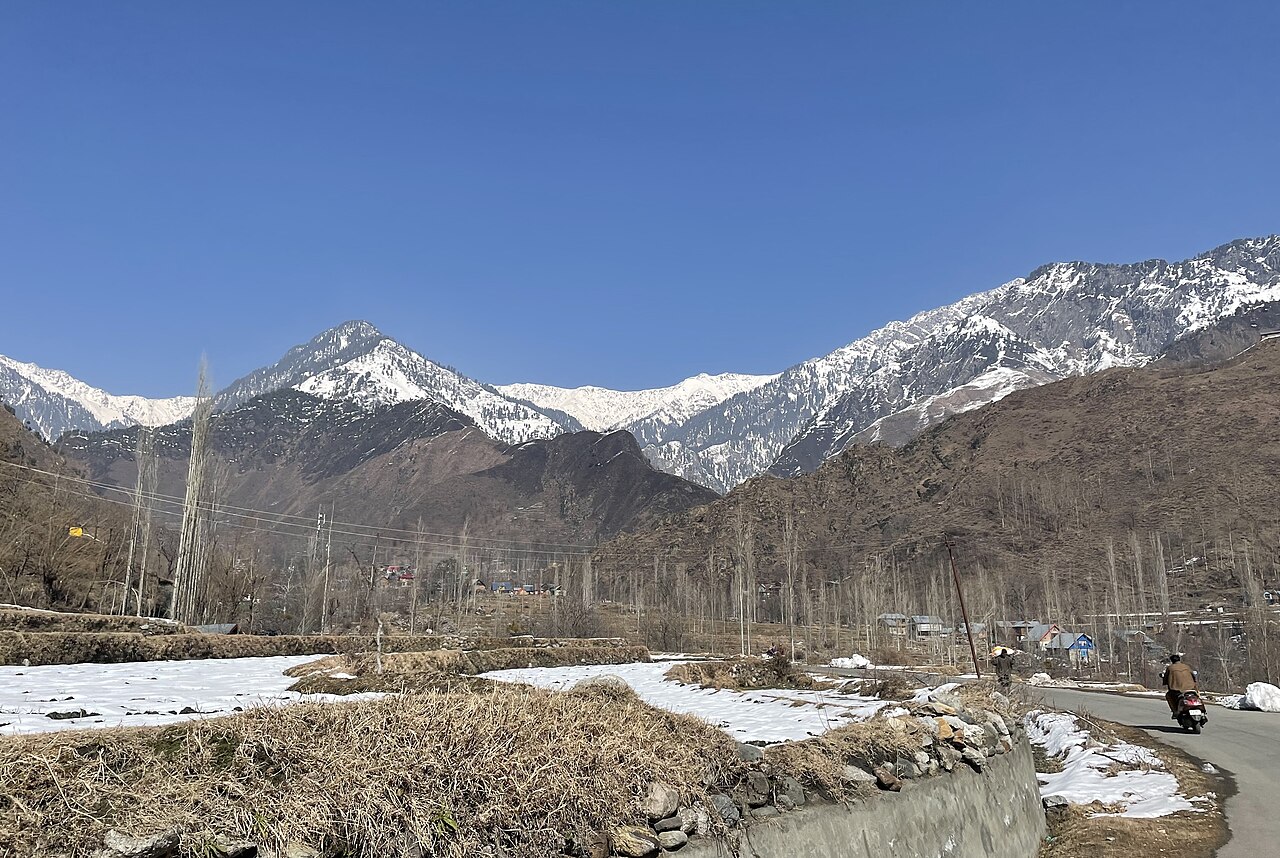
A study has mapped 34 places in Jammu and Kashmir where the seasonal routes of herders and their livestock overlap with, or run close to, protected areas, and where foot-and-mouth disease (FMD) could pass between farm animals and endangered wild ungulates. The researchers say transmission has not been confirmed in these areas, but the overlap marks a clear risk.
FMD is a highly contagious viral disease of cloven-hoofed animals, including cattle, buffaloes, sheep and goats, and it is endemic among livestock in India. Dr Pervaiz Dar, an associate professor of veterinary microbiology at Sher-e-Kashmir University of Agricultural Sciences and Technology, who was not involved in the study, said mass vaccination under the National Animal Disease Control Programme has damped large epidemics, but the seasonal movement of Gujjar and Bakarwal herders and pockets of unvaccinated livestock keep local outbreaks going.
The team at the Central University of Jammu mapped pastoral routes, grazing grounds and protected areas using GIS analysis, surveys with herders and veterinary records, and published the work in the journal Virus Disease in July 2026. They drew a high-risk zone up to 5 km outside a protected area and two buffer zones out to 15 km. The 34 zones fall across 15 of the region's 48 protected areas; Baramulla has the most (11), followed by Bandipora (9), Rajouri (8) and Ganderbal (7). The closest interface is only 370 metres from Lachipora Wildlife Sanctuary in Baramulla.
"While direct evidence of transmission was not established, the overlap highlights a clear risk," said Vinita Sharma, an assistant professor at the university's Wildlife Conservation Research Laboratory and the study's corresponding author. Livestock and wildlife share grazing grounds, water and movement corridors, she said, and hangul, Himalayan musk deer, markhor and goral may be susceptible, though field surveillance is needed before naming species at risk.
Others urged caution about the method. Rahul Kaul, an ecologist and former chief executive of the Wildlife Trust of India, said heavily grazed areas such as Upper Dachigam, Hirpora in Shopian and Kishtwar should rank among the most affected, which points to possible limits in the field checks. Dr Mohsin Ali Gazi, a wildlife veterinary officer in Kashmir, said active FMD surveillance by the animal husbandry department covers cattle, buffaloes, sheep and goats but not wildlife, which he called a critical gap.
The experts favour working with herding communities rather than restricting migration: health checks, vaccination and certification of livestock before the seasonal move, mobile veterinary camps along the routes, grazing buffers agreed with forest officials, and village volunteers trained to report suspected cases by mobile phone. Sharma recommends targeted vaccination in the overlap zones alongside wildlife health monitoring. The report for Mongabay India was written by Priyanka Shankar.
Photo: Javid majeed / Wikimedia Commons (CC BY-SA 4.0)
Source: Mongabay India

Comments
(0)