
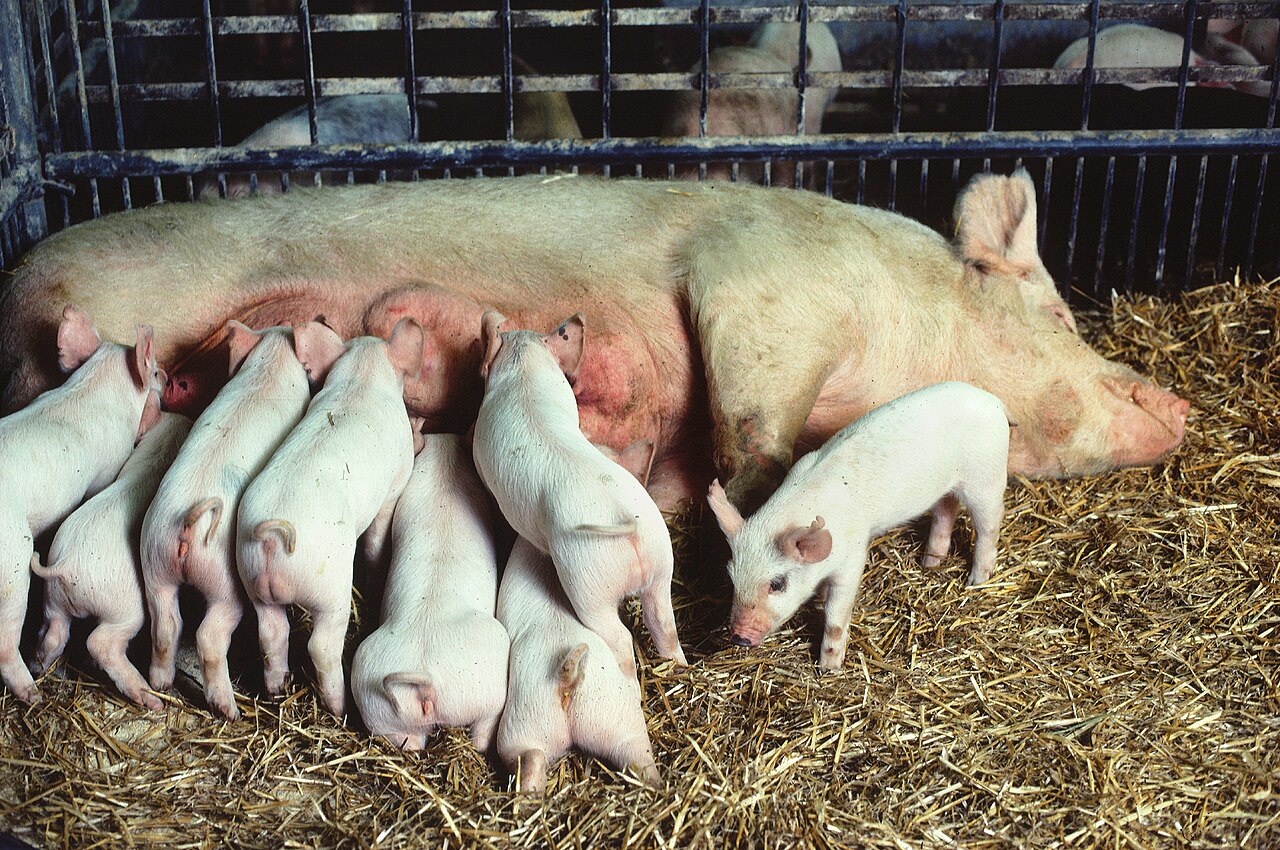
The feed conversion ratio (FCR), the kilograms of feed a pig eats for each kilogram it gains, sits at the heart of a pig unit's profit, and it rarely improves through a single fix, Farmer's Weekly in South Africa reports. Under well-managed commercial conditions there, realistic targets are about 1.3 to 1.5 for weaners and 2.3 to 2.5 for grow-finish pigs.
Cara Nel, monogastric development specialist at Vitam International, says the first sign of trouble is usually pigs eating more without growing in proportion. A wider spread of weights in one pen, with some pigs pulling ahead and others falling behind, points to uneven feed access, competition at the feeder or poor gut health. Mild coughing or diarrhoea, feed piling up under feeders, wet pens and uneven manure are early clues too.
Housing matters as much as the ration. Cold makes pigs burn feed to keep warm, heat cuts their appetite, and ammonia or carbon dioxide from poor ventilation suppresses intake, Nel says. Crowding raises stress and disease, and too little feeder or water space creates competition. In South Africa, hot summers, older buildings with little insulation and larger litters that push stocking beyond design capacity all add pressure. "Genetics set the upper ceiling for performance, but management determines whether that potential is achieved," she says.
On the feed itself, variable raw materials, poorly adjusted feeders and the wrong particle size all cost efficiency: feed that is too coarse is less digestible, while feed that is too fine can bridge in feeders or raise the risk of ulcers. Water quality and flow matter as well. Hidden respiratory and gut disease divert nutrients from growth to the immune response, which is why performance often drops before any clinical sign appears.
When FCR slips, Nel advises a structured check: first the feed (raw material quality, mycotoxins, consistency and whether diets fit the growth stage), then feeders, wastage, water, stocking density, ventilation and temperature, then the records for weight variation and rising mortality, with veterinary diagnostics where disease is suspected. The most common mistake, she says, is cutting nutrient density too far to save money, which raises the cost per kilogram gained; farmers should judge feed by that cost, not by price per tonne, and work with a nutritionist who visits the farm. The report was written by Lindi Botha.
Photo: USDA / Wikimedia Commons (public domain)
Source: Farmers Weekly South Africa

Comments
(0)