
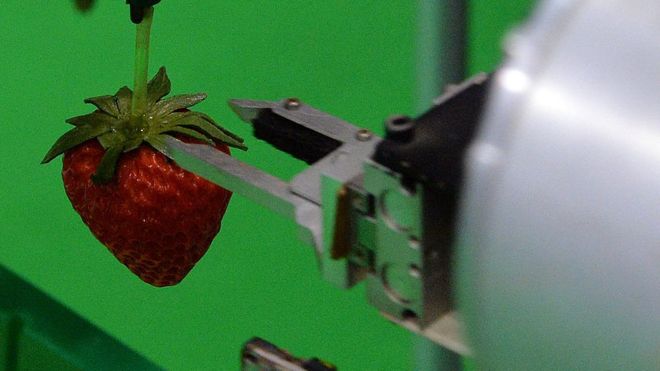
Yuichi Mori does not grow fruit and vegetables in fields. In his farming there is no soil at all. Instead, the Japanese scientist relies on something originally used to treat human kidneys: a clear, permeable polymer membrane.
Plants grow on top of the membrane, which stores liquid and nutrients. Besides letting vegetables grow in any environment, the technology uses 90 percent less water than conventional farming. No pesticides are needed either, because the polymer itself blocks viruses and bacteria.
A technology from dialysis
"I am using materials that were used for kidney dialysis membranes," the scientist told the BBC. His company, Mebiol, has secured patents for the invention in about 120 countries.
This is just one example of how Japan, which faces shortages of land and labour, is revolutionising agriculture. It highlights an ongoing agricultural revolution in the country, where fields are being turned into technology centres using Artificial Intelligence (AI), the internet and the latest technology. Farm technology will further improve the ability to monitor and maintain crops in the near future.
Why it matters
This year's UN World Water Development Report estimated that at the current rate of environmental damage and water use, about 40 percent of grain production and 45 percent of global gross domestic product could be at risk by 2050.
Source: BBC Bangla. First published in Bengali on The Agro News.
Comments
(0)