
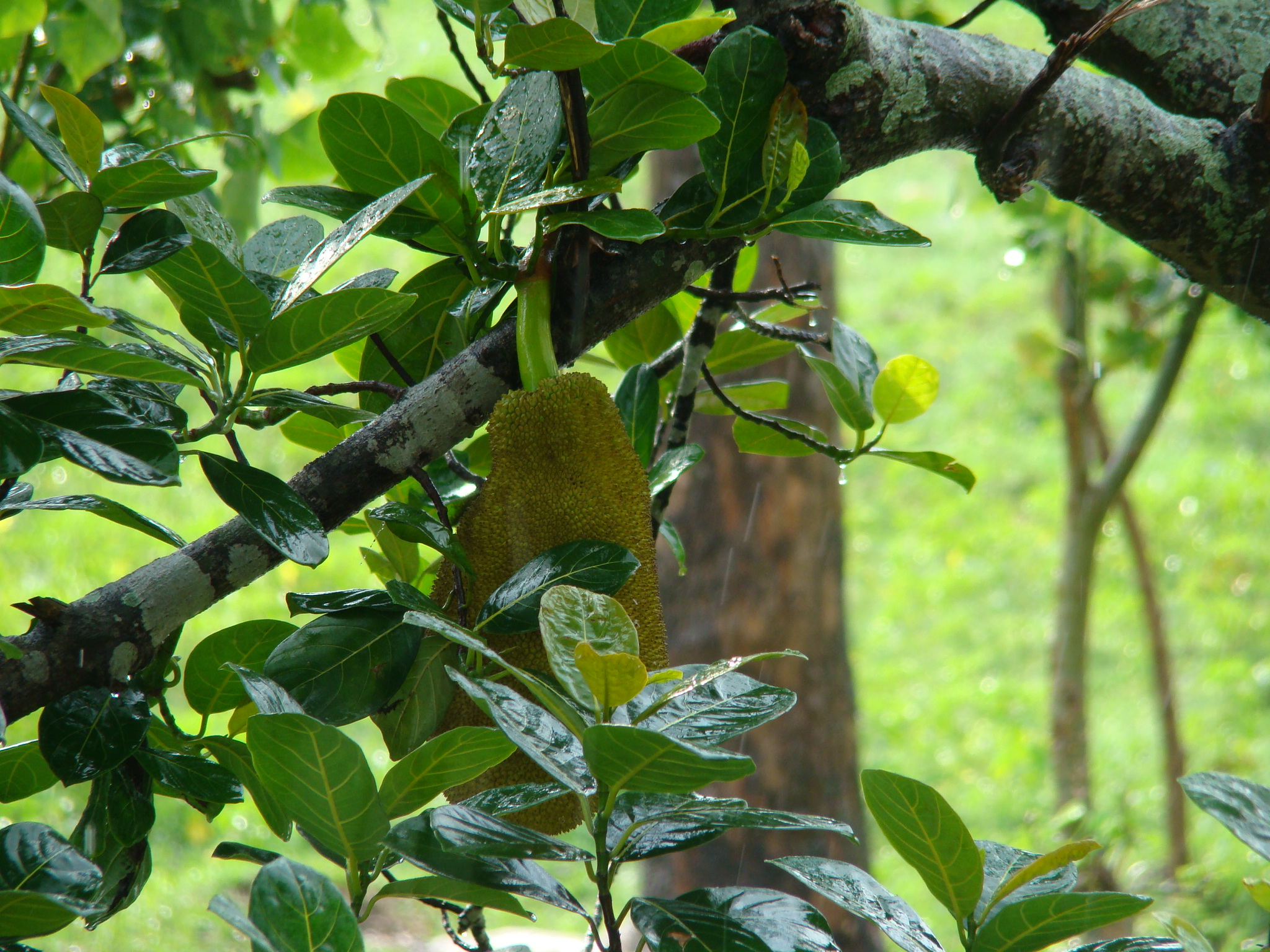
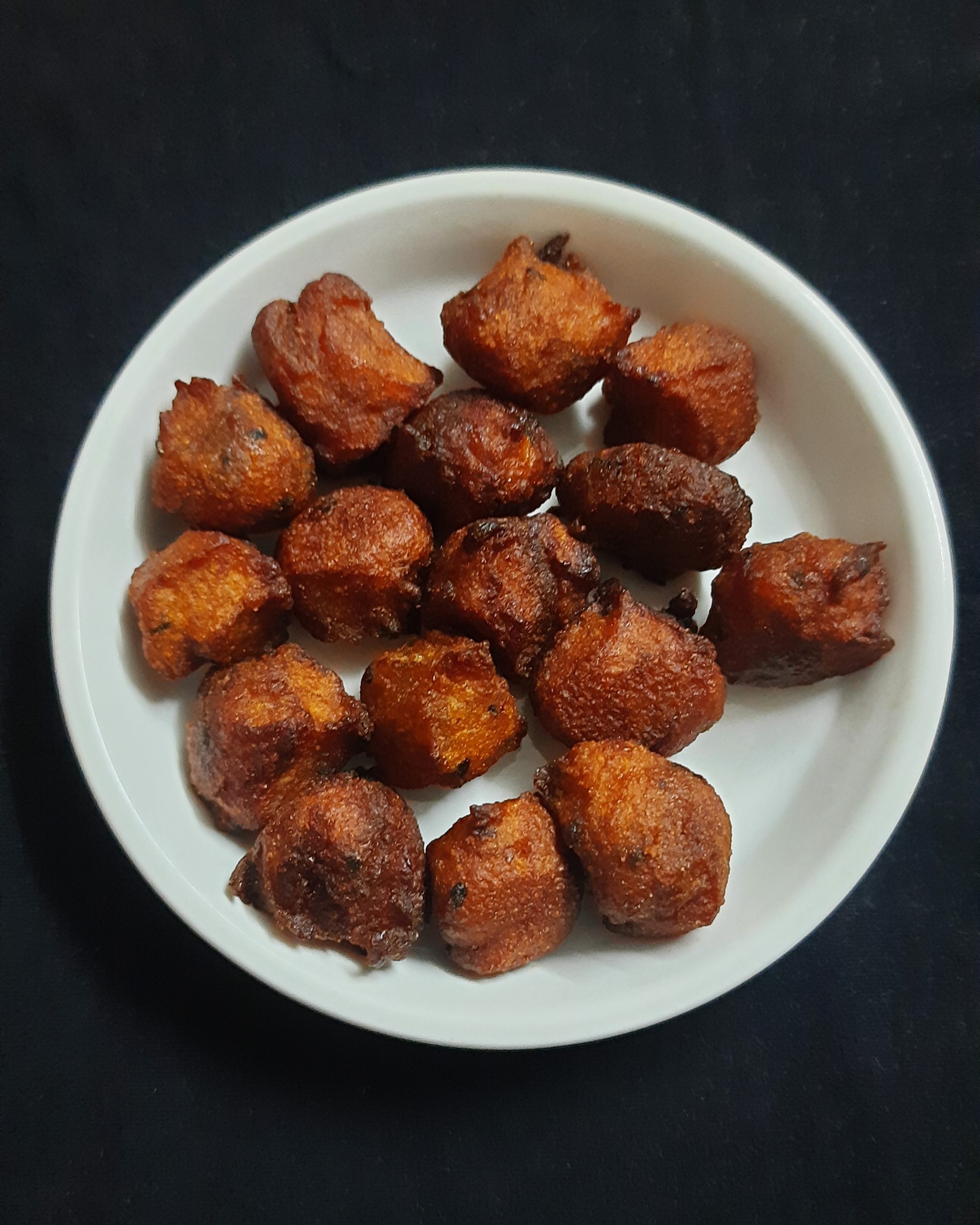
Jackfruit pitha is a fried sweet made by mixing ripe jackfruit pulp with rice flour, grated coconut and sugar or jaggery. Jagonews24's lifestyle desk published a home recipe for it on 18 June 2026, at the height of the jackfruit season: according to Banglapedia, the national encyclopaedia of Bangladesh, the trees flower from December to March and the fruit ripens from May to August, and researchers give June to August as the fruiting season of the country's ordinary seasonal jackfruit.
The Jagonews24 recipe describes the pitha as part of rural Bengali cooking, made from ripe jackfruit, coconut, rice flour and jaggery, simple ingredients found in most homes. The recipe follows, with background on its ingredients and on the fruit itself.
Ingredients
- Ripe jackfruit: 15 to 20 pods (bulbs)
- Rice flour: one cup
- Sugar or jaggery: half a cup
- Coconut: half a cup
- Salt: a pinch
- Water: as needed
- Oil: for frying
Banglapedia names rice or wheat flour, jaggery or sugar, coconut and oil as the most common ingredients of pitha. The Jagonews24 list fits that familiar pattern, with ripe jackfruit pulp added.
Method
- Remove the seeds from the jackfruit pods and mash the pods to extract the pulp.
- Mix the pulp with the rice flour, sugar or jaggery, coconut, a pinch of salt and enough water to make a thick batter.
- Heat oil in a karai (a deep wok-like pan) on the stove.
- When the oil is hot, drop in small spoonfuls of batter, shaped like fritters (bora).
- Fry until golden and lift out. The jackfruit pitha is ready.
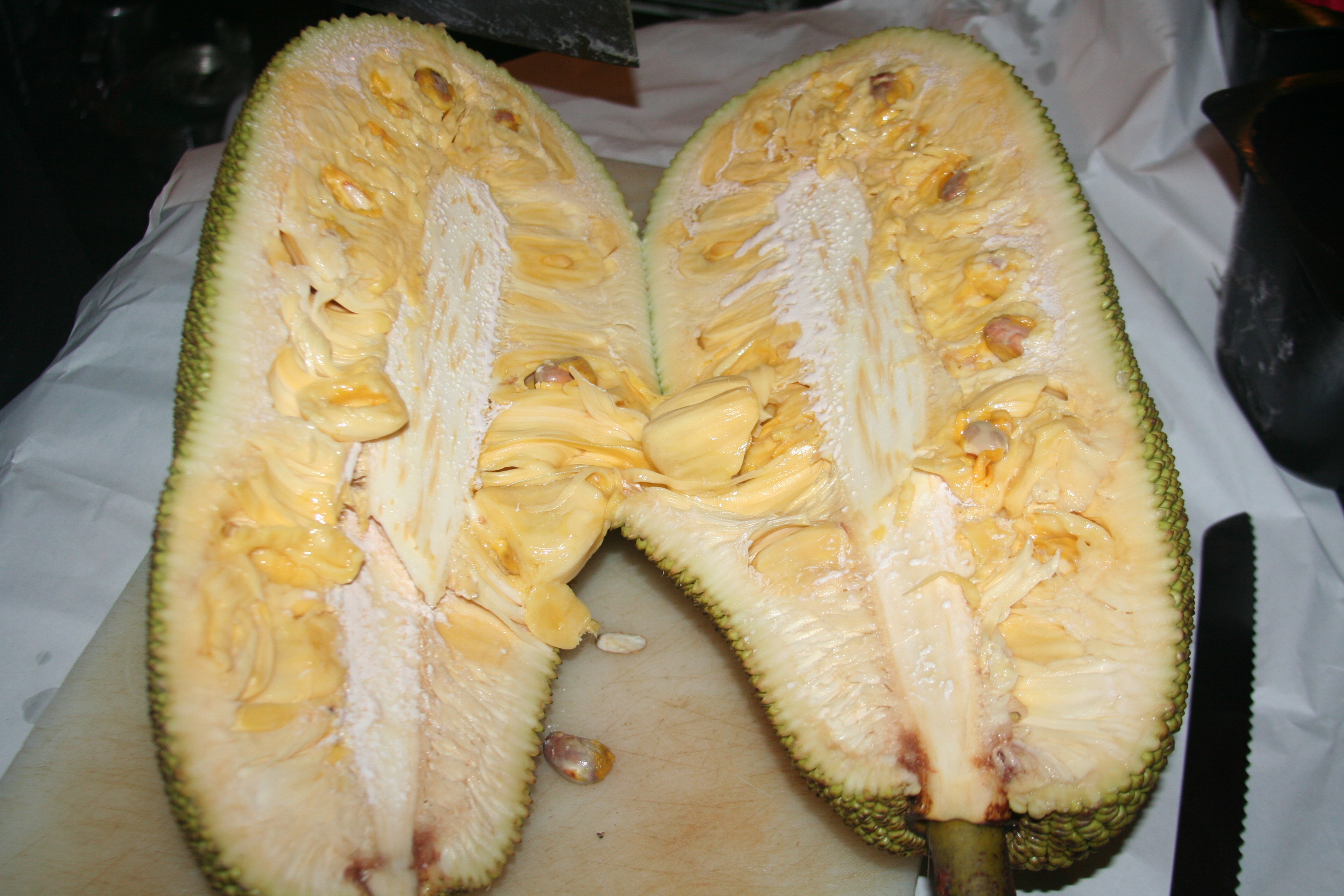
Cutting a jackfruit releases a white, sticky latex. Julia Morton's Fruits of Warm Climates, published online by Purdue University's NewCROP resource in the United States, notes that the gummy latex builds up on the knife and the hands unless both are first rubbed with oil. The same book says raw jackfruit seeds contain trypsin inhibitors that are destroyed by cooking. The seeds taken out for the pitha need not be thrown away: they can be boiled or roasted, as Banglapedia also notes.
Jackfruit in the pitha tradition
Banglapedia defines pitha as the traditional home-made cakes of Bangladesh. They are made to welcome a new family member or guest, for family gatherings and on special occasions, and also simply when children or elders ask for them. The encyclopaedia says the pitha season begins in late autumn after the harvest, and that winter pithas are thought the most delicious, because that is when date-palm juice and jaggery from date palm and sugarcane are available.
Banglapedia lists more than twenty kinds, among them chitoi, patishapta, pakan, bhapa, andosha, kulshi, kata pitha, chit pitha, labanga pitha, gokul pitha, chutki pitha, muthi pitha, jamdani pitha, hadi pitha, chapdi pitha, nakshi pitha, pata pitha, tejpata pitha, jhuri pitha, phuljhuri pitha and bibikhana pitha. Some pithas contain meat and vegetables; others use fruit, and the encyclopaedia names the fruits as mostly jackfruit, palmyra, coconut and banana. Jackfruit, in other words, heads the list of fruits that go into pitha.
Banglapedia's separate entry on nakshi pitha describes dough of atap (unboiled) rice flour rolled out and pricked with designs of plants, creepers and flowers using date thorns, hairpins, needles or jute sticks, then fried in hot oil and soaked in sugar syrup. It is made for Eid, puja festivals, Shab-e-Barat, weddings, aqiqah, the Nabanna harvest festival in Agrahayan, the Paush festival and other social and religious occasions, and the encyclopaedia calls it both a culinary art and an important folk art of women.
Jackfruit foods have also reached city fairs. Prothom Alo reported on 20 June 2025 from the National Fruit Fair held from 19 to 21 June 2025 at the Krishibid Institution grounds in Khamarbari, Dhaka, that an entrepreneur from Singair in Manikganj, representing the Subarta Trust, made 28 kinds of food from jackfruit, among them jackfruit pickle, pitha and kanthalsotto, a dried jackfruit leather. According to the report, she said kanthalsotto cannot be hardened by drying in the sun and needs an improved dryer.
Jaggery, rice flour and coconut: the other ingredients
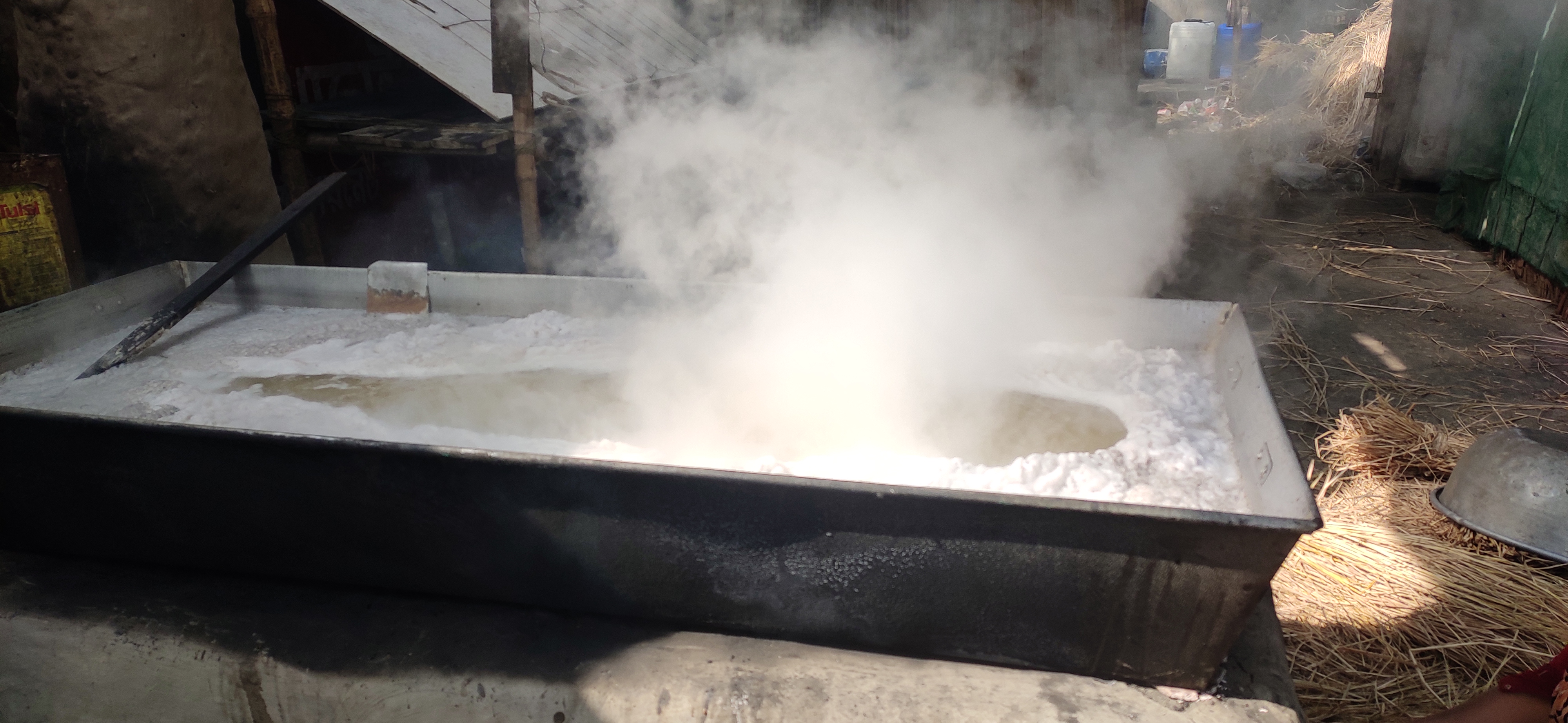
The introduction to the Jagonews24 recipe mentions date-palm jaggery, while its ingredient list allows either sugar or jaggery. Khejurer gur, or date-palm jaggery, is a palm sugar made from the sweet sap of the date palm: the sap is boiled down and concentrated by evaporation, then cooled. It comes in two forms, solid patali and liquid nolen or jhola gur. Winter is its main season of making and eating, and in Bangladesh the districts of Jessore and Faridpur are known for it. It is prized in Bengali sweets and dishes such as pitha and sandesh.
Jaggery is made by boiling the sap, but raw sap is another matter. The World Health Organization's Nipah virus fact sheet (January 2026) advises that freshly collected date palm juice should be boiled, and that fruit should be thoroughly washed and peeled before it is eaten. It says prevention should first focus on keeping bats away from date palm sap, and that protective coverings over the collection sites may help. Do not drink raw date-palm sap.
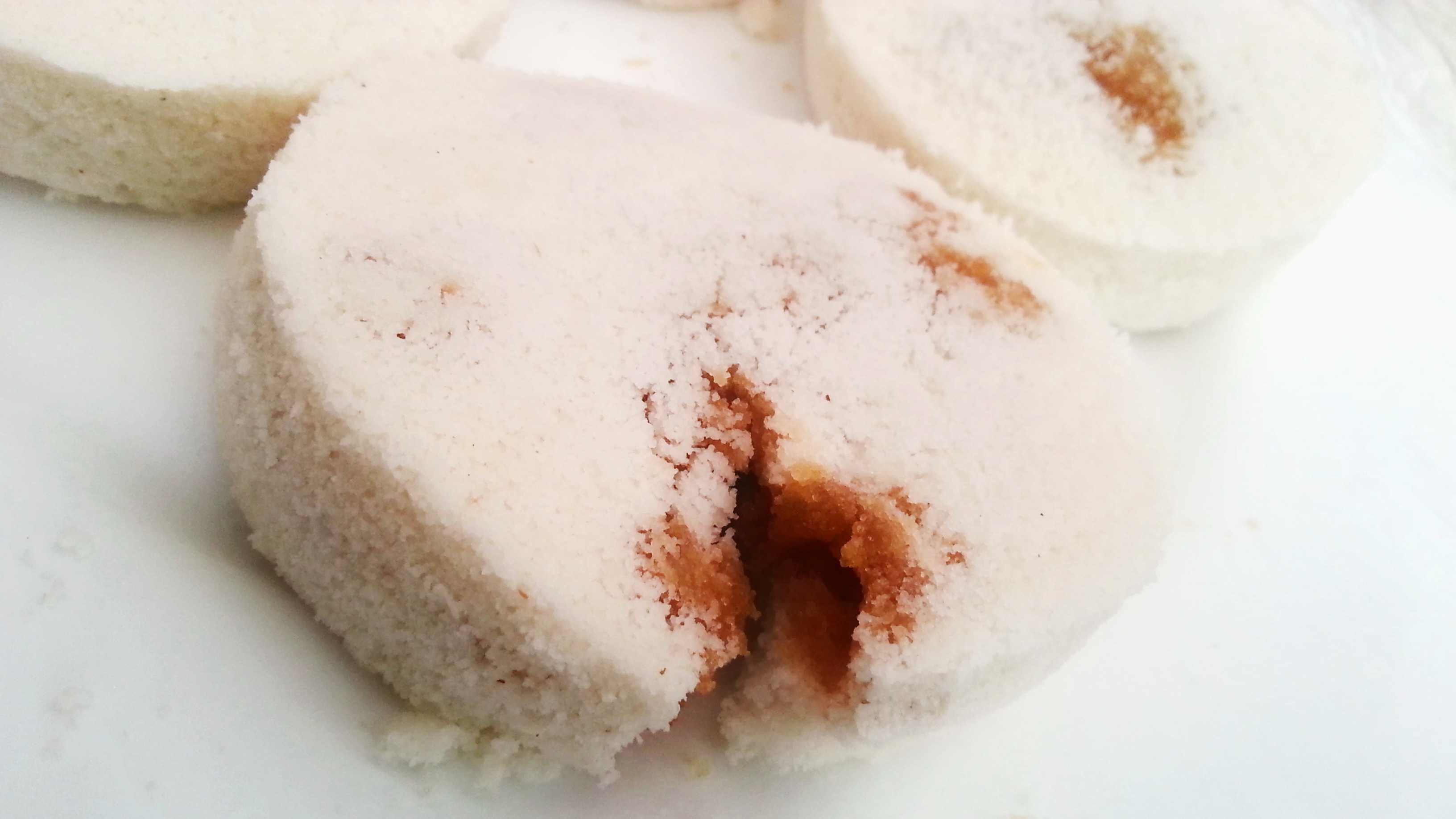
Rice flour is the body of the pitha. The U.S. Department of Agriculture's FoodData Central database lists 100 grams of white rice flour at about 366 kilocalories, with 80.1 grams of carbohydrate and 5.95 grams of protein. The same database gives 100 grams of raw coconut meat 354 kilocalories, 33.49 grams of fat, of which 29.698 grams is saturated fat, and 9 grams of fibre. Most of the energy in a jackfruit pitha therefore comes from the rice flour, the coconut, the sweetener and the frying oil.
Similar fried sweets in neighbouring regions
The pairing of jackfruit, rice, coconut and jaggery is not Bengal's alone. A photograph on Wikimedia Commons is described as halasina hannu mulka, a sweet fritter made with jackfruit, rice, coconut, salt and jaggery. The name is Kannada, and the list of ingredients is almost the same as in the Jagonews24 recipe.
Unniyappam, popular in Kerala in India, is another close relative. Wikipedia describes it as a small round snack of rice, jaggery, ripe banana, roasted coconut pieces, roasted sesame seeds, ghee and cardamom powder, fried in oil. The batter of soaked, ground rice is poured into the rounded moulds of a heavy pan and turned once to brown both sides, and some versions use jackfruit preserve instead of banana. In Malayalam, unni means small and appam means rice cake.
Wikipedia's jackfruit entry notes that jackfruit is the national fruit of Bangladesh and Sri Lanka and the state fruit of Kerala and Tamil Nadu in India. Ripe jackfruit is made into jams, jellies, candies and many sweet dishes, and in India dried bulbs are fried in oil to make chips.
The national fruit: tree, fruit and season
Banglapedia records jackfruit (Artocarpus heterophyllus) as the national fruit of Bangladesh. The tree carries separate male and female flower spikes on the same plant. The fruit is a multiple fruit: a greatly enlarged fleshy stalk with many carpels fused together. Trees begin bearing at five to eight years of age, and a mature tree gives from a few to about 200 fruits a year.
In Bangladesh jackfruit is commonly sorted into three types: khaja, with firm pods; gala, very juicy with soft pulp; and dorosa, in between and juicy. Banglapedia adds, however, that distinct varieties are not available in India or Bangladesh. Depending on the type, the edible portion ranges from 23.26 to 75.56 per cent of the fruit. The ripe pods are eaten fresh or kept in syrup or dried, the unripe fruit is cooked as a vegetable, the latex is used as a sealant and the heartwood gives timber and a yellow dye.
Julia Morton describes jackfruit as one of the largest tree-borne fruits in the world, from 8 inches to 3 feet long and 6 to 20 inches wide, weighing 10 to 60 pounds and occasionally up to 110 pounds, with yellow bulbs around the seeds. Its exact birthplace is unknown, but it is believed to have originated in the rainforests of the Western Ghats in India. An unopened ripe fruit gives off a strong smell, Morton writes, while the opened fruit smells of pineapple and banana.
Because the season is short, a great deal of fruit reaches the market at once. A University of Saskatchewan release of 21 February 2023 said Bangladesh's traditional June-to-August season leads to jackfruit wastage as high as 30 per cent or more. With that problem in view, the Bangladesh Agricultural Research Institute (BARI) released the year-round variety BARI Kanthal-3 in 2014. According to a study published in Frontiers in Plant Science in December 2022, the variety fruits from September to June and yields on average 1,334.6 kg of fruit per plant a year (1,165 to 1,504.2 kg), about four times the seasonal varieties. Researchers at the Institute of Biotechnology and Genetic Engineering of Bangabandhu Sheikh Mujibur Rahman Agricultural University and the Global Institute for Food Security at the University of Saskatchewan sequenced its whole genome.
Production, exports and processing
Bangladesh is the world's second-largest jackfruit producer after India. A market brief from the One Country One Priority Product (OCOP) initiative of the Food and Agriculture Organization of the United Nations (FAO) says jackfruit makes up about 21 per cent of the country's total fruit production and is its second most produced fruit, after mango. The FAO newsroom reported on 13 January 2025 that Bangladesh joined the initiative, with jackfruit as its priority product, in 2022.
Prothom Alo, citing the Department of Agricultural Extension (DAE), reported on 19 July 2025 that jackfruit was grown on 58,700 hectares in the 2023-24 fiscal year and that production reached 1,830,131 tonnes. The leading districts were Gazipur, Bandarban, Rangamati, Tangail and Khagrachhari. Estimates differ between agencies: the Frontiers paper, citing the Bangladesh Bureau of Statistics (BBS), gives 1.1 million tonnes from 16,592 hectares in 2019-20, and Banglapedia gives an annual 469,500 tonnes from 25,110 hectares for 2000 to 2007.
Exports remain small. Using International Trade Centre data, the FAO brief says Bangladesh's jackfruit exports rose from USD 1.2 million in 2012 to USD 11.3 million in 2023, still only 0.3 per cent of world exports. The United Kingdom, Italy, Canada and France take almost 85 per cent of them, with 76 per cent going to the United Kingdom. Prothom Alo reported exports of 2,081 tonnes in 2023-24. The FAO notes that jackfruit has no trade code of its own, so these trade figures also include some other tropical fruits.
The FAO brief also sets out the world market. In the trade category that includes jackfruit, global exports grew from USD 2 billion in 2012 to USD 3.7 billion in 2023. Viet Nam, Thailand, the Netherlands, China and Ecuador account for 60 per cent of world exports, Viet Nam alone for 25 per cent, while China and the United States take 25 and 10 per cent of world imports. For Bangladesh, the FAO suggests exploring new markets in Canada, the Maldives, Spain, South Africa and the United Arab Emirates, and calls China and Hong Kong the most promising markets because of existing trade links and geographic proximity.
The FAO brief names underdeveloped supply chains and a marked lack of post-harvest storage, processing and transport facilities as the main obstacles. Citing the FAO-supported report The Jackfruit Value Chain in Bangladesh (2023), Prothom Alo reported that value addition at the processing stage is only 10 per cent. The FAO newsroom story described trained entrepreneurs in Sreepur, Gazipur, turning jackfruit into pickles, jam, burgers, cakes, pizzas and snacks. A home-made jackfruit pitha is a small example of the same versatility.
Nutrition and some cautions
According to USDA FoodData Central, 100 grams of raw ripe jackfruit contain 73.46 grams of water, 95 kilocalories, 23.25 grams of carbohydrate (19.08 grams of it sugars), 1.5 grams of fibre, 1.72 grams of protein, 448 milligrams of potassium, 13.7 milligrams of vitamin C and 0.329 milligrams of vitamin B6. Wikipedia's jackfruit entry describes this as a moderate source of vitamin B6, vitamin C and potassium.
In the pitha, sugar or jaggery and frying oil are added to the fruit. The WHO's healthy diet fact sheet (January 2026) counts sugars added by the cook or consumer as free sugars and recommends keeping them below 10 per cent of total daily energy intake, with further benefits below 5 per cent. It also advises that no more than 10 per cent of total energy should come from saturated fat. People with diabetes, heart disease or other conditions should ask their doctor how much of a sweet fried snack like this suits them.
Morton notes that ripe jackfruit is laxative and can cause diarrhoea if eaten in excess, and that raw unripe fruit is astringent and indigestible. Some people are allergic to jackfruit: a study by Dutch researchers published in the journal Allergy in 2004 found that patients allergic to birch pollen developed oral allergy symptoms after eating jackfruit. Anyone whose mouth, lips or throat itch or swell after eating jackfruit should see a doctor.
Ripe jackfruit deteriorates quickly, so the pulp for pitha is best used soon after the fruit is opened. Morton gives the storage life of ripe fruit as three to six weeks in cold storage at 52 to 55 degrees Fahrenheit and 85 to 95 per cent relative humidity.
Photo: Shahnoor Habib Munmun / Wikimedia Commons (CC BY 3.0)
Sources: Jagonews24, Banglapedia, Prothom Alo, Food and Agriculture Organization of the United Nations (FAO), USDA FoodData Central, World Health Organization (WHO), Purdue University (Julia Morton, Fruits of Warm Climates), Frontiers in Plant Science, University of Saskatchewan, the journal Allergy, Wikipedia
Comments
(0)