
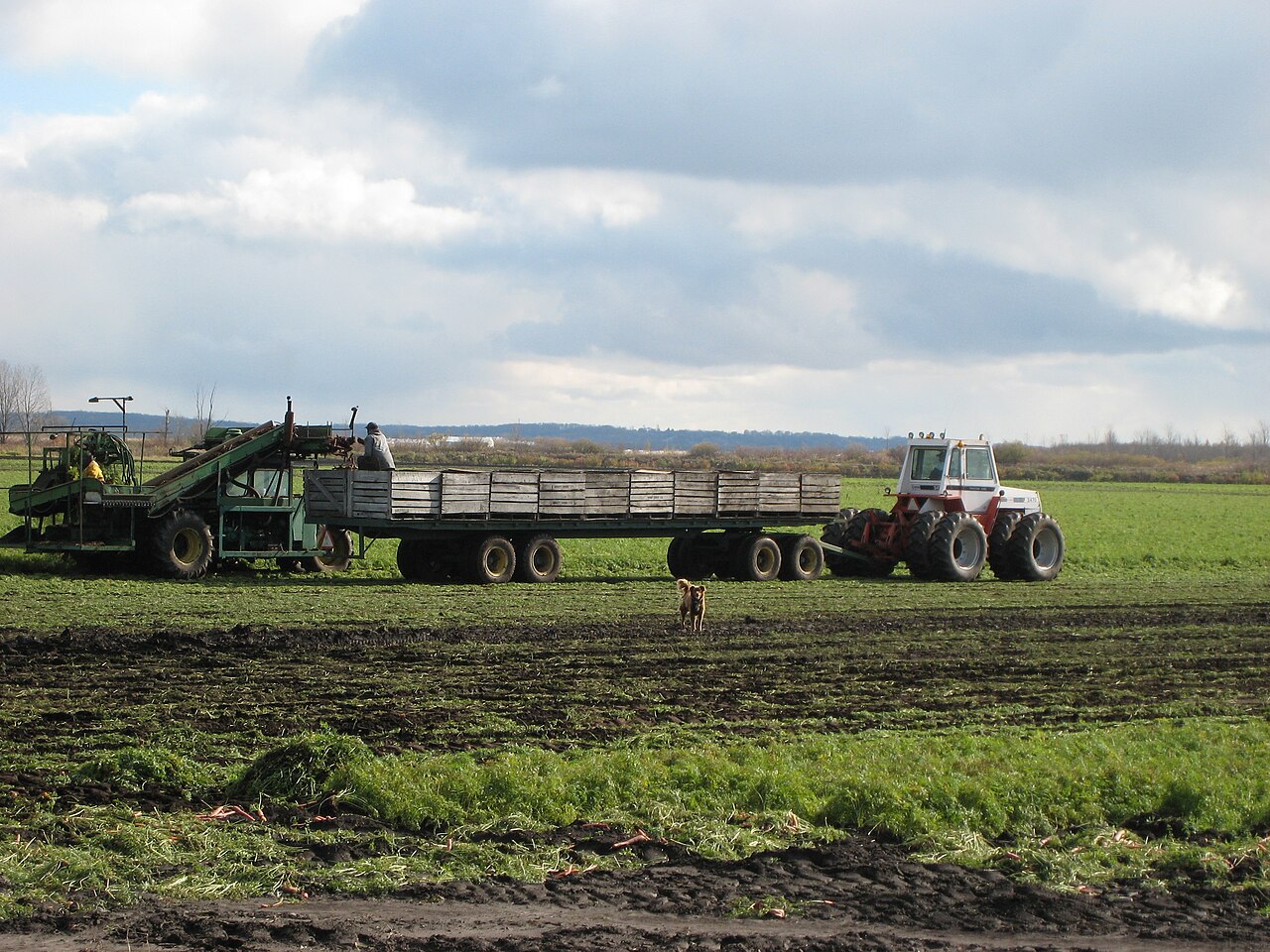
Philip Draper, an organic carrot grower from Birr, Co. Offaly, who has grown carrots for more than 30 years, says building a business that can withstand a changing climate "takes huge investment". This year, he told Agriland, irrigation was the difference: "The harvest only started on time because we were able to get enough water onto the crops. Without irrigation, the growth would have been delayed and the quality would suffer."
Carrots are lifted according to supermarket orders, not all at once, so harvesters, toppers and tractors stay in the fields for months, ready to move at short notice. "You need to have good machinery that's able to get over the ground quickly when you do get a weather window," Draper said. To keep filling orders through bad spells, his business, Coolnagrower Agri, has invested in short-term storage.
The season runs from September to March, so full-time staff are needed all year, and skilled operators for expensive machines in hard conditions are difficult to find. Growers have always had to cope with saturated ground in winter, but recent summer droughts have added new problems. "It's not as straightforward as it was years ago and it costs a lot more to produce crops now," he said.
Only nine commercial carrot growers are left in Ireland. Draper blames retail pricing: supermarkets began selling vegetables as a "loss leader" to draw shoppers, and that downward pressure has eroded the price of carrots. He is part of the Irish Carrot Growers (Working) Group, set up in 2025, which represents 95 percent of Irish retail carrot supply and works with policymakers on the sector's problems.
"The growers that are left need to be rewarded for what they are doing, because the risks that are involved are huge," he said. Whether 2026 will be a profitable year is not yet clear, but conditions for harvesting have so far been good.
Photo: phot0geek / Wikimedia Commons (CC BY-SA 2.0)
Source: Agriland

Comments
(0)