
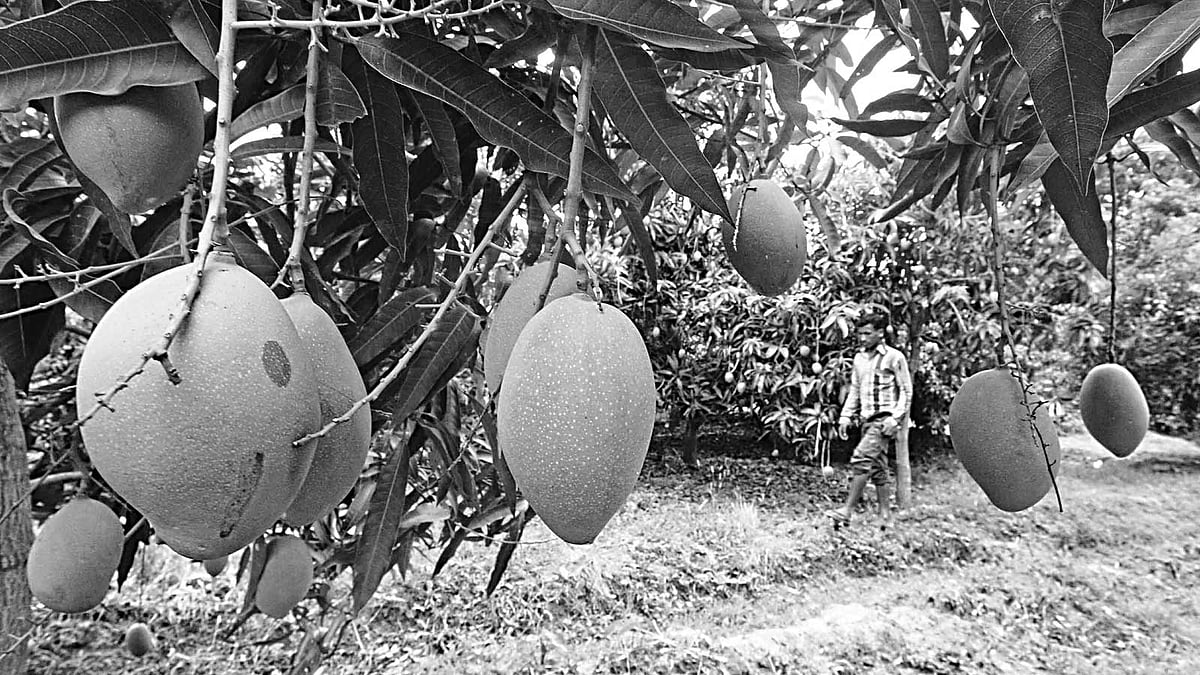
Mango season has arrived. Severe drought this year has raised doubts about yields in many places, with reports of mangoes cracking and dropping. Yet markets suggest the ripe mango season began a month ago.
Where are the mangoes coming from?
After two years of campaigns, no mangoes were supposed to reach market before 15 May; local administrations informally told growers this date to encourage selling mature fruit. Only in Satkhira did the agriculture department allow sales from 2 May after field tests, in small amounts. So why were markets flooded?
Chuadanga grower and trader Faruk Hossain said all mangoes on the market were Indian, from drought-prone areas such as Uttar Pradesh and Karnataka, of Lalmoni, PM and Golapkhas varieties, ripened with chemicals and treated to last 15 to 20 days or more. Sharafuddin, an expert at the Chapainawabganj mango research centre, said the Indian mangoes show orange and yellow patches when cut, with little taste or aroma, and mostly enter through the Sonamasjid land port. The DAE deputy director responsible for plant quarantine there could not be reached.
No testing at the border
There is no testing of mangoes at Sonamasjid, so tonnes enter freely. Yet in 2014, police destroyed hundreds of tonnes of Bangladeshi mangoes at Dhaka's entry points over formalin claims; a court later found the testing device was wrong, and growers lost heavily without compensation.
Protect the home market
Mango is now grown across the country, and Bangladesh began exporting mangoes last year. The Ministry of Commerce and Bangladesh Bank could not say how many mangoes are imported daily. Growers in Rajshahi, Chapainawabganj, Chuadanga and Meherpur obeyed the 15 May rule and faced unequal competition as Indian mangoes took the opening market. Seraj calls for discouraging fruit imports before the local season and for constructive controls.
Source: Shykh Seraj. First published in Bengali on The Agro News.
Comments
(0)